The planning board approved three site plans on July 1 and sent a fourth back for more work. Its chairman stepped out of the room for one of them, and the minutes record exactly when he came back.
Three approvals, one project told to come back, and a chairman who left the room.
This story came from public records we pulled ourselves
Get the next one, plus overnight incidents, in your inbox at 6 AM. Free, no spam.
That was the July 1 meeting of the Town of Cicero Planning Board, held at Town Hall, 8236 Brewerton Road. It is the meeting that produced the decisions residents will actually see on the ground over the next year, and almost nobody was there for it. The minutes record public input as none.
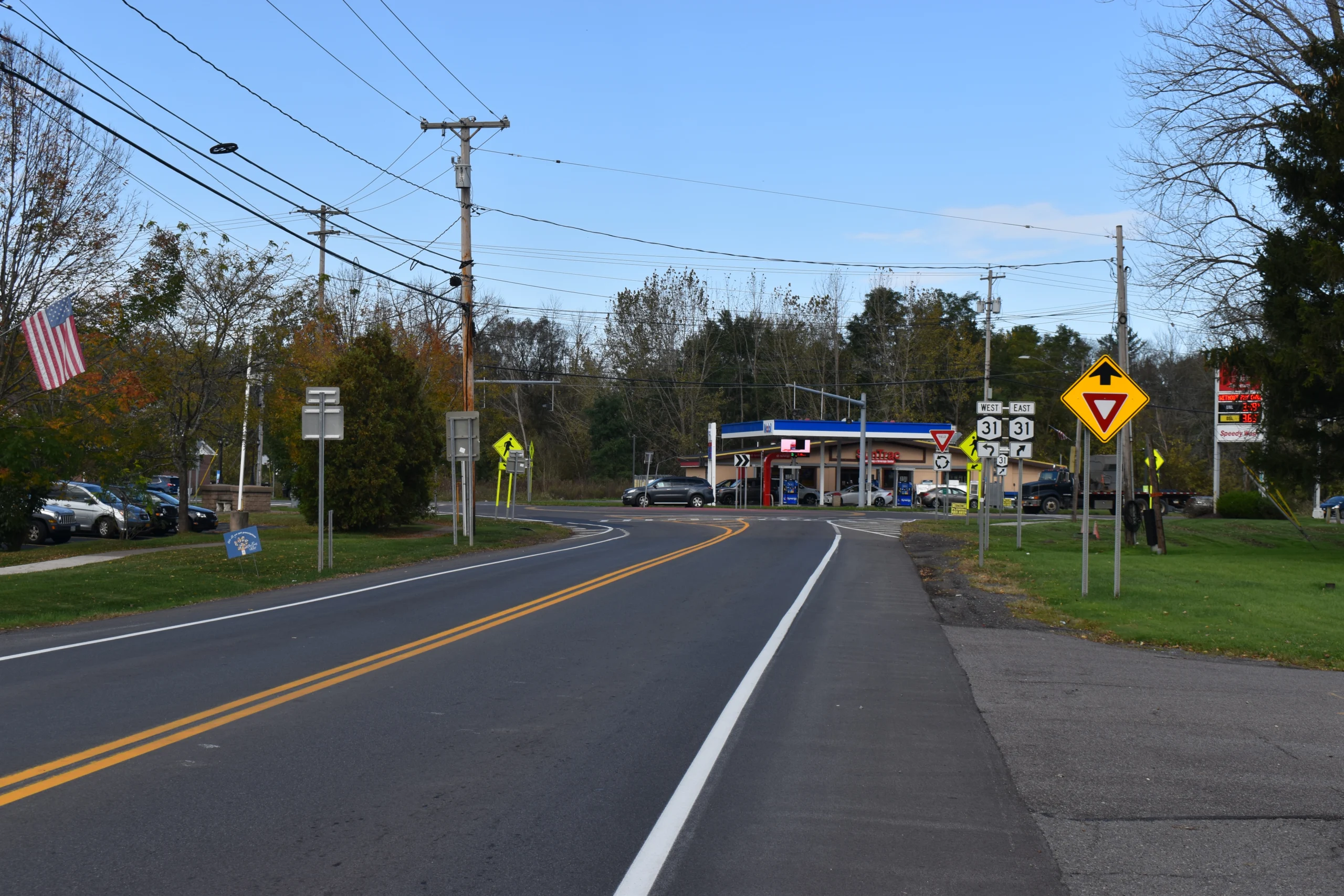
Holland Farms is coming to Route 31
The approval most people in Cicero will notice is a bakery.
The board approved a site plan for Next Choice Property Holding LLC at 5866 State Route 31 for a proposed baked good store, identified in the agenda as Holland Farms. The plan was prepared by Keplinger Freeman Associates.
Holland Farms is a Central New York institution with a long history in Oneida County, and it has been expanding westward. The Cicero approval follows a separate Holland Farms location announced for Camillus earlier this summer, which puts the bakery on both the eastern and western edges of the Syracuse suburbs.
For a Route 31 corridor that has been filling in with retail for two decades, a regional bakery is a different kind of tenant than another drive-through. It is a destination business, which means it draws traffic from outside the immediate area rather than capturing traffic already passing by.
A manufacturer is growing on Guy Young Road
The most economically significant approval that night was quieter.
The board approved a site plan for Schneider Packaging Equipment Company, Inc. at 5370 Guy Young Road for a proposed building expansion, prepared by Keplinger Freeman Associates.
Schneider Packaging is a Cicero-based manufacturer of packaging and palletizing automation systems. A manufacturer expanding its building is the kind of item that scrolls past on an agenda and matters more than most of what surrounds it, because manufacturing square footage generally tracks with production capacity and headcount.
The minutes do not state the size of the expansion or a job figure, and CNY Signal is not going to supply numbers the record does not contain. What the record does establish is that the town approved the plan and that a Cicero manufacturer is building more space in Cicero rather than somewhere else.
An 11,200 square foot addition, and a chairman who stepped aside
The first application of the night was a minor site plan for Joseph Marzullo at 9160 Brewerton Road, a proposed 140 foot by 80 foot building addition, prepared by Calocerinos Engineering, PLLC.
That footprint works out to 11,200 square feet.
The board’s chairman is Mark Marzullo. He did not participate in this item.
The minutes handle it without commentary, which is the right way to handle it. Mary Vielhauer called for the vote in the chairman’s place. The roll shows three members voting: Chuck Abbey yes, Mary Vielhauer yes, Zachary Wilke yes. The motion was approved unanimously. The minutes then state plainly that after the representatives thanked the board, Chairman Marzullo re-joined the proceedings.
The minutes do not describe a relationship between the two men and CNY Signal is not asserting one. What the record shows is a chairman who removed himself from an application bearing his surname and a board that documented his absence and his return.
That is how a conflict is supposed to be handled at this level, and it is worth noting precisely because it so often is not.
The approval came with two conditions, read into the record by board attorney Neil Germain. First, the color schemes and renderings or elevations presented by the applicant are incorporated by reference into the site plan and the approval, meaning the actual project must substantially conform to what was shown. Second, the sign may be internally lit but will not be externally lit by any ground mounted lighting.
Those two conditions are a compact illustration of what site plan review actually controls. A board cannot generally stop a permitted building. It can bind the applicant to the renderings it was shown, and it can keep a light out of a neighbor’s window.
What a minor site plan is, and why the label understates it
The Marzullo item was docketed as a minor site plan, and the word minor does a lot of quiet work.
Most towns split site plan review into major and minor tracks. The minor track exists so that a modest addition to an existing commercial building does not have to carry the same review burden as a new development on raw land. It typically means fewer submission requirements, no public hearing, and a faster path to a vote.
An 11,200 square foot addition is not small in absolute terms. It is roughly the footprint of a large supermarket department. What makes it minor in the procedural sense is that it is an addition to something already there, on a parcel already developed and already served by utilities and a curb cut.
That distinction is reasonable policy. It is also the reason a substantial amount of the building that happens in a suburban town never gets a public hearing at all, and why reading planning board agendas is the only reliable way to know what is going in next door.
One project told to come back
The fourth item did not get approved, and was not meant to.
Robert Seniecle brought a sketch plan review for a proposed restaurant at 7991 State Route 31, identified as Mi Rancho Alegre, with Zausmer Frisch Scruton and Aggarwal as consultant. The agenda records the outcome as to return.
A sketch plan review is the informal first conversation. An applicant shows a concept before spending money on full engineering, and the board tells them what it will want to see. Nothing is approved and nothing is denied.
Sending a sketch plan back is not a rejection. It is the system working the way it is designed to, catching problems while they are still cheap to fix.
Two of the four applications that night came through the same consultant, Keplinger Freeman Associates, and a third through Calocerinos Engineering, PLLC, the same firm that appears in Town of Clay records requesting a sewer connection on Buckley Road. The pool of engineering firms working suburban Onondaga County is not large, and the same names recur across town lines.
That is worth knowing for a practical reason rather than a suspicious one. Consultants who appear regularly before a board know what that board will ask for, which tends to make their submissions cleaner and their approvals faster. An applicant hiring a firm with no local track record often spends an extra meeting or two learning the same lessons.
The SEQR step nobody talks about
Each approval that night carried a standard SEQR motion first.
The State Environmental Quality Review Act requires a board to consider environmental impact before approving an action. For routine site plans on already-developed commercial corridors, that consideration usually results in a determination that the action will not have a significant adverse environmental impact, and the board adopts a resolution to that effect before voting on the plan itself.
It is procedural, and skipping it is one of the more common ways a municipal approval gets overturned in court. The Cicero minutes show the board taking the SEQR motion separately on each application, with named movers and seconders, which is exactly the paper trail that makes an approval durable.
Chairman Marzullo made the standard SEQR motion on two of the items. Mary Vielhauer made it on the first, in his absence.
Who was in the room
Four board members were present: Chairman Mark Marzullo, Chuck Abbey, Mary Vielhauer and Zachary Wilkie.
Three were absent: Deputy Chairman James DeVaul, ad hoc member Michael Marra and Planning Board Clerk Cynthia Chamberlain. Toni Mosley served as acting clerk.
Also present were Neil Germain as planning board attorney, Mark Parrish as planning board engineer and Steven Procopio, the town’s Director of Code Enforcement.
With four members seated and one stepping aside, the Marzullo application was decided by three votes. That is a thin margin of participation for an 11,200 square foot addition, and it is a reminder that summer meetings in small towns often run with reduced boards.
Mary Vielhauer moved to adjourn and Chuck Abbey seconded.
What comes next on this corridor
The July decisions read differently alongside what is coming.
The same board meets Wednesday, August 19, with six applications on its agenda, five of them on Brewerton Road, including a proposed 74 unit apartment building and a plan to redevelop a former Walgreens at Brewerton Road and Caughdenoy Road.
Taken together, July and August show a corridor absorbing a bakery, a factory expansion, a restaurant in the pipeline, an 11,200 square foot addition, apartments and a pharmacy site coming back into use, all inside two months of agendas.
Agendas and approved minutes for the Town of Cicero are posted at ciceronewyork.net, and meetings are streamed on the town’s YouTube channel.