If you’ve driven down South Wilbur Avenue in the last few years, you know the view. A sprawling, decaying complex, windows boarded, weeds reclaiming the parking lots, chain-link fencing sagging around 47 acres of institutional decay on the western edge of Tipperary Hill. For decades, the former Syracuse Developmental Center has been the neighborhood’s most visible scar.
That’s finally changing. And the scope of what’s coming is bigger than most people realize.
A Half-Century of History, Then Silence
The Syracuse Developmental Center at 800-2 South Wilbur Avenue originally opened in 1972 as a state-run facility for individuals with developmental disabilities. At its peak, the complex sprawled across dozens of buildings on its 47-acre campus. But like many large state institutions of that era, it eventually closed its doors and sat vacant, for decades.
This story came from public records we pulled ourselves
Get the next one, plus overnight incidents, in your inbox at 6 AM. Free, no spam.
What was left behind became a defining feature of the Tipperary Hill and Westside landscape, but not in a good way. Residents watched the buildings deteriorate year after year. Proposals came and went. Nothing stuck.
Until now.
A $134 Million Bet on Syracuse’s Westside
The Albanese Organization, a Long Island-based developer with a track record of large-scale mixed-use projects, has committed to a $134 million redevelopment of the site. That number alone makes this one of the most significant private development investments on Syracuse’s Westside in a generation.
The state is backing the play, too. Governor Kathy Hochul’s office has committed up to $29 million in state funding to support the project, a signal that Albany sees this as more than a local housing project. It’s a test case for how New York can turn abandoned institutional campuses into functional neighborhoods.
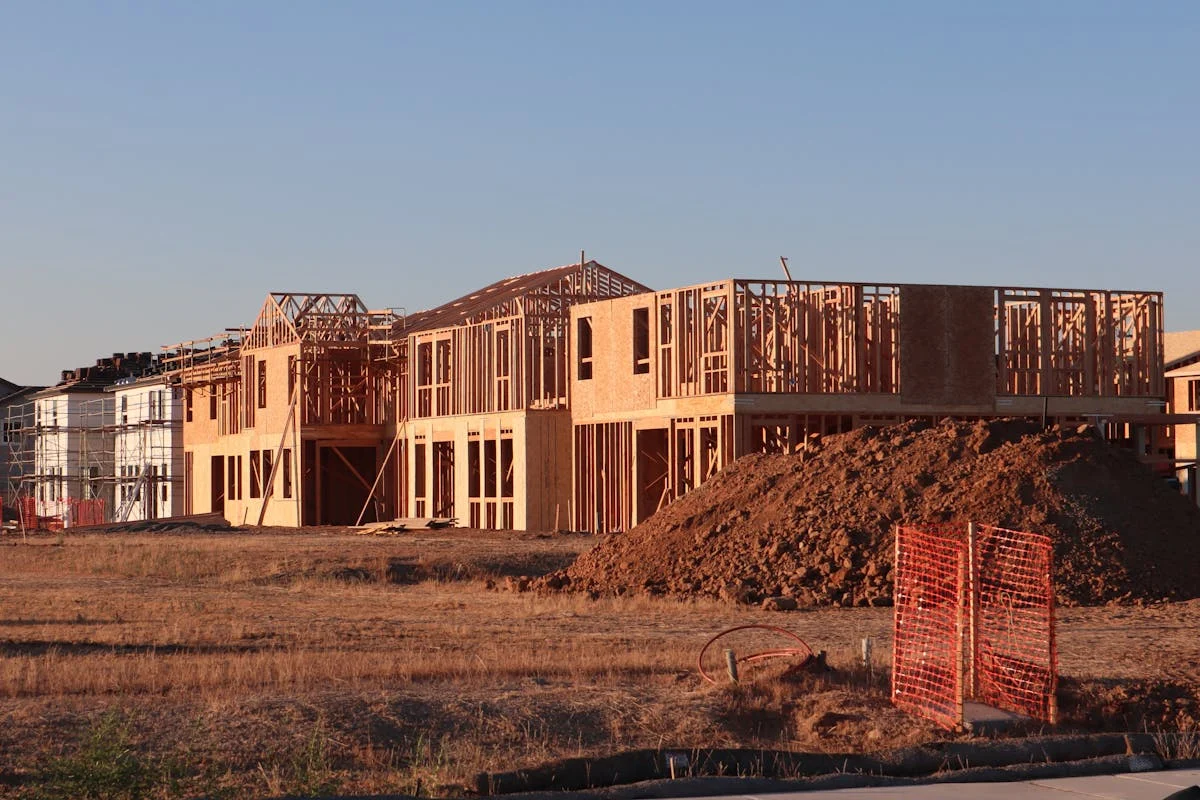
The first phase of the plan calls for more than 250 housing units, 7.5 acres of new green space, and 3,600 square feet of retail. Later phases are even more ambitious, with plans for an advanced manufacturing facility that could bring jobs, not just residents, to a part of the city that’s been waiting a long time for both.
600,000 Square Feet of History, Gone
Before anything new could rise, the old had to come down. And there was a lot of it.
Demolition crews spent months tearing through roughly 600,000 square feet of decrepit institutional buildings, a process that wrapped up in September 2025. Anyone who drove past the site last summer saw the dust clouds and heavy equipment chewing through concrete and steel. It wasn’t pretty, but it was progress.
With the demolition complete, the site is now a blank canvas. And the city is moving fast to get infrastructure in the ground.
Sewer, Water, Streets: The Boring Stuff That Matters
Syracuse is currently accepting bids for sewer, water, and streetscape construction on the site. It’s the kind of unglamorous municipal work that doesn’t make headlines, but it’s the foundation, literally, for everything that follows. You can’t build 250 housing units without the pipes and roads to support them.
The fact that the city is already in the bidding phase for infrastructure tells you this isn’t a project that’s sitting in someone’s desk drawer. Ground is being prepared. Timelines are real.
What This Means for Tipperary Hill
Tipperary Hill is one of Syracuse’s most storied neighborhoods, the kind of place where people know each other’s names and the green-over-red traffic light on Tompkins Street is a point of genuine civic pride. But it’s also a neighborhood that’s been hemmed in by vacancy and disinvestment for too long.
A successful redevelopment of the SDC site could fundamentally reshape the western edge of the neighborhood. Two hundred fifty housing units means new neighbors, new foot traffic, new demand for the small businesses along Burnet Avenue and South Avery. The 7.5 acres of green space would give families something the neighborhood has lacked, a real park anchoring the community.
And the advanced manufacturing component, if it materializes, could provide the kind of middle-skill jobs that Syracuse’s Westside desperately needs. That’s the piece that turns this from a housing project into an economic development play.
The Risks Are Real
Let’s be honest: Syracuse has seen ambitious redevelopment plans before. Some delivered. Some didn’t. A $134 million multi-phase project on a formerly contaminated institutional campus comes with risk, environmental remediation, construction cost inflation, market absorption for 250+ new units in a neighborhood that hasn’t seen this kind of density in decades.
The Albanese Organization has the resources and experience to pull it off. But this is Central New York, not Long Island. The economics are different here, and the margin for error is thinner.
Still, the demolition is done. The state money is committed. The infrastructure bids are out. Those aren’t renderings on a website, they’re shovels in the ground. And for a neighborhood that’s been staring at an abandoned campus for longer than most residents can remember, that counts for something.
What Comes Next
The immediate next steps are infrastructure construction, getting the sewer, water, and street network built out so that vertical construction on the housing and retail components can begin. Phase 1 will be the proof of concept. If it delivers on the 250 units, the green space, and the retail, Phase 2 and the manufacturing facility become a much easier sell.
For now, Tipperary Hill watches and waits, but for the first time in a long time, there’s something worth watching.
Sources: CNY Central, Urban CNY, Governor Hochul announcement. Photo: Pexels / D Goug.