Inside the Everson’s Lego Moment
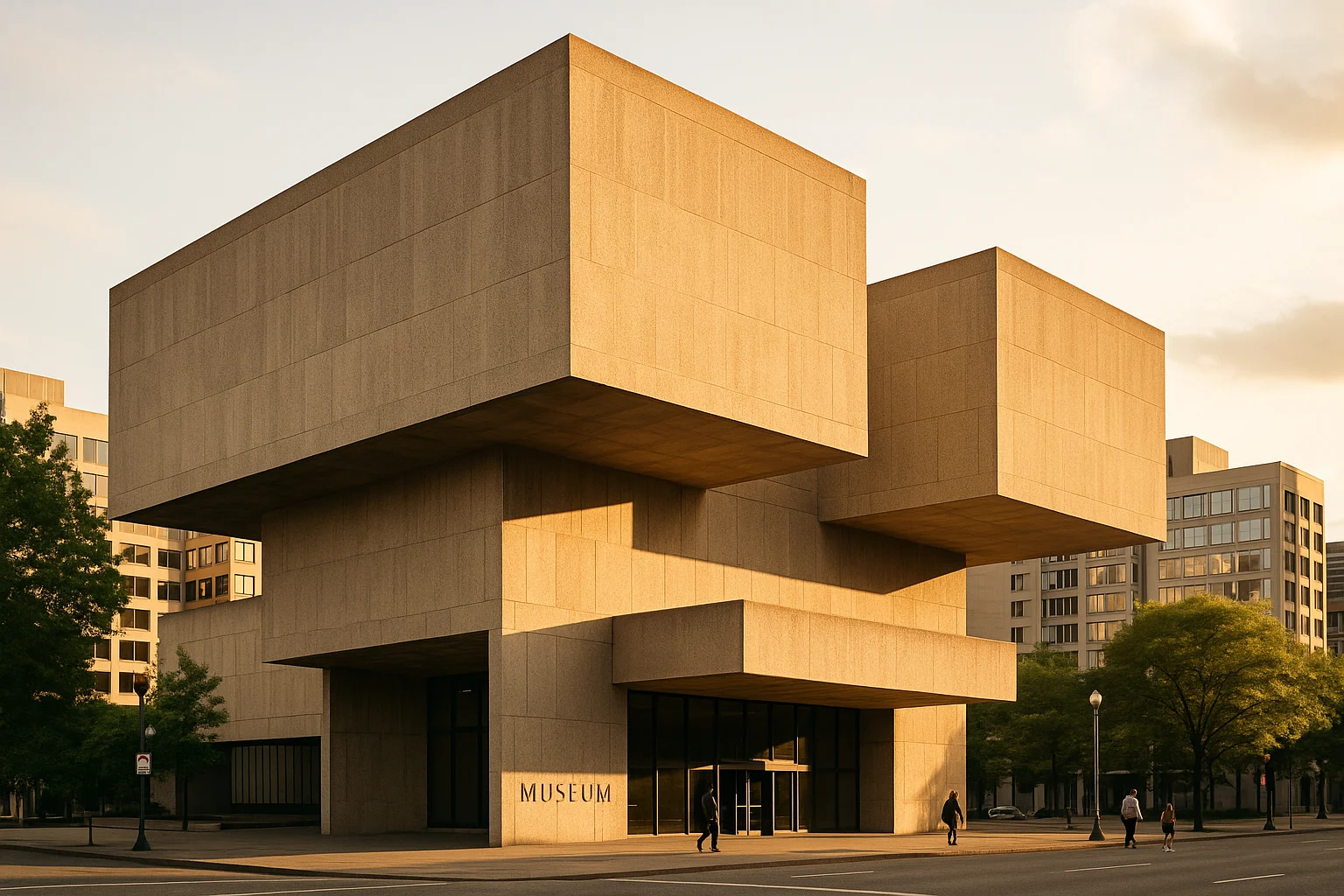
If you grew up anywhere near Syracuse, you remember the first time you walked into the Everson Museum of Art. Maybe it was a third-grade field trip. Maybe your parents dragged you downtown on a rainy Saturday. Either way, the building itself stopped you cold before you ever saw a painting. That hulking, cantilevered concrete mass at 401 Harrison Street does not look like anything else in Central New York, or, really, anywhere else in the world.
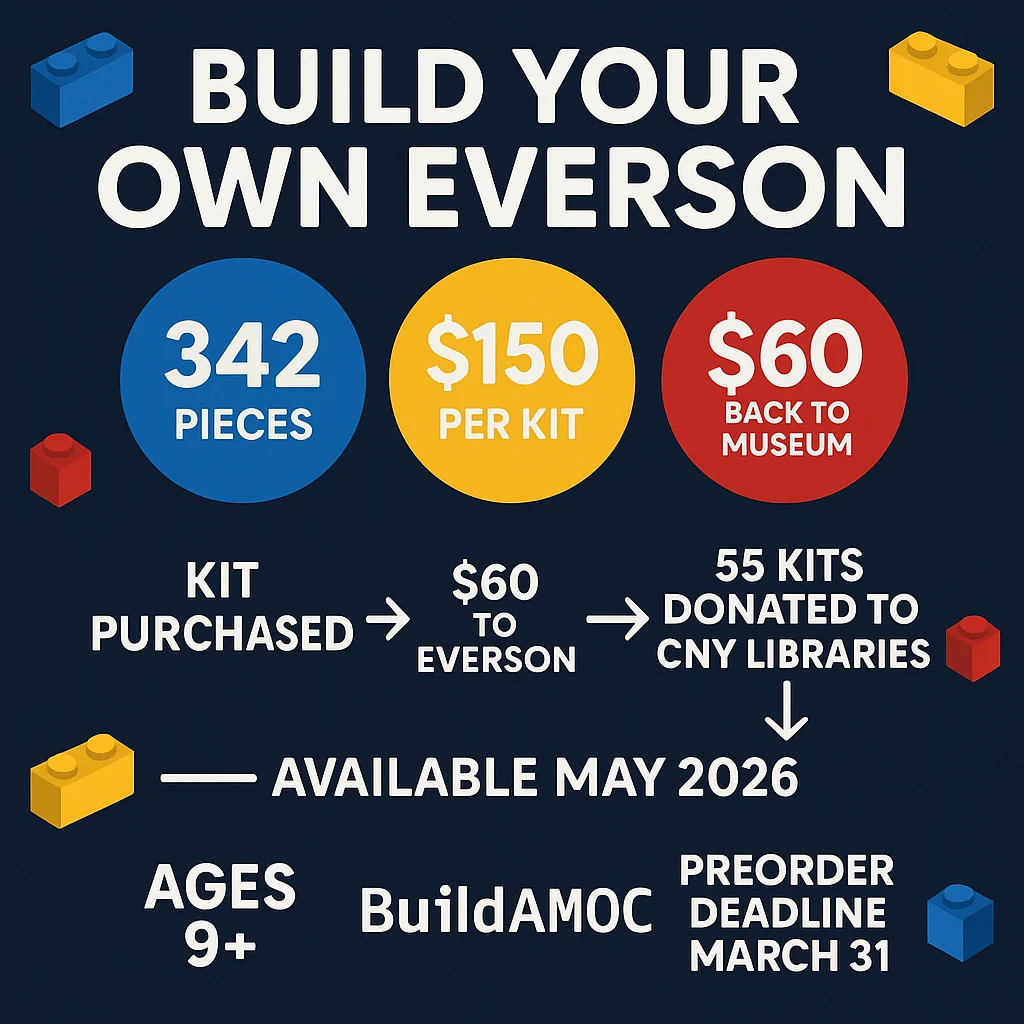
Now, for $150 and a free afternoon, you can build your own.
This story came from public records we pulled ourselves
Get the next one, plus overnight incidents, in your inbox at 6 AM. Free, no spam.
The Everson has released a 342-piece custom Lego kit of I.M. Pei’s 1968 brutalist landmark, and the project says everything about where this museum is heading. It is not a gimmick. It is a strategy, and maybe the clearest sign yet that the Everson understands exactly what a 21st-century regional museum needs to be.
A Building Worth Bricking
The Lego set, designed and packaged by BuildaMOC using authentic repackaged bricks, recreates the museum building and its outdoor courtyard in miniature. The kit is rated for ages nine and up, and the instruction pamphlet doubles as a short architectural education, walking builders through concepts like bush hammering and cantilever beams while telling the story of Pei, the Chinese-American architect who went on to design the Louvre Pyramid in Paris, the National Gallery of Art East Wing in Washington, and the Rock and Roll Hall of Fame in Cleveland.
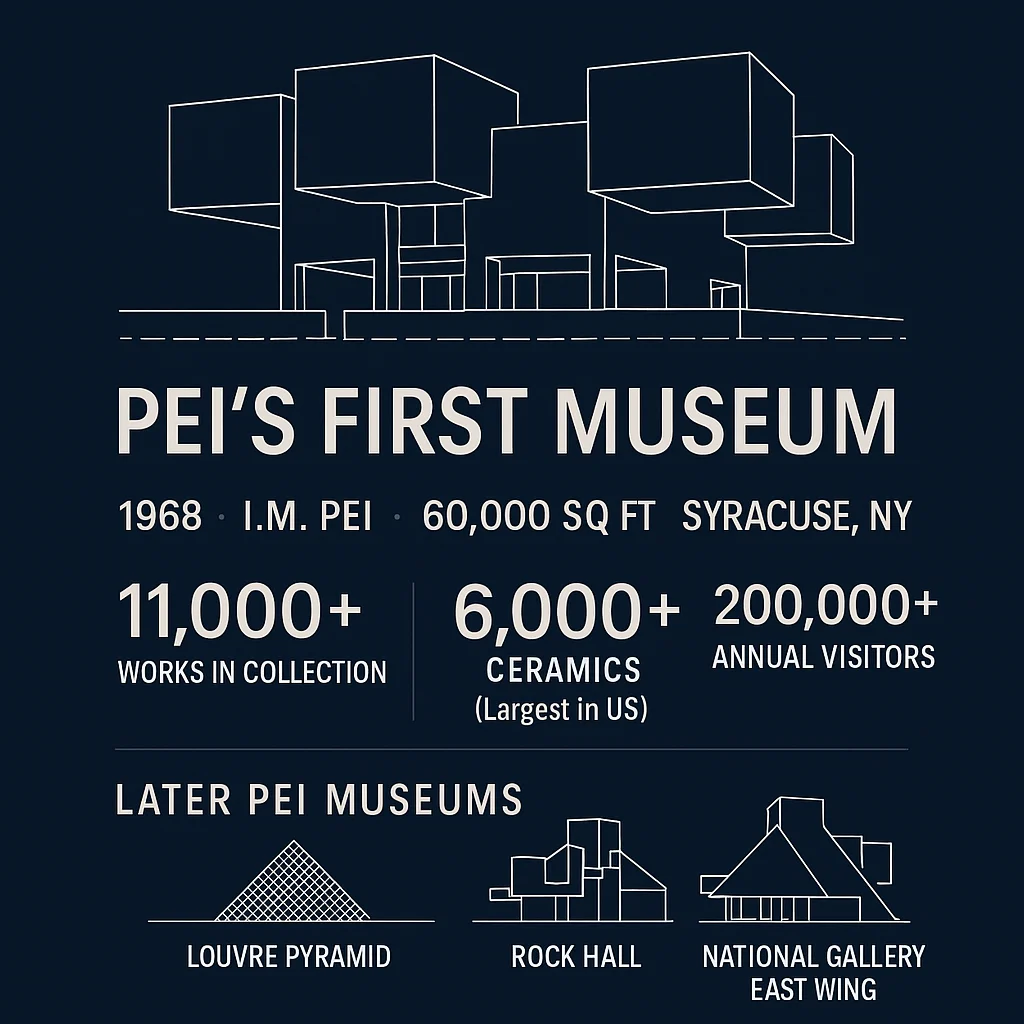
What most people outside Syracuse do not realize is that the Everson was Pei’s very first museum commission. He was selected in 1960, considered a wildcard choice at the time, a young architect with zero museum experience who worked primarily in concrete, which happened to be cheap. The building fund traced back to a $1 million bequest from Helen Everson in 1941, and the budget was tight. Pei delivered a 60,000-square-foot structure of poured-in-place concrete and local granite, with four cantilevered gallery volumes that seem to float above the street. The aggregate in the concrete walls was chosen for its warm, reddish-brown tones, giving a building that could have felt cold a surprising warmth, especially when late-afternoon light rakes across its textured surfaces.
Syracuse got there first. The Louvre came later.
From Library Shelf to Living Room
The idea came from the Everson’s director of learning and engagement, after watching a group of kids playing with toys at a library outreach event. Central New York library systems had started circulating “unusual items” collections that included Lego kits, and it clicked: what if the museum itself could become one?
More than 55 sets will be donated to library systems across the region, Onondaga County Public Libraries, Northern Onondaga Public Library, the North Country Library System, and Syracuse University’s King + King Architecture Library. Those kits will be available for checkout by the end of May. The Everson is keeping additional sets for its own classes. For every $150 kit sold through preorder, the deadline is March 31, $60 goes directly back to the museum.
The Bigger Play
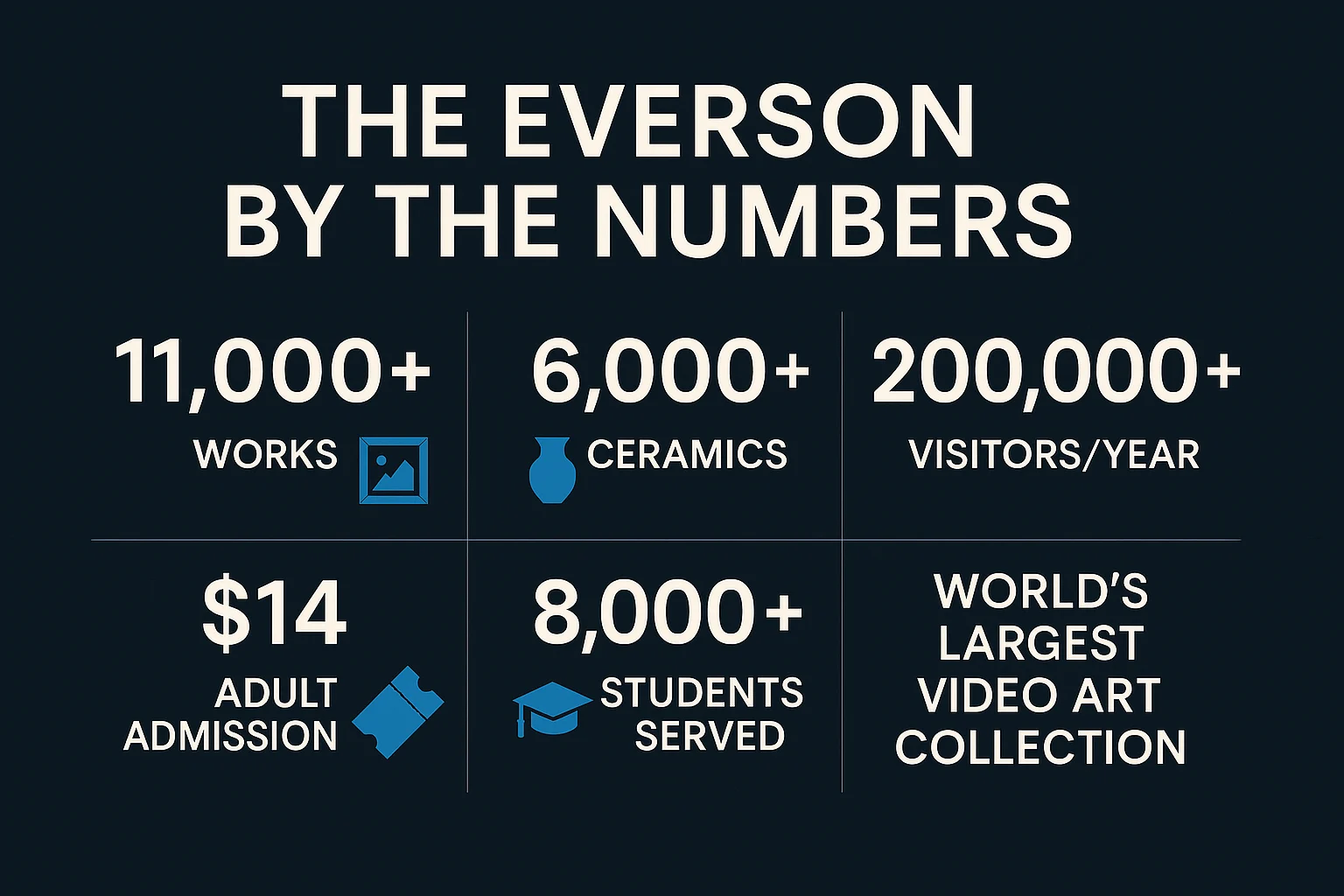
The Lego kit is the most visible piece of something larger happening at the Everson. In 2025, CenterState CEO named the museum one of its Economic Champions, recognizing the institution for driving Syracuse’s growth through inclusive programming, community partnerships, and cultural experiences. The Everson reports more than 200,000 visitors annually, a remarkable throughput for a city of Syracuse’s size, and the programming slate explains why.
Right now, the galleries hold a formidable roster. Deborah Roberts: Consequences of Being brings together large-format paintings, works on paper, and, for the first time in Roberts’ career, ceramic sculpture. Roberts, who earned her MFA at Syracuse University, uses collage to interrogate how identity gets fragmented and rebuilt. Joyce Kozloff: Contested Territories, 1983-2023 surveys four decades of work from one of the Pattern and Decoration movement’s founding figures. Laurent Craste: Iconoclasts marks the American museum debut for the French-born Canadian ceramist.
Then there is the CNY Artist Initiative, launched in 2022, which awards four regional artists solo exhibitions each year. The 2026 cohort includes fiber artist Ann Clarke, whose large-scale wall-mounted rugs open April 4, and Renqian Yang, whose work on duality and displacement opens June 13.
The Permanent Collection, and Why It Matters
Beneath the rotating exhibitions sits the reason the Everson punches far above its weight class: a permanent collection of roughly 11,000 works, anchored by one of the largest holdings of international ceramics in the United States. The museum’s ceramics program dates to 1916, when it acquired 32 works by Adelaide Alsop Robineau, the Syracuse-based studio potter whose Scarab Vase, carved over an estimated 1,000 hours, won first prize at the 1911 Turin International. The Everson holds more than 100 Robineau pieces today.
In a characteristically creative move, the museum partnered with Budmen Industries to produce a 3D-printed replica of the Scarab Vase, displayed alongside the original so visitors can actually touch it, the first time anyone has been able to handle the vase’s intricate excised scarab beetle design in 115 years. The scanning process itself became a story: conventional methods failed because the vase’s interplay of glazed and unglazed surfaces scattered light unpredictably. Budmen’s team ultimately cracked it by scanning in total darkness inside the museum’s auditorium.
The permanent collection runs deep beyond ceramics, paintings by Jackson Pollock, Helen Frankenthaler, Gilbert Stuart, and Edward Hicks, plus what the museum describes as the world’s largest video art collection. The Everson founded the Ceramic National exhibitions in 1932, which for 40 years stood as the most prestigious juried ceramics show in the country.
Go
The Everson Museum of Art is at 401 Harrison Street in downtown Syracuse. Admission is $8 for adults; free for members and children under 12. The museum hosts free community days throughout the year. Pei designed the interior circulation to loop visitors through the galleries without dead ends, always returning to a light-filled central atrium, a path that feels, even after dozens of visits, like a small theatrical production.
It is the kind of building that makes you proud it belongs to Syracuse. And now, brick by Lego brick, it belongs to the whole region.
CNY Signal is Central New York’s source for real-time local news, built by and for the people who live here. Tips: [email protected]