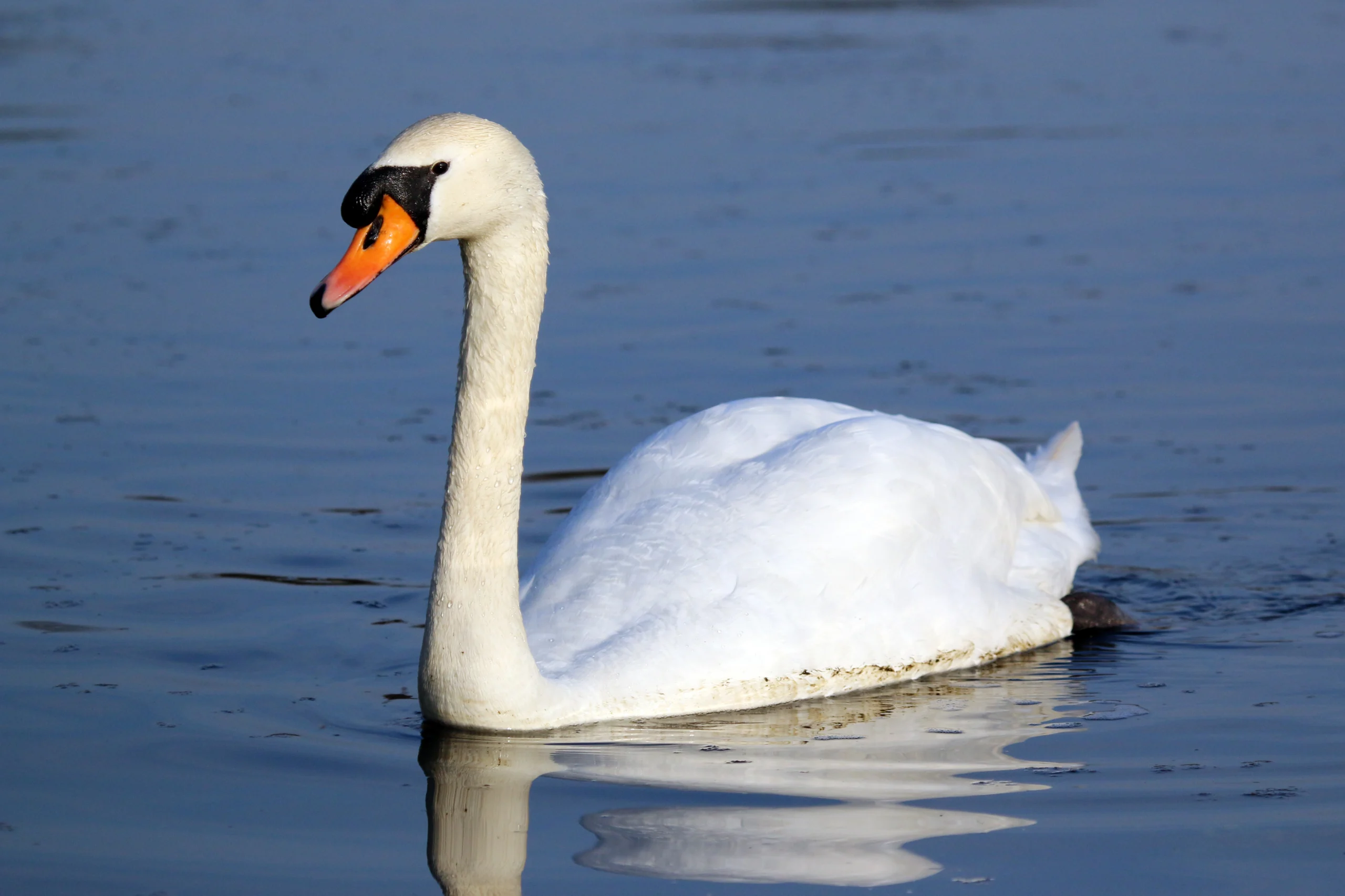

One acre of water at the corner of Fayette and Pleasant. Two pairs of mute swans, by tradition. A bronze plaque. That is the entire footprint of a 120 year old village argument that has now reached the desks of state regulators in Albany, and the village of Manlius is not backing down.
David Seager, the village’s longtime swan caretaker, has a standing piece of advice for the children who lean over the iron fence on a Sunday afternoon. Watch them, do not touch them. The males will bite. He has been giving that warning for years, and the cygnets keep arriving anyway, hatching after Memorial Day and growing out through October and November before the cold drives the family into the shelter the village maintains on the pond’s north edge. That was the rhythm of life on the pond for more than a hundred springs in a row. It broke on the Memorial Day weekend of 2023.
Three Syracuse residents, an 18 year old named Eman Hussen along with a 16 year old and a 17 year old, climbed the fence after dark. They took the adult female swan and her four cygnets. They decapitated the female, brought her to a relative to cook, and planned to keep the babies as pets. Police later said the teenagers had been out hunting and believed they were shooting ducks. The Town of Manlius Police Department recovered the four cygnets alive within days. The female, named Faye by the village, was not coming back.
This story came from public records we pulled ourselves
Get the next one, plus overnight incidents, in your inbox at 6 AM. Free, no spam.
What happened next still surprises the people who run the village. Flowers piled up against the iron pickets. Schoolchildren left drawings. A handwritten note told Faye to rest in grace, and the message stayed taped to the fence for weeks. The Associated Press, NBC News, CBS, and CNN sent crews. A village of roughly 4,500 residents, sitting inside a Town of Manlius of about 33,000, ended up on the front page of the national feed for an entire week. Mary Sue Burgwin, a Manlius resident interviewed at the pond, told the cameras that three generations of her family had taken Sunday drives to feed the birds. That kind of detail does not show up in DEC correspondence. It is the entire reason the DEC fight exists.
Mayor Paul Whorrall, whose office holds more than two dozen swan figurines that visitors have given him over the years, addressed the village board within days of the arrests. He told the trustees, on the record, “We will not let three ruthless and despicable individuals dictate how our village operates. The village will continue to make the swan pond home for the swans because it is a symbol of our community and has been a staple for over 100 years.” That was not just a statement. Within weeks the village had a 24 hour livestream camera trained on the water, taller fencing, motion lighting around the perimeter, and a nighttime curfew on the pond’s footpath.
The four orphaned cygnets came home on July 17, 2023. The reunion did not go the way anyone wanted. Manny, the adult male and Faye’s longtime mate, turned on the young birds almost immediately. He attacked one of them. The village had to pull him out and ship him to Pennsylvania, where a private caretaker took him in. Whorrall told reporters at the time that the rejection was not a shock. “We were pretty much aware that he probably wasn’t going to accept them,” the mayor said. A week later, on July 24, 2023, the village announced the names that area schoolchildren had submitted for the four cygnets. The females became Faith and Fayette. The males became Noa, after the village of Minoa next door, and Lius, after Manlius itself. The names were chosen by the children of the F-M school district. There was no formal ceremony. Cygnets do not wait on press events.
The court case ground forward at a different pace than the news cycle. On February 15, 2024, Eman Hussen was sentenced to three years of probation and 45 hours of community service. There was no restitution. His defense attorney, Jeremy Cali, told the court that this was a clash of cultures, that his client’s family had fled genocide in Burma and that the young man had no concept of what a swan was, let alone what a village swan meant. Mayor Whorrall, asked by a reporter outside the courtroom, did not bother with diplomacy. “To say that I’m not satisfied is probably the best statement,” he said. The two juvenile defendants were processed through the youth court system and their cases never moved into public view.
The pond itself sits on roughly one acre at the corner of Fayette and Pleasant streets, a short walk from the Fayetteville-Manlius commercial corridor and the Erie Canalway. The water came to the village from the Cheney family, who ran the S. Cheney and Son gray iron foundry that anchored the local economy from roughly 1880 until the postwar period. The foundry, established in 1866 and formally incorporated in 1907, donated the first pair of swans in 1905 and sold the pond itself to the village in 1952. The price on the deed was one dollar. Chris Sherwood of the village Department of Public Works put the result in plain terms when a reporter visited the pond in 2023: “There’s not a village street you go down where there’s not a swan or a decoration.” The bird is on the welcome signs, on the trash cans, on the storefronts. It is the village.
None of that history matters to the New York State Department of Environmental Conservation, and on the agency’s reading of state law it should not. Mute swans (Cygnus olor) are not native to North America. The species was introduced from Europe to ornamental ponds in the late 1800s and is classified as invasive by the state, with a formal management plan dating to 2014. Wild populations displace native waterfowl, tear up submerged vegetation, and aggressively defend territory in ways that compromise cattail marshes and shallow lake margins. The DEC’s preferred outcome is for existing managed populations to age out without producing new offspring. In 2024 the agency told Manlius that the four swans on the pond would be barred from reproducing after December 31, 2025. The village had two paths: keep all four and sterilize them, or keep only two of the same sex. Either path ends Sunday cygnet season.
The village board voted to fight, and the village did not fight alone. State Senator John Mannion, who represents the Manlius area, took the case directly to the DEC. His argument was simple and procedural. The Manlius swans live inside a fenced, one acre municipal pond. They do not interact with wild waterfowl. They do not damage wetlands. They serve a documented civic and educational purpose, including school visits and an annual swan walk. In September 2024 the DEC granted a one year extension on the reproduction deadline, which was the first concession the agency had made in the case. In November 2024 the village filed its 2025 mute swan permit application, formally requesting authorization to keep the two adult males and two adult females and to continue the program. Whorrall described the agency’s preferred non-lethal mitigation, wing clipping, as roughly comparable to trimming a human’s fingernails. The village’s annual pond maintenance budget has roughly tripled since 2022, according to figures reported in board meeting summaries. That is what a permit fight costs when nobody on the village side wants to surrender.
A Manlius resident named Martha Ballard Lacy spent every day from April 1, 2023 to April 1, 2024 walking to the pond. She brought a camera. She kept notes. On May 31, 2024 a 30 page hardcover called “Manlius Mute Swans” arrived at her door, self published, $35 a copy. The book covers Faye and Manny across a full year, the cygnets’ arrival in late May 2023, the panic of Memorial Day weekend, the empty pond, the rebuilt nest, the court dates. It is, as far as anyone can tell, the only book that exists on the subject. The Eagle News Online story on her project ran in June 2024 and did not need to argue for the book’s importance. The book existed. The village existed because the swans existed. Lacy walked to the pond every day for a year. That is what residents do here.
Look at the pond on a Saturday afternoon in May and the picture is the same as it was in 1965, with three small adjustments. A camera bracket bolts into one of the iron pickets. A motion light is mounted to the fascia above the shelter. A small bronze plaque sits near the pond’s north edge, the size of a paperback. The plaque marks the place where Faye lived. Visitors usually do not notice it on a first pass. The cygnets, when they come, hold the eye.
The story of the Manlius swans is also a story about how small villages keep their identity when the mass-market suburb is the default product for sale on the Fayetteville-Manlius corridor. Strip away the swans, the Erie Canal aqueduct, the Limestone Creek waterfalls, and the brick storefronts at Seneca and Fayette, and a stranger driving through could no longer tell Manlius from any other DeWitt-adjacent zip code. That is the argument the village made to the DEC. It is, also, the argument residents make to themselves every Sunday when they take their grandchildren past the iron fence. Mary Sue Burgwin’s family has been making that walk across three generations. The number of people who have made some version of that walk since 1905 is uncountable, and that, more than anything in the DEC’s correspondence files, is why the village will not let the program end on a regulator’s calendar.
The DEC permit decision for 2026 has not been issued. The two adult pairs are still on the pond. Faith, Fayette, Noa, and Lius are now three years old, full grown, and the next cygnets, if the village gets the permit, will hatch into a pond that has a livestream feed, a curfew, and a plaque. David Seager will still be telling children not to touch the males. Mary Sue Burgwin will still be making her Sunday drive. The bronze plaque does not say much. It just says where Faye lived, and where the pond is, and the rest of the sentence is supposed to be obvious to whoever walks by.