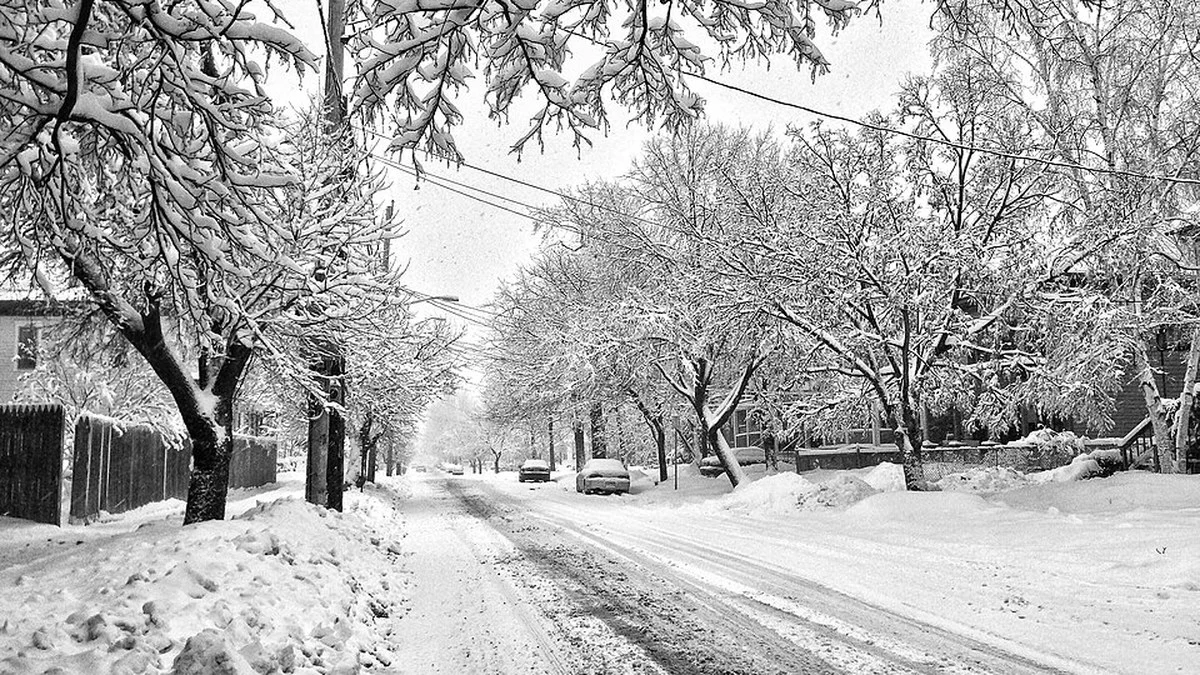
Winter driving in Onondaga County is not one long hazard. It is a sharp, short problem that peaks in January and is mostly finished by the middle of March.
Drivers reported 4,247 crashes on snow, ice or slush covered roads in the county between 2021 and 2024, according to state crash records. January produced 1,279 of them, February 1,143 and December 892. Those three months hold 3,314 crashes, or 78 percent of the winter surface total.
The shoulders drop off fast. March falls to 590, November to 286, and April to 57. For most of the calendar the number is zero, which is why the January figure is worth looking at directly: it is roughly 22 times the April count.
This story came from public records we pulled ourselves
Get the next one, plus overnight incidents, in your inbox at 6 AM. Free, no spam.
November is the warning shot
The 286 crashes recorded on winter surfaces in November are a small share of the season, but they land on drivers who have not driven on snow in eight months and whose tires may still be the ones that finished last winter.
That month also brings the end of daylight saving time, which pushes the evening commute into darkness. Across all causes and all seasons, the county’s crash peak sits in the late afternoon.
The 3 p.m., 4 p.m. and 5 p.m. hours are the busiest of the day for crashes of every type. In November and December those hours are dark, and in January and February they frequently carry snow as well.
The size of the problem
Onondaga County logged 46,596 reported crashes over the four years, so winter surface conditions account for 9.1 percent of the total. The county’s yearly totals were 11,902 in 2021, 12,736 in 2022, 11,113 in 2023 and 10,845 in 2024, a decline of about 9 percent from the 2022 peak.
Snow and ice crashes are concentrated enough in time that a handful of storm days drive most of the annual figure. A single lake effect event that lands during an afternoon commute can produce more crashes than a quiet month.
How road surface breaks down overall
Across the four years, 31,470 of the county’s crashes happened on dry pavement and 9,642 on wet. Snow and ice accounted for 3,960 and slush for another 287. Wet roads produce more than twice as many crashes as snow and ice do, largely because rain falls across far more of the year.
The seasonal shape of all crashes is flatter than the winter surface numbers suggest. December was the busiest month overall with 4,492 crashes, followed by November at 4,451 and January at 4,201. April was the quietest at 3,249. The spread between the busiest and quietest month is about 38 percent, far narrower than the swing in snow and ice crashes.
Lighting shows the same seasonal pressure. Of all crashes in the county, 8,114 happened on dark but lighted roads and 5,199 on dark unlighted roads, with another 1,326 at dusk and 1,119 at dawn.
What the record suggests
The data points to a narrow window where preparation pays. Tires, wipers and washer fluid matter most from the middle of December through February, and the single most dangerous combination in the record is a weekday afternoon in January with snow on the pavement.
New York’s standing winter driving guidance is to increase following distance well beyond the dry pavement rule, to accelerate and brake gradually, and to clear the entire vehicle including the roof before moving. State law also requires headlights whenever wipers are in use.
Sources
- New York State Department of Motor Vehicles, Motor Vehicle Crashes, Case Information: Four Year Window, covering 2021 through 2024, accessed via the New York State Open Data portal.
Averages, percentage changes, medians and per gallon and per tank figures in this article were calculated by CNY Signal from the primary records cited above.