
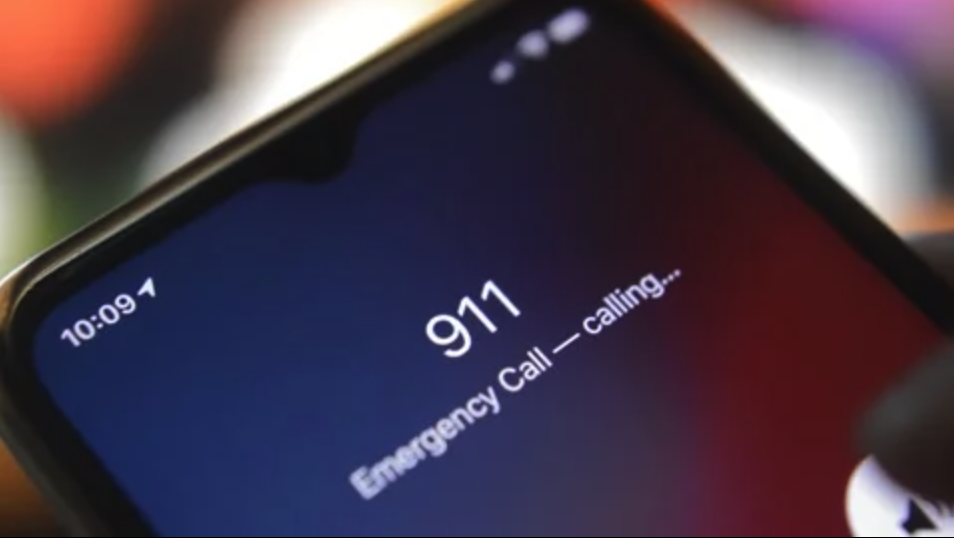
Most People Have No Idea What Happens After They Hang Up
You dial 911. Someone answers. You tell them what’s happening. Help shows up. That’s the version most people carry around in their heads — and it’s wildly incomplete. Between the moment your call connects and the moment a fire truck, ambulance, or patrol car pulls up, a sophisticated system involving dozens of people, multiple computer networks, and a priority framework refined over decades kicks into motion.
Onondaga County’s 911 center handles approximately 350,000 calls per year — about 960 per day. It coordinates responses for the City of Syracuse, 19 towns, 15 villages, and the unincorporated areas of the county. Understanding how it works won’t just satisfy your curiosity — it’ll make you a better caller when it counts, and it’ll help you understand what platforms like CNY Signal are actually monitoring when we report on emergency response activity.
Step 1: Your Call Connects
When you dial 911 from anywhere in Onondaga County, your call is routed to the Onondaga County 911 Center, which operates 24/7 out of a secured facility. The center is staffed by trained emergency dispatchers — formally called Public Safety Telecommunicators — working in shifts that typically run 12 hours.
If you call from a landline, the system automatically displays your address. If you call from a cell phone, it’s more complicated. The FCC’s Enhanced 911 (E911) requirements mean your carrier must provide location data, but the accuracy varies. Cell tower triangulation can put you within 300 meters, which in Syracuse could mean the difference between Westcott Street and Euclid Avenue. GPS-equipped phones provide better accuracy (within 50 meters typically), but the signal has to be strong enough to transmit. Inside a building, it often isn’t.
That’s why dispatchers always ask “Where are you?” even though they may already have location data on their screen. They’re confirming. Don’t skip the question.
Step 2: Call Triage — What the Dispatcher Asks and Why
The dispatcher’s first job is to determine three things as fast as possible: Where is the emergency? What is happening? Who needs help?
Dispatchers in Onondaga County use a structured protocol system for medical calls called Emergency Medical Dispatch (EMD), developed by the International Academies of Emergency Dispatch. It’s a standardized set of questions and instructions organized by complaint type — chest pain, breathing problems, falls, traffic accidents, etc. Each protocol guides the dispatcher through the right questions in the right order and generates a response code.
For fire and police calls, the process is similar but less rigidly scripted. The dispatcher gathers key information — location, nature of the incident, whether weapons are involved, whether anyone is injured, whether the situation is still active — and assigns a priority level.
Here’s the part people don’t expect: the dispatcher may keep you on the line and ask questions that feel frustrating while you’re panicking. “Is the person conscious?” “Is there smoke or flames visible?” “What direction did the vehicle go?” These aren’t delays — the dispatcher is almost certainly already typing the call into the system and units may already be en route while they’re still talking to you. The questions help responders prepare for what they’re walking into.
Step 3: The CAD System — How Calls Become Dispatches
As the dispatcher enters information, it goes into the Computer-Aided Dispatch (CAD) system. This is the nerve center of emergency response — a specialized software platform that tracks every active call, every available unit, and every response in real time.
Onondaga County’s CAD system does several things simultaneously:
- Geocodes the location — plots the call on a map and determines which jurisdiction it falls in (City of Syracuse, Town of DeWitt, Village of Liverpool, etc.).
- Identifies the correct responding agencies — based on the location and call type, the CAD recommends which fire department, police agency, and ambulance service should respond. Syracuse has its own fire and police departments, but the suburban towns are served by a patchwork of volunteer fire departments, paid departments, and contracted ambulance services.
- Assigns a priority level — calls are categorized by severity. The specific codes vary by agency, but the general framework looks like this:
Dispatch Priority Levels
| Priority | Description | Examples | Target Response |
|---|---|---|---|
| Priority 1 (Emergency) | Immediate threat to life or major property | Cardiac arrest, structure fire, active violence, serious MVA with entrapment | Lights and sirens, immediate dispatch |
| Priority 2 (Urgent) | Serious but not immediately life-threatening | Chest pain (conscious/breathing), residential alarm, domestic dispute | Expedited response |
| Priority 3 (Routine) | Non-emergency requiring response | Minor fender-bender, property crime report, welfare check | Response when available |
| Priority 4 (Low) | Administrative or delayed response acceptable | Past-tense property crime, parking complaint, noise complaint | Queued, may be handled by phone |
Priority 1 calls get units rolling immediately — sometimes before the dispatcher has even finished gathering information from the caller. A cardiac arrest call, for example, will trigger automatic dispatch of the nearest ambulance and fire engine within seconds of the address being entered.
Step 4: Radio Dispatch — Talkgroups and Channels
Once the CAD system identifies the right units, the dispatcher broadcasts the call over the radio. Onondaga County operates on a digital trunked radio system — specifically, a Project 25 (P25) system that allows multiple agencies to share infrastructure while maintaining separate operational channels called talkgroups.
Here’s how the talkgroups break down:
- Syracuse Fire dispatch — carries all fire and EMS dispatches within the City of Syracuse. When you hear a fire truck leave a station, this is the channel that sent it.
- Syracuse Police dispatch — patrol dispatches within city limits, organized by patrol sector (the city is divided into geographic sectors, each with assigned patrol units).
- County Fire dispatch — covers the volunteer and paid departments in the towns and villages outside the city. When a house fire in Camillus or a car accident in Cicero gets dispatched, it goes out on this channel.
- County Sheriff dispatch — Onondaga County Sheriff’s Office patrol and investigative communications.
- EMS dispatch — ambulance and paramedic unit dispatches for the suburban areas served by AMR (American Medical Response) and other contracted ambulance providers.
- Interoperability channels — shared channels that let different agencies talk to each other during multi-agency incidents. A major MVA on I-81, for example, might involve Syracuse Fire, State Police, AMR, and the county sheriff all needing to coordinate — interop channels make that possible.
The P25 digital system replaced the old analog system over the past decade. It provides clearer audio, encrypted channels for sensitive communications (tactical law enforcement, for example), and better coverage across the county’s varied terrain — from downtown high-rises to the rural hills south of Tully.
This radio infrastructure is part of what CNY Signal monitors. When we report that fire units are responding to an incident on James Street or that there’s heavy EMS activity on the south side, we’re drawing from the same dispatch data that moves through this system.
Step 5: Units Respond
When a unit is dispatched, the crew receives the call information on their Mobile Data Terminal (MDT) — a ruggedized computer mounted in the vehicle — and over the radio. The MDT shows the address, call type, priority, any notes from the dispatcher, and a map route.
For fire calls in the City of Syracuse, the SFD operates 11 engine companies, 5 ladder companies, and 2 rescue companies out of fire stations spread across the city. The target response time for Priority 1 fire calls in Syracuse is 4 minutes for the first-arriving unit, and SFD meets that benchmark about 80% of the time according to their most recent annual report. In practice, response times are fastest downtown (2-3 minutes) and longest in the outer neighborhoods and annexed areas (5-7 minutes).
For police, the Syracuse Police Department targets a Priority 1 response of under 5 minutes. Actual averages run closer to 6-7 minutes across the city, with significant variation based on how many patrol units are available in a given sector at a given time. Friday and Saturday nights, when call volume spikes, responses slow.
EMS response times are harder to generalize because they depend on which ambulance service covers the area, how many units are in service, and whether the closest unit is already on another call. For the city, AMR contracts with Onondaga County for primary 911 ambulance service. Rural areas of the county can see longer response times — 15-20 minutes is not uncommon for a call in the southern hills near Fabius or Pompey.
Step 6: On-Scene and Afterward
When units arrive, the first responder on scene provides a size-up — a quick radio report describing what they see. For a fire, that might be “two-story wood frame, smoke showing from the second floor, side Charlie” (the rear of the building). For a medical call, it’s the patient’s condition. For a police call, it’s a description of the scene and any immediate threats.
This size-up determines whether additional resources are needed. A working structure fire automatically triggers a second alarm — more engines, more ladders, a chief officer. A multi-vehicle accident with injuries may prompt additional ambulances. The CAD system tracks all of this in real time, and dispatchers continuously manage resource allocation to make sure coverage gaps don’t develop elsewhere in the county while units are committed to a major incident.
After the call is resolved, units go “in service” on the radio, signaling to dispatch that they’re available for the next call. The incident data stays in the CAD system and becomes part of the permanent record — it’s eventually used for statistical analysis, response time reporting, and resource planning.
How CNY Signal Fits In
When we launched CNY Signal, one of our core goals was to give the public meaningful visibility into what’s happening with emergency response in their community — in real time, without the noise and speculation of social media.
Our platform monitors dispatch activity, NWS alerts, traffic conditions, and other public safety data streams to present a clear picture of what’s going on across Onondaga County at any given moment. When you see an incident on our live dashboard, it’s because the same dispatch infrastructure described in this article generated the data.
We report what we can confirm. We provide context. And we respect the limitations — not everything that goes out over dispatch should be public in real time. Sensitive law enforcement operations, juvenile incidents, and medical details are handled with the discretion they require.
How to Be a Better 911 Caller
Knowing how the system works makes you better at using it. Here’s what dispatchers wish every caller knew:
- Know your location. “I’m at home” doesn’t help if your cell phone is pinging off a tower a mile away. Give the street address, or the nearest intersection, or a landmark.
- Stay on the line. Don’t hang up after giving the basics — the dispatcher may need more information, and they can provide life-saving instructions (CPR guidance, how to stop bleeding, when to evacuate).
- Answer the questions. Even if they feel pointless. The dispatcher is building a picture for the responders.
- Don’t call 911 for non-emergencies. Non-emergency police reports can be filed by calling (315) 442-5222 in the City of Syracuse. Noise complaints, parking issues, and past-tense property crimes don’t need 911.
- If you see something serious, call even if you think someone else already did. Multiple calls for the same incident actually help dispatchers — each caller may have seen a different detail.
The 911 system works. It’s staffed by professionals who make life-and-death decisions dozens of times per shift, and it’s backed by technology that’s evolved enormously over the past two decades. Understanding how it functions doesn’t just make you more informed — it makes you more useful when it matters most.