
LIVERPOOL, NY. GiGi’s Playhouse Syracuse, the Cicero-based achievement center that has run free Down syndrome programs out of a converted office suite on Crossroads Park Drive since November 2012, has roughly 60 days to raise $50,000 or it will close, leaders told the more than 250 local families it serves this week.
The two-month window puts an early-July decision point on a small nonprofit whose entire operating model is built on a single rule: families never pay. Therapeutic literacy tutoring, math tutoring, infant playgroups, teen and young adult social clubs, and the LMNOP program for newborns and their parents all run at no cost to participants. When the income side of the ledger shrinks, the programs do not have a sliding scale to fall back on.
This story came from public records we pulled ourselves
Get the next one, plus overnight incidents, in your inbox at 6 AM. Free, no spam.
The fundraising appeal, announced through the Syracuse location’s social channels and confirmed by WSYR-TV on May 13, sets the playhouse apart from most Central New York nonprofit closures of the past three years. There is no rent dispute, no leadership turnover, no scandal. The numbers simply stopped balancing after a stretch of post-pandemic donor fatigue and the loss of two corporate sponsorships that together covered close to a quarter of annual operating expenses.
What Closes If The $50,000 Does Not Land
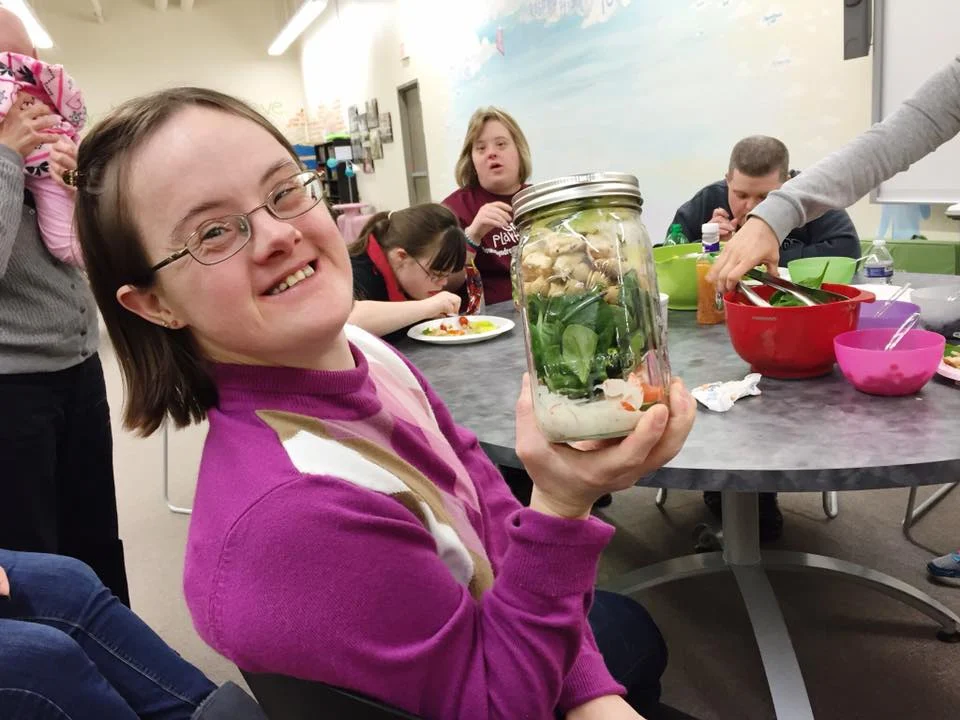
The Syracuse location runs 13 standing programs across its calendar year. Among them are GiGiFIT (a fitness curriculum for participants of all ages), Hugs and Mugs (a vocational job-skills cafe simulation for teens and adults), Lit Lab and Math Matters (one-on-one academic tutoring), and the Cara Mia program for young adults aged 18 and up. The infant offering, called LMNOP, exists specifically because the first year after a Down syndrome diagnosis is when families most often report isolation and information gaps. None of those services duplicate what is provided by Onondaga County Early Intervention, the Syracuse City School District committee on special education, or Upstate Golisano Children’s Hospital. They sit in the gap that exists between clinical care and family life.
If the doors close in July, the closest GiGi’s Playhouse is in Rochester, roughly 90 miles west on the New York State Thruway. The next nearest is in Buffalo, a 160-mile one-way trip. For the Onondaga, Madison, Oswego, and Cayuga county families currently driving to Liverpool for weekly programming, neither alternative is logistically realistic on a school-night schedule.
How A No-Fee Nonprofit Loses $50,000
The Syracuse playhouse is structured as a chapter of a national 501(c)(3) headquartered in Hoffman Estates, Illinois, founded by Nancy Gianni in 2003 after the birth of her daughter GiGi, who has Down syndrome. The national organization handles brand standards, curriculum design, and shared back-office systems. Each local site is responsible for its own fundraising and pays a chapter assessment back to headquarters.
In a chapter the size of Syracuse, annual operating expenses sit in the low-six-figure range. Rent on the Crossroads Park Drive office, two part-time staff salaries, program supplies, insurance, and the assessment to the parent organization make up the bulk of the budget. Two recurring revenue lines collapsed during late 2025: an annual corporate gift from a Syracuse-area health insurer that had funded the literacy program for four years, and a smaller sponsorship from a local accounting firm that covered the cost of the Hugs and Mugs supply chain.
The replacement strategy depends on small donors. The local board has set a per-family stretch goal of $50 from each of the 250 enrolled families, plus a 1:1 matching push from a single anonymous donor who has pledged up to $25,000 if the chapter raises the rest by July 4. That math works only if every family contributes and the wider community covers the matching half.
Why The Syracuse Chapter Is Different From The National Brand
GiGi’s Playhouse opened its first site in Hoffman Estates in 2003 and currently operates 59 brick-and-mortar achievement centers across the United States and Mexico. National annual revenue exceeds $20 million, but that figure reflects every chapter combined. The Syracuse chapter, like most outside the Chicago region, runs on a budget of roughly one-half of one percent of the national whole.
That structural reality means the Syracuse situation cannot be solved by an internal transfer from the parent organization. National policy treats each chapter as a stand-alone fundraising unit, and the board has been clear with families that no headquarters bailout is coming. The May 2026 appeal is local, and the deadline is local.
The Syracuse playhouse opened on November 17, 2012, becoming the 12th GiGi’s Playhouse nationally and the second in New York after Rochester. In its 13 years of operation it has graduated children from infant playgroups into the Cara Mia young-adult program, run a Race for Acceptance 5K every September at Onondaga Lake Park, and welcomed visits from Syracuse Crunch hockey players, Syracuse Mets ballplayers, and Le Moyne College student volunteers.
The Local Down Syndrome Population Math
National prevalence data from the Centers for Disease Control and Prevention put Down syndrome births at roughly 1 in every 700 live births. Onondaga County recorded 5,012 live births in 2023, the most recent year for which the New York State Department of Health Vital Statistics report is final. Applied to the four-county footprint of Onondaga, Madison, Oswego, and Cayuga, the math produces roughly 11 to 13 new Down syndrome diagnoses per year regionally, and a standing population of school-age and young-adult individuals with Down syndrome estimated in the high three figures.
That is the pool the playhouse serves. The 250-family enrollment figure represents a substantial share of the regional Down syndrome community, which is part of why a closure would create a void no other local provider is positioned to fill on short notice.
Comparable Closures Are A Pattern
In the past 24 months, three Central New York nonprofits with similar budget profiles have closed or reorganized: a sensory-friendly arts program in Manlius wound down in 2024 after losing a single major grant, a pediatric therapy cooperative in Camillus suspended operations in 2025 after a building lease dispute, and a special-needs summer camp in Cazenovia merged with a larger downstate operator in early 2026. The GiGi’s appeal lands in a sector that has been visibly contracting.

How Families Can Help
The Syracuse chapter accepts donations through its national portal at gigisplayhouse.org/syracuse, by mailed check to its Crossroads Park Drive address, and through a Facebook fundraiser pinned to the GiGi’s Playhouse Syracuse page. The board has stated publicly that monthly recurring donations of as little as $10 are valued over one-time large gifts because they stabilize the operating budget through the second half of the fiscal year.
The Race for Acceptance 5K, which has run every September at Onondaga Lake Park since 2015, is the chapter’s largest single-event fundraiser, typically clearing between $15,000 and $25,000 net of expenses. Registration for the 2026 race is open and is being pushed by the board as a vehicle for new sponsors to commit before the July deadline.
For families in the Onondaga, Madison, Oswego, and Cayuga area whose children attend programs at the playhouse, an organized parent network is also recruiting volunteers to staff weekend hours, which would let the chapter cut a portion of paid staff time in the summer and reduce the recurring monthly spend.
The Bigger Question The Playhouse Is Asking
Beyond the immediate $50,000 question is a longer-term issue the board has begun to raise publicly. Free programming for children and adults with developmental disabilities is structurally difficult to fund in a market where state and county special-education dollars flow primarily through schools, not community nonprofits. The Syracuse chapter has spent more than a decade demonstrating that a no-fee, family-centered achievement model produces measurable gains in literacy, math, and social skills, but it has never had a stable institutional revenue source to match the impact.
Local advocates are using the current fundraising appeal to begin a conversation with the Onondaga County Department of Children and Family Services and the New York State Office for People With Developmental Disabilities about a contracted-services line that could fund a portion of the playhouse’s programming on a multi-year basis. Whether that conversation produces a path to longer-term stability is a separate question from whether the lights stay on through the summer.
For now, the math is simple: $50,000 in 60 days, or the 13-year experiment in free Down syndrome programming in Central New York closes.
Sources & Verification
- WSYR-TV NewsChannel 9: “GiGi’s Playhouse Syracuse needs $50,000 to keep doors open,” May 13, 2026, localsyr.com
- GiGi’s Playhouse Syracuse official chapter page, gigisplayhouse.org/syracuse
- GiGi’s Playhouse national organization (history of network, founder Nancy Gianni biography), gigisplayhouse.org/how-it-began
- GiGi’s Playhouse national locations directory (59 sites), gigisplayhouse.org/locations
- Centers for Disease Control and Prevention, Down syndrome prevalence data
- New York State Department of Health, Vital Statistics 2023, Onondaga County live birth count