Here’s a number that should stop you in your tracks: 10% of students in the Syracuse City School District lack a permanent address.
That’s not a national statistic. That’s here. Syracuse. The kids who go to Nottingham, Fowler, Henninger, Corcoran, one in ten of them doesn’t have a stable place to live. And for a troubling number of those kids, the most basic piece of furniture most of us take for granted, a bed, simply doesn’t exist in their home.
“Hundreds of children in Syracuse are currently sleeping on the floor,” according to Sleep in Heavenly Peace, a national nonprofit with a dedicated Syracuse chapter that has been quietly tackling this crisis since 2018.
Know before your neighbors do
The Morning Signal hits your inbox at 6 AM with everything that happened overnight. Real incidents, real data, zero fluff.
The Scope of the Problem
Child bedlessness is one of those issues that exists in a blind spot. It’s not homelessness in the visible, on-the-street sense. These are kids who have a roof over their heads but lack the most basic furnishing for a decent night’s sleep. They sleep on couches, blankets on the floor, or share mattresses with siblings or parents.
The impact is measurable and cascading:
- Academic performance, sleep-deprived children have lower test scores, higher absenteeism, and more behavioral issues
- Physical health, poor sleep is linked to weakened immune systems and developmental delays
- Mental health, chronic sleep deprivation in children correlates with anxiety and depression
- Self-worth, not having your own bed sends a powerful psychological message to a child about their place in the world
Syracuse Mayor Sharon Owens has spoken directly about the connection: a good night’s sleep is a precondition for a child’s ability to reach their potential. It’s not a luxury. It’s a foundation.
SLEEP IN HEAVENLY PEACE, SYRACUSE CHAPTER
What Sleep in Heavenly Peace Does
Sleep in Heavenly Peace (SHP) operates under a simple motto: “No kid sleeps on the floor in our town.”
The Syracuse chapter, which also covers the Oswego City area, has delivered more than 5,730 beds since its first delivery on October 6, 2018. Each bed is a twin-size wooden frame, hand-built by volunteers, delivered with a mattress, pillow, and bedding set, everything a child needs for a proper night’s sleep.
The process works like this:
- Families apply through the SHP website for children ages 3-17 who need a bed
- Volunteers build bed frames at organized “build day” events
- Delivery teams bring the completed bed, mattress, and bedding directly to the child’s home
- Setup is included, volunteers assemble the bed on-site so the child can sleep in it that night
It’s tangible, immediate, and personal. Volunteers don’t just drop off lumber, they meet the families, set up the beds, and see the child’s reaction.
The SU Build: 116 Beds in One Day
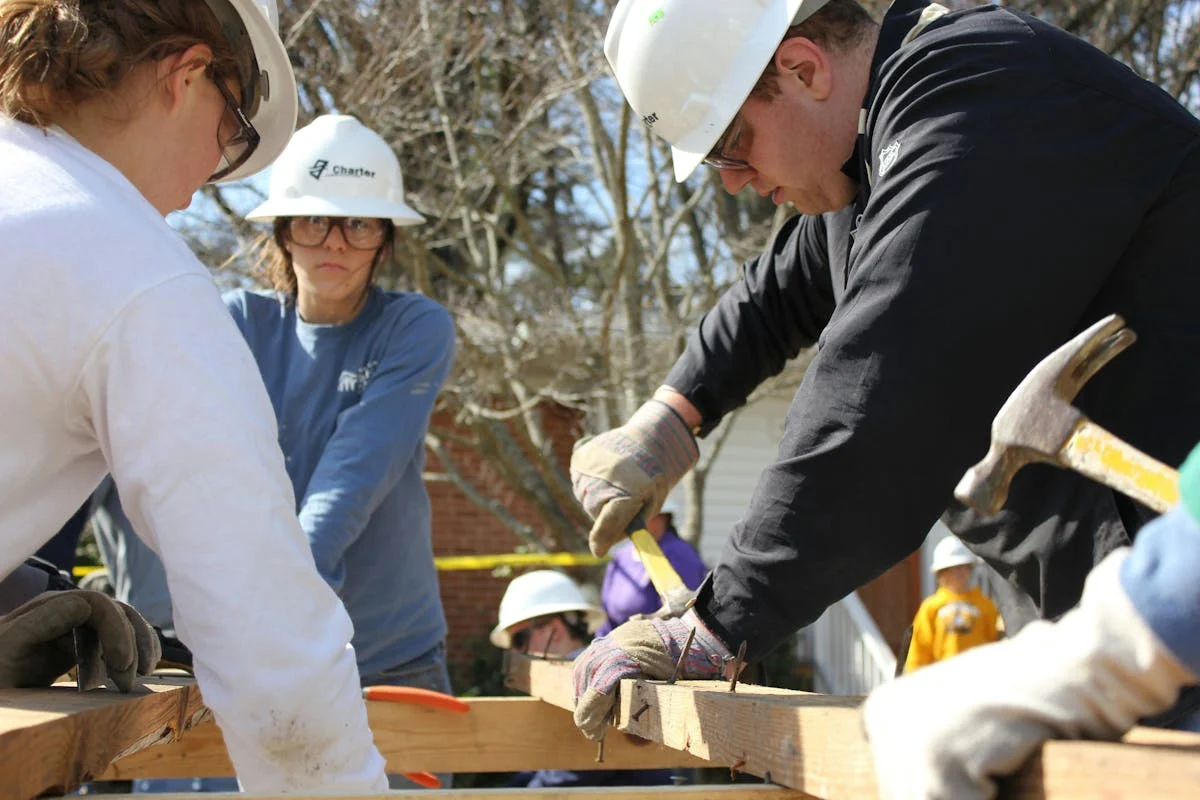
On February 20, 2026, 141 Syracuse University student volunteers gathered at the Skybarn on South Campus for a massive build event organized by the Syracuse University Volunteer Organization (SUVO) in partnership with the Syracuse SHP chapter.
Over the course of two two-hour shifts, students built 116 bed frames, surpassing the goal of 100 and more than doubling what was accomplished during the inaugural university build.
Mayor Sharon Owens stopped by and addressed volunteers, drawing a direct line between a good night’s sleep and a child’s ability to succeed. It wasn’t a photo op, it was an acknowledgment that the city’s leadership understands the scale of the problem.
The Bigger Picture: Child Poverty in Syracuse
The bed shortage is a symptom of a deeper issue. Syracuse has one of the highest child poverty rates among mid-sized cities in the United States. The factors are structural and long-standing:
- Housing instability, families moving frequently due to eviction, rent increases, or unsafe conditions
- Income gaps, median household income in many Syracuse neighborhoods falls well below the county average
- Generational poverty, cycles that are difficult to break without targeted intervention
- Cost of furnishing, even basic furniture represents a significant expense for families living paycheck to paycheck
When 10% of your school district’s students don’t have a permanent address, bed access is just the beginning. But it’s a beginning that can be addressed, right now, by regular people showing up with lumber and a drill.
WHY IT MATTERS
A bed is not a luxury, it’s a baseline. When hundreds of children in your city are sleeping on the floor, that’s a community crisis hiding in plain sight. Sleep in Heavenly Peace’s Syracuse chapter has delivered over 5,730 beds, but the waitlist keeps growing. Every bed built is a child who wakes up rested, goes to school ready to learn, and knows that someone in their community cared enough to build something for them. This is the kind of story that should be front-page news, and the kind of cause that anyone with a free Saturday can help with.
How You Can Help
Sleep in Heavenly Peace makes it straightforward to get involved:
- Volunteer for a build day, no experience necessary; must be 12 or older
- Join a delivery team, help transport and assemble beds in homes
- Donate bedding, twin sheets, pillows, and blankets are always needed
- Make a monetary donation, each bed costs approximately $150-250 to build and deliver
- Request a bed, if you know a child ages 3-17 sleeping on the floor, apply at shpbeds.org
Build days are scheduled regularly, check the Syracuse chapter page for upcoming dates.
The Bottom Line
In a city where 10% of schoolchildren lack a permanent address and hundreds of kids sleep on the floor, Sleep in Heavenly Peace’s Syracuse chapter has delivered over 5,730 beds since 2018. The February build at Syracuse University, 141 volunteers, 116 beds, one day, showed what’s possible when a community decides that no child should go without something as basic as a place to sleep. The need is real, the solution is tangible, and the next build day is always around the corner. Show up.
Sources: Syracuse University News, Sleep in Heavenly Peace, LocalSYR, Mayor Sharon Owens’ office