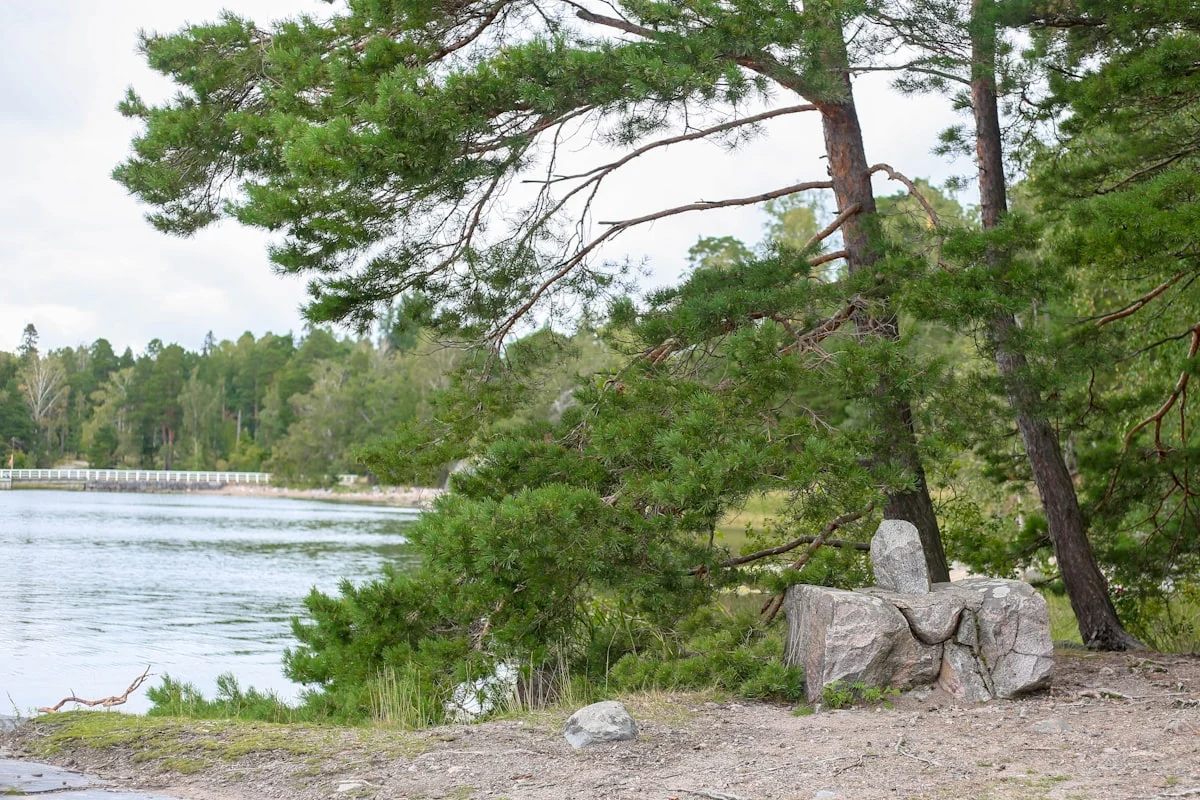
There was a time — not that long ago — when Onondaga Lake was considered one of the most polluted bodies of water in the United States. Industrial waste from the Solvay Process Company and Allied Chemical (now Honeywell International) had contaminated the lake bed with mercury and other toxins for the better part of a century. Swimming was banned. Fishing advisories warned against eating anything you caught.
That story is changing. Slowly, imperfectly, and with significant caveats — but it is changing.
The Cleanup by the Numbers
Honeywell’s remediation of Onondaga Lake, which officially began in 2006, ranks as one of the largest sediment cleanup projects in the United States. Crews hydraulically dredged approximately 2.2 million cubic yards of contaminated sediment from the lake bottom, according to the EPA’s Superfund Site Profile. The dredged areas were then capped with layers of clean material designed to isolate remaining contaminants.
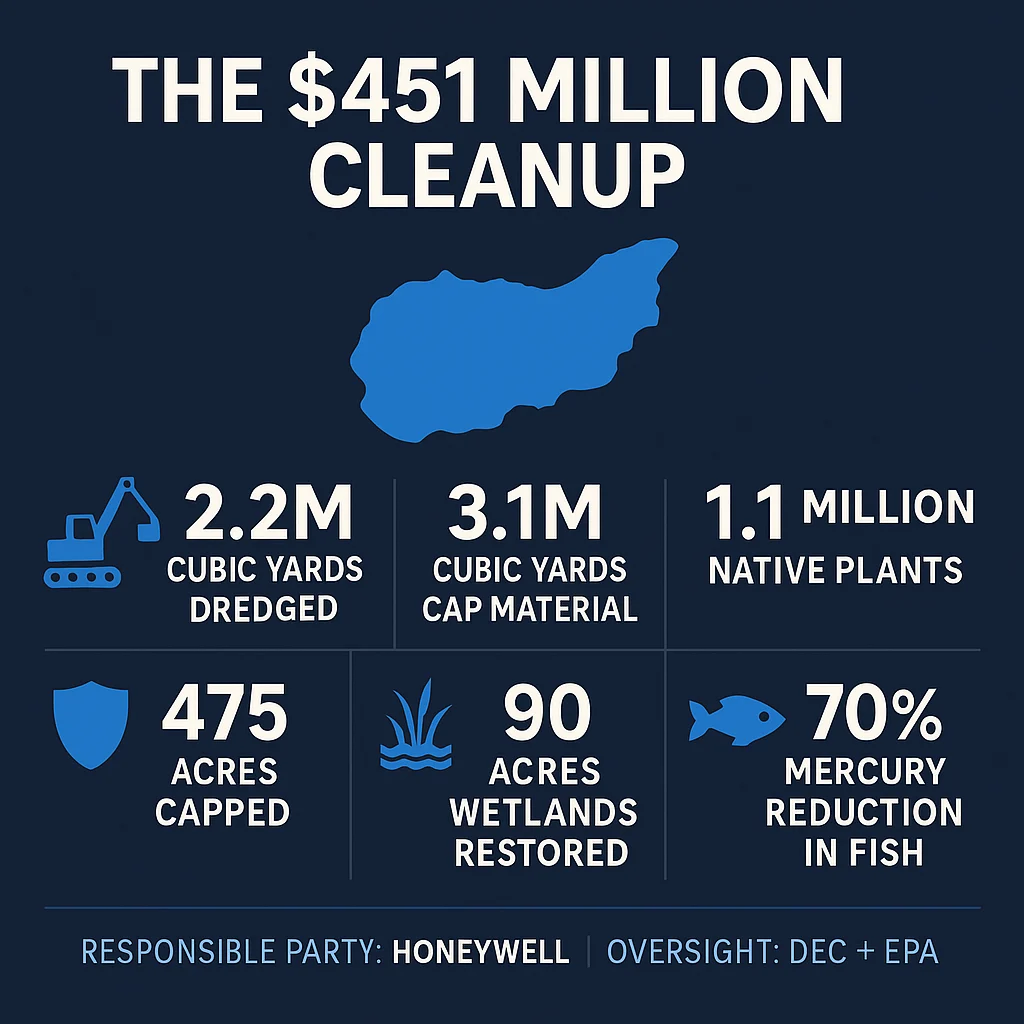
Habitat restoration, a major component of the project, was completed in 2017. More than 1,200 acres were conserved, restored, or enhanced around the lake and its tributaries. The result has been dramatic: more than 250 species of fish, birds, and other wildlife have returned to restored habitat near the lake, according to the New York State Department of Environmental Conservation.
The DEC continues to oversee Honeywell’s ongoing monitoring of the lake-bottom cap under a comprehensive Monitoring and Maintenance Plan developed in coordination with the EPA.
The Visitor Center Comes to New York State
In June 2025, the DEC announced a significant milestone: the transfer of the Onondaga Lake Visitor Center from Honeywell International to New York State. The center, located along the lake’s western shore near the Loop-the-Lake Trail, features displays about the cleanup history, the lake’s ecology, and the watershed restoration process.
The transfer represents Honeywell’s gradual handoff of stewardship responsibilities to state agencies — a sign that the most intensive phase of the cleanup is behind us, even as monitoring continues for decades to come.
Trails, Fishing, and the Return of Recreation
Onondaga Lake Park now offers more than eight miles of scenic trails. The East Shore Recreation Trail, a 2.5-mile paved path popular with cyclists and runners, is the only trail plowed during winter and stays busy year-round. The West Shore Trail stretches over four miles along restored wetlands where herons, waterfowl, and bald eagles can be spotted during colder months.
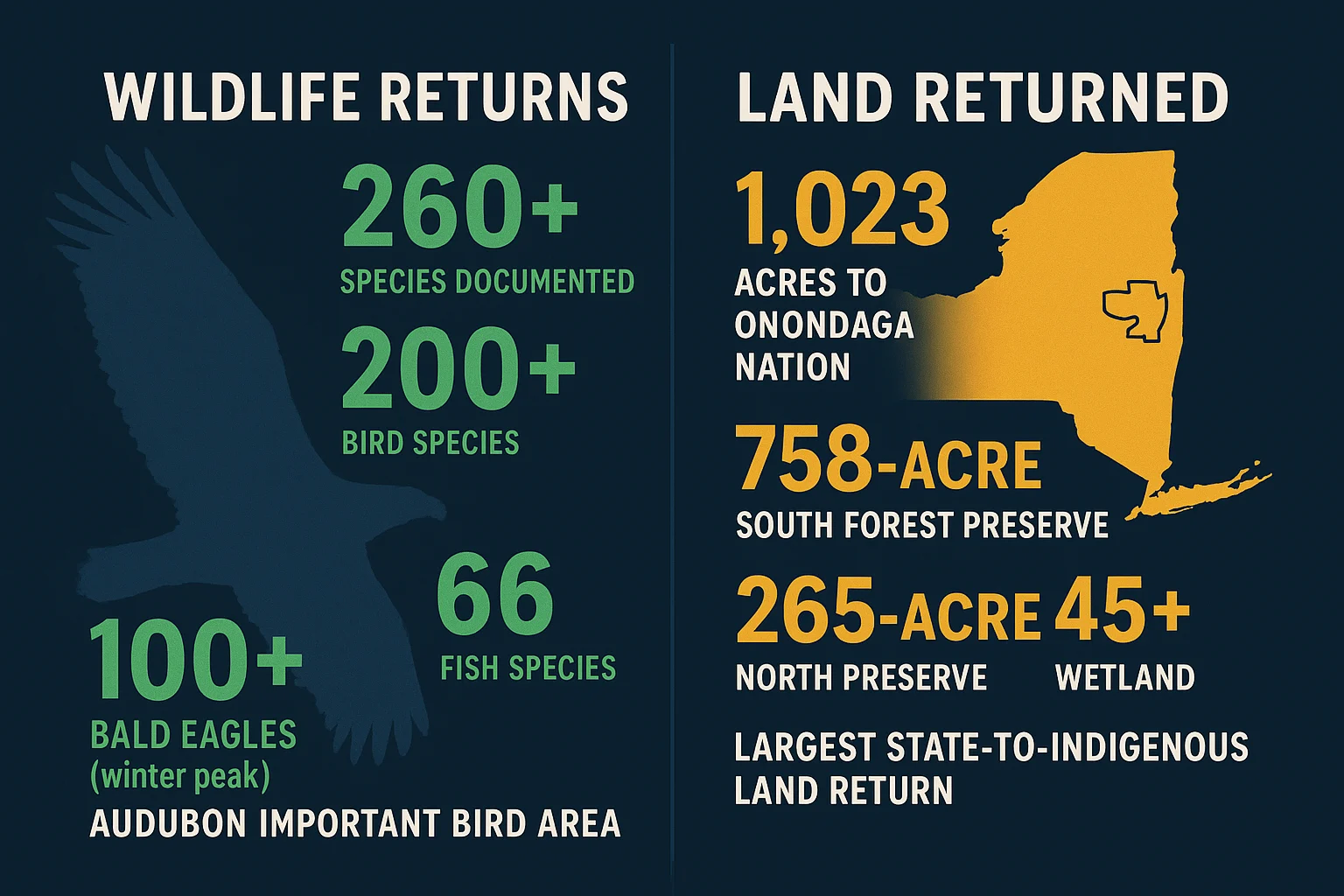
Fishing has made a notable comeback. Species including largemouth bass, smallmouth bass, walleye, northern pike, tiger musky, channel catfish, and black crappie now populate the lake. A universally accessible kayak launch, fishing jetty, and fishing pier along the western shore allow anglers of all abilities to access the water.
The Empower Federal Credit Union Amphitheater at Lakeview, the Empire State Trail connection, and Onondaga County’s Loop-the-Lake Trail have turned the shoreline into a genuine recreational destination — something that would have been unthinkable 20 years ago.
Unfinished Business
The progress is real, but the cleanup is not complete. Several subsites of the Onondaga Lake Superfund area still have active remediation work underway.
At the Willis Avenue subsite, the DEC and EPA have approved a design plan and construction workplan for mercury cleanup. A treatability study evaluating in-situ treatment options was expected to wrap up in 2025. At the Wastebed B/Harbor Brook subsite, negotiations are ongoing for the design and construction of the selected cleanup plan. Honeywell is also investigating contaminated groundwater at Wastebeds 1-8.
The Onondaga Nation has raised pointed concerns about the sufficiency of the overall cleanup. The Nation notes that the remediation plan did not cap the entirety of the lake bottom, that mercury in remaining sediments continues to methylate — converting to a more toxic form — and that the plan sets no goals for making the lake swimmable or fishable without advisories.
Perhaps most troubling: Honeywell is required to catch and sample fish annually to verify the cleanup’s effectiveness, but due to laboratory errors and bureaucratic delays, fish caught after 2018 have still not been tested, according to the Onondaga Nation.
Land Returned to the Onondaga Nation
In a historic development tied to the natural resource damage settlement, more than 1,000 acres of ancestral homeland in Central New York’s Tully Valley were transferred to the Onondaga Nation for protection, restoration, and caretaking. The U.S. Fish and Wildlife Service and DEC, acting as Natural Resource Trustees, finalized the restoration plan addendum that made the transfer possible.
Onondaga Lake holds deep spiritual significance for the Onondaga Nation. The Haudenosaunee (Iroquois) Confederacy was founded on its shores centuries before European contact. The lake’s contamination — and its slow recovery — carries weight far beyond environmental science.
The lake isn’t pristine. It may never be. But on a spring morning, when the sun hits the water along the West Shore Trail and a great blue heron lifts off from the restored wetlands, it looks a lot more like the lake Syracuse deserves than the one it had.