By Jen Okafor, Staff Reporter
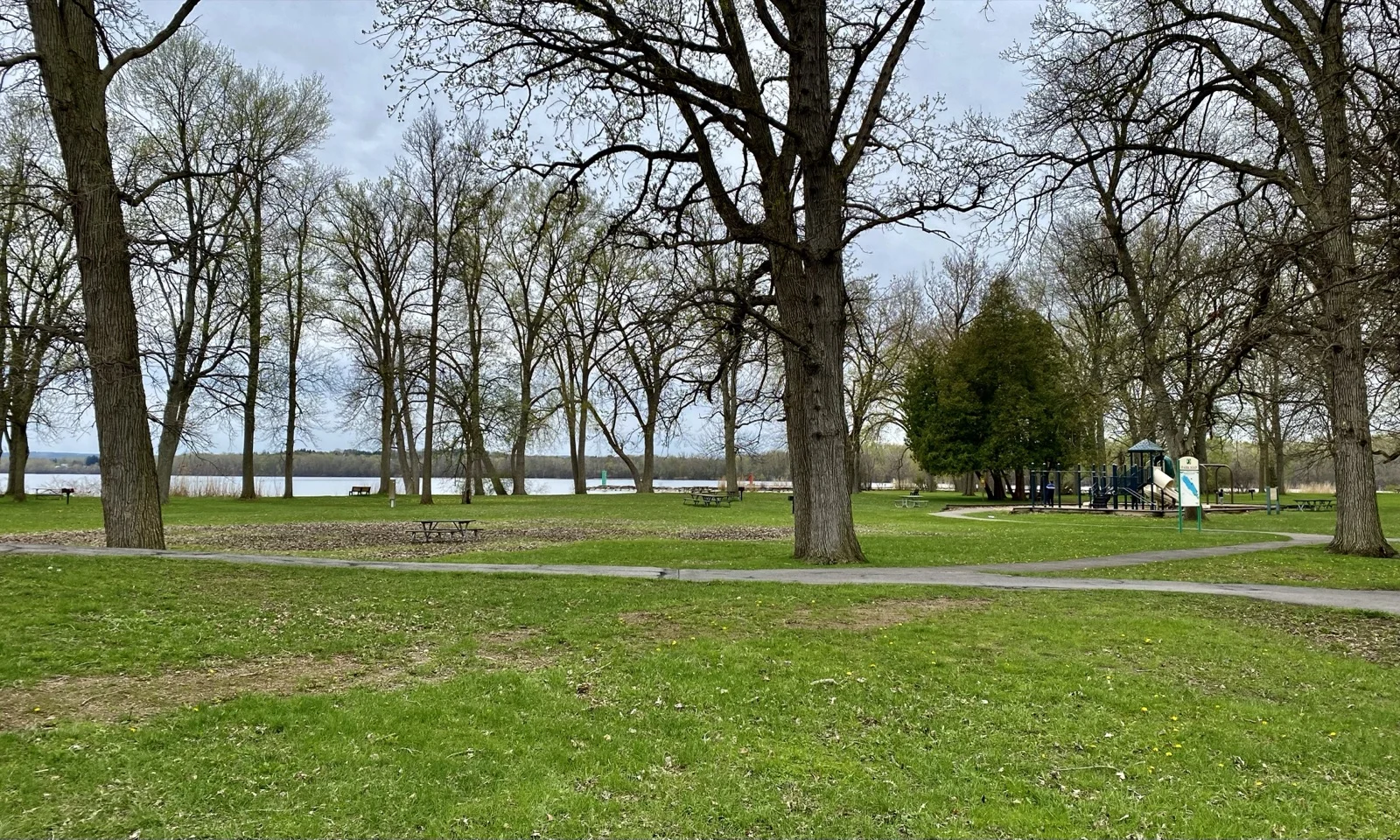
LIVERPOOL. Stand on the West Shore Trail at sunset and the lake in front of you reads like a contradiction. The water that once carried 165,000 pounds of mercury now reflects the wings of bald eagles. A 6.3-mile paved path runs along a shoreline that, two generations ago, the state told people to stay away from. Onondaga Lake Park draws more than one million visitors a year, and the story of how that happened spans 93 years, $451 million in cleanup work, and a re-told history that no longer centers a French Jesuit fort.
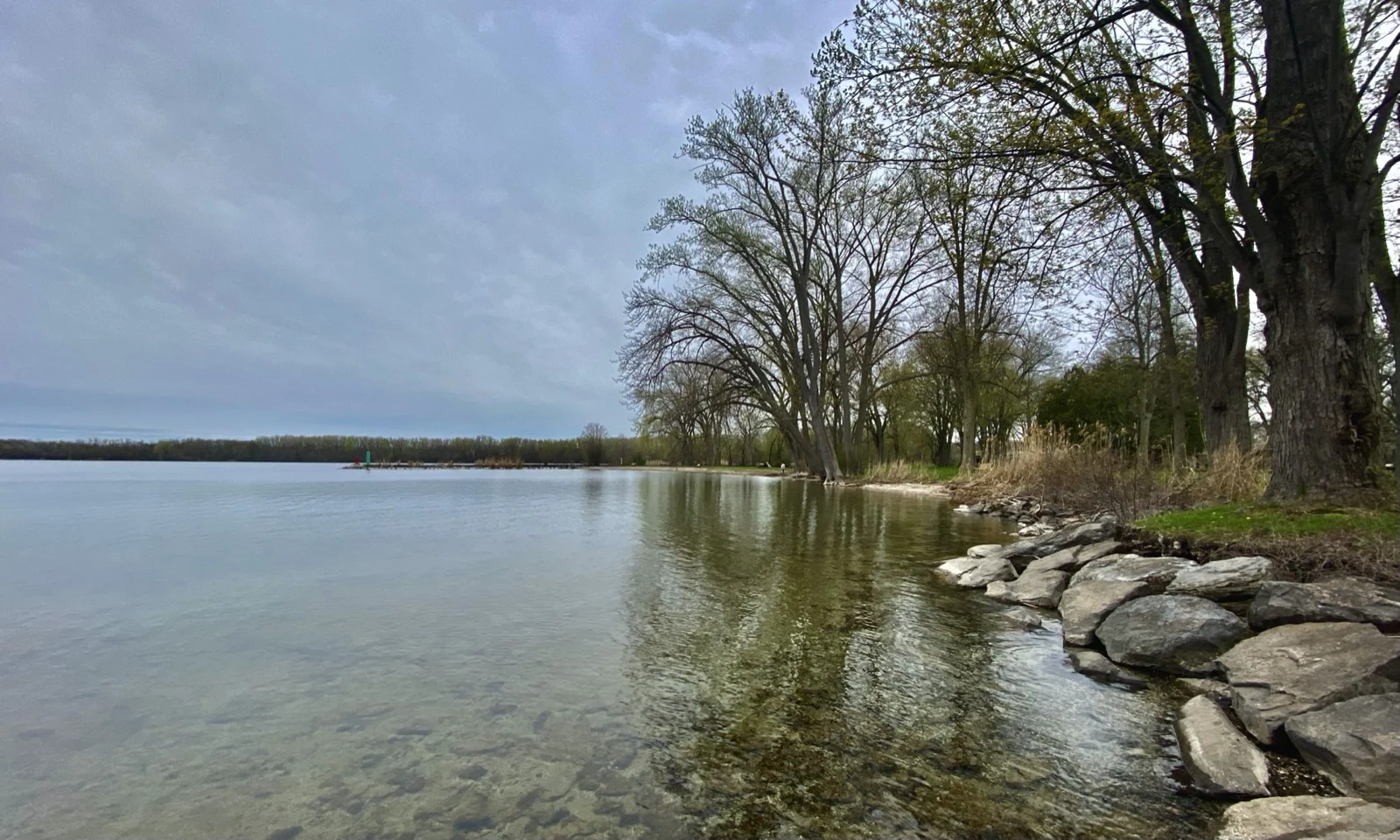
The park itself is the linear backbone of all of it. The county established the original park land in 1933, the same year the Salt Museum opened on the western shore. Today the property is an over 8-mile linear greenway shared between the towns of Salina and Geddes and the city of Syracuse. Four trails make up its spine: the East Shore Recreation Trail at 2.5 miles, a parallel 2-mile Shoreline Walking Trail with distance markers, the West Shore Trail at 6.3 miles through woodlands, and the natural-surface Lakeland Trail accessible from the West Shore.
This story came from public records we pulled ourselves
Get the next one, plus overnight incidents, in your inbox at 6 AM. Free, no spam.
A Park Built on a Cleanup
The numbers behind the cleanup remain hard to read. Between 1946 and 1970, Allied Chemical and Dye Corporation discharged roughly 165,000 pounds of mercury into the lake. The federal Superfund process eventually produced a $451 million remediation plan, with $414 million in construction costs and $3 million in projected annual maintenance. Honeywell International, the corporate successor to Allied, ran the work.
From 2012 to 2014, crews dredged about 2.2 million cubic yards of contaminated sediment from the lake bottom and three shoreline areas. The capping phase, completed in 2016, placed more than 3 million cubic yards of sand, activated carbon, siderite and stone over roughly 580 acres of lake bottom. Habitat restoration wrapped in late 2017. Near the mouth of Nine Mile Creek, more than 18 acres of in-lake and shoreline wetlands were rebuilt using approximately 150,000 native plants.
Cleanup by the Numbers
The work has not closed the story. The state Department of Health 2024 advisory still tells women under 50 and children under 15 to eat no fish from the lake, citing mercury, dioxin and PCBs in the tissue. The general public is told to skip largemouth and smallmouth bass over 15 inches, walleye, carp, channel catfish and white perch entirely; brown bullhead and pumpkinseed are limited to four meals a month, with all other species capped at one meal a month. A 2018 study found that Burmese refugees in Syracuse who fished the lake had six times the average American blood mercury level. A separate 2026 finding flagged surprising mercury readings at a marina sediment pocket, raising questions about residual contamination outside the capped zones.
Even with that caveat, the wildlife rebound is real. Adult fish species richness has grown from 13 in 1946 to more than 50 documented since 2000, including largemouth and smallmouth bass, walleye, northern pike, channel catfish and tiger musky. More than 120 bird species have been logged on the lake, an Audubon Important Bird Area. Onondaga Lake supports a year-round eagle population of 5 to 10 birds and three active nests; the first nest documented along the shoreline since the early 1800s appeared in 2022. In winter, more than 50 bald eagles can be counted in a single day along the south end, with totals reaching 100 in cold winters. A 200- to 400-square-yard pocket of open water kept warm by sewage treatment outflow draws fish to the surface and gives the eagles year-round access.
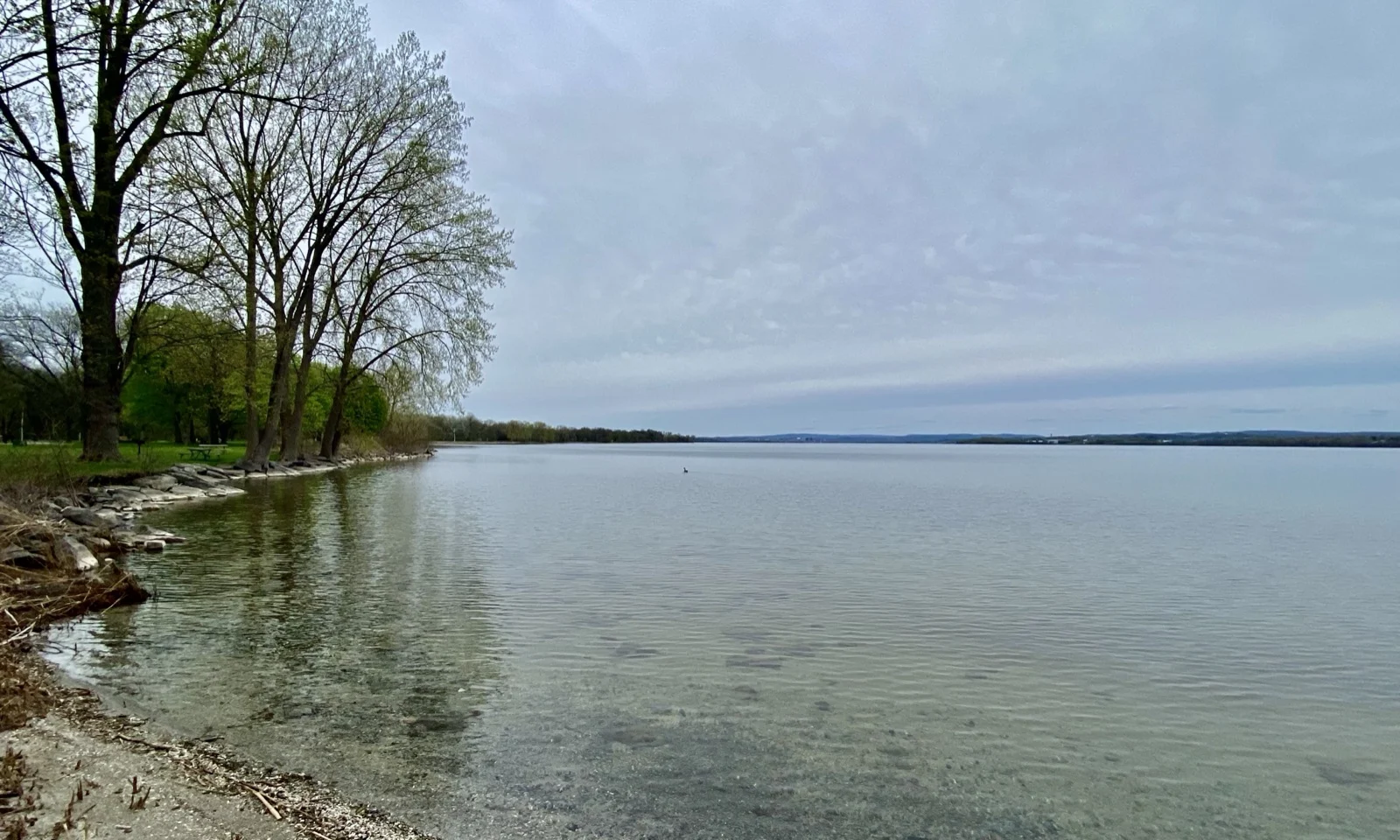
Walking the West Shore
The West Shore Trail is the longer leg of the park system at 6.3 miles, paved and shared by walkers, runners and cyclists. It connects Onondaga Lake Park north of Liverpool with the southwestern lake corner near Syracuse. A direct connection from the Onondaga Creekwalk, a 4.8-mile multi-use trail that runs from Armory Square to the lake, formally opened on Dec. 31, 2020, joining downtown Syracuse to the lake trails along Hiawatha Boulevard West.
Onondaga County still plans a complete 12-mile loop around the lake. The full Loop the Lake project remains under construction; the connected segment now totals 9.3 miles, with two more phases needed to close the ring. Construction on the final stretch through Murphy’s Island, the south-end parcel that anchors the winter eagle roost, is expected to begin in 2027 once core soil sampling required by state and federal agencies wraps up. Senator Charles Schumer pursued a $10 million federal grant for the trail completion, with Onondaga County funding the balance.
For visitors who do not want to walk it all, a tram shuttles riders between the Willow Bay area and the Salt Museum during the season. Bicycles, including multi-person bikes, are available through the Cuse Cycle concession at the park; recent rates ran $5 for 30 minutes, $25 for the day and $50 for three days.
Trails at a Glance
| Trail | Miles | Use |
|---|---|---|
| East Shore Recreation Trail | 2.5 | Skate, bike |
| Shoreline Walking Trail | 2.0 | Walk, run |
| West Shore Trail | 6.3 | Multi-use paved |
| Onondaga Creekwalk (link) | 4.8 | Walk, bike, skate |
The Salt Museum and a 1933 Story
The Salt Museum sits next to the lake on land fed by the same brine springs that built Syracuse. Europeans first heard about the salt springs in 1654, when the Onondaga showed them to French explorers. Jesuit missionaries reported the springs to colonial authorities the same year, calling the water Salt Lake. Salt production followed and ran until the 1920s, with Syracuse providing most of the country’s salt for much of that period.
The museum opened in 1933 as a federal work-relief project, built around a still-standing boiling-block chimney. Wood salvaged from 19th-century salt warehouses framed the structure. Inside, the equipment used to convert brine to salt is on display. The museum is open Thursday through Sunday during a roughly May-to-October season, and admission is free.
The Erie Canal turned the salt economy into a national one. Governor DeWitt Clinton broke ground on the canal in 1817, and by the time it opened in 1825, Syracuse incorporated as a village the same year. With cheap east-west barge access, salt exports surged, the city’s population reached 10,000 within a decade, and Syracuse dominated the U.S. salt market until the 1870s.
From Sainte Marie to Skä-noñh
For 70 years the site at the south end of the park told a French Jesuit story. Sainte Marie among the Iroquois, a recreated 1656 mission, closed at the end of 2002 amid declining attendance and county budget cuts. Volunteers reopened it on a limited schedule, but the model never fully recovered. In January 2013 the Onondaga Historical Association took over management. In November 2015 the site reopened as the Skä·noñh. Great Law of Peace Center, a Haudenosaunee heritage site told from the Onondaga Nation’s point of view. The word means “peace and wellness.” The museum runs year-round; the outdoor mission area is open May through October.
The original 1656 mission was the work of Fathers Simon Le Moyne, Joseph Chaumont and Claude Dablon, who arrived on Sept. 7 with donnes (skilled lay laborers) and soldiers at the invitation of the Onondaga, who hoped the French presence would broker peace with the Mohawks. The mission lasted two years before the Jesuits fled in 1658. The Works Progress Administration built the first replica in the 1930s near, but not on, the original site, since a parking lot at LeMoyne Manor covered the actual location. A 1990s redesign rebuilt the structure to align with the Jesuit Relations and the layout of the sister mission Sainte Marie among the Hurons.
A Playground Built for Everyone
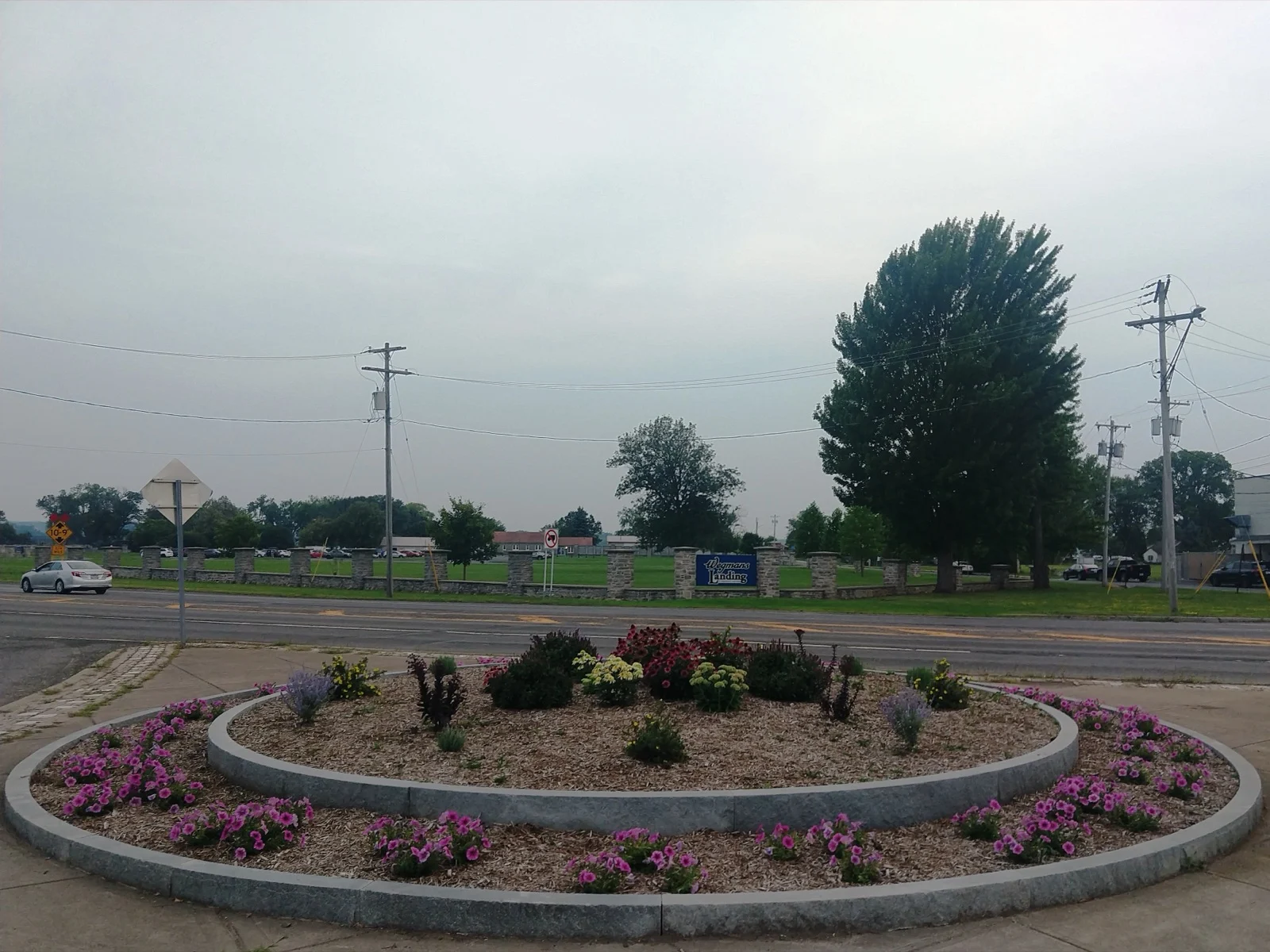
The Wegmans Playground opened in September 2003 at the north end of the park as a Boundless Playground, a design standard meaning roughly 70 percent of the equipment is wheelchair-accessible, against an industry average closer to 20 percent. Specific features include a Sway Fun teeter-totter sized for wheelchairs, ramped access to the largest School Age section, and unitary poured-rubber and Fibar wood-fiber surfacing chosen so wheels and walkers do not bog down. Wegmans pledged $750,000 to the project in 2002 and committed an additional $750,000 in 2008, with the funding continuing to support the tram and the children’s playground areas. It is the largest accessible play space in Central New York.
Other family features sit nearby: a skate park with quarter pipes, grind rails and spines; sand volleyball; bocce; shuffleboard; two baseball fields; the Wegmans Good Dog Park along the Seneca River near Cold Springs Road; a fishing pier; a marina and boat launch; and a small playground and boat-rental concession at Willow Bay. The Long Branch section at the north end carries the name of the amusement park founded there in 1882 by Ben and George Maurer. At its peak the Maurer property included a roller coaster, boxing arenas, an arcade, bowling alleys, a dance pavilion and billiard tables, all served by a trolley line. The park closed in 1938 and the family donated the land to the county.
Lights, Music and the State Fair Edge
Lights on the Lake started in 1990 as a half-mile string of white lights. The display expanded to 2 miles the next year and has held that footprint ever since. Today it features more than 600,000 lights across themed sections, including a Land of Oz tableau, a fantasy forest and a fairy-tale finale. More than 40,000 vehicles drive through each season, which runs Nov. 17 through Jan. 12 in 2025 to 2026. Online tickets cost $10 per car Monday through Thursday and $20 Friday through Sunday, with $5 charity drive-through nights on opening Monday and closing Monday and a Doggy Charity Drive-Thru on Nov. 18 benefiting HumaneCNY and Second Chance Canine Adoption Shelter.
On the southwest corner, the Empower Federal Credit Union Amphitheater, formerly St. Joseph’s Health Amphitheater at Lakeview, and originally Lakeview, opened on Sept. 3, 2015, with a Miranda Lambert concert. Construction cost more than $40 million. The venue holds 17,500: 5,000 covered pavilion seats and a lawn for 12,500. Through the 2023 season it had averaged 17 shows a year and hosted more than 200 different artists. The 2026 calendar already includes Kid Cudi (June 8), Mumford and Sons (June 18), Jelly Roll (June 23), Godsmack (June 30), “Weird Al” Yankovic (July 10), 311 with Dirty Heads (July 19), Billy Idol (Aug. 15), Pitbull with Lil Jon (Aug. 26), Goo Goo Dolls with Neon Trees (Sept. 3) and Jason Aldean (Sept. 18).
Inside the Park
Founded 1933. Free admission. Thur-Sun, May-Oct.
Opened Nov 2015. Year-round museum, mission site May-Oct.
Opened Sept 2003. ~70% wheelchair-accessible.
Nov 17, 2025, Jan 12, 2026. $10-$20/car. 600,000+ lights.
Opened Sept 3, 2015. 17,500 capacity.
Transferred to NYSDEC June 2025. Open Apr-Oct seasonally.
What the Lake Looks Like Today
The park draws more than one million visitors a year. Beach attendance projections from the county put the mid-June through mid-September window at roughly 203,544 unduplicated users on the recreation side. The Onondaga Lake Conservation Corps, founded in July 2012 in partnership with Audubon New York, runs hands-on stewardship and bird excursions. Volunteers have removed thousands of pounds of invasive plants in single events. More than 250 wildlife species have been documented in the restored areas, some not seen along the lake in decades.
The Onondaga Lake Visitor Center, originally built and operated by Honeywell when it opened in 2012 to explain the cleanup, transferred to the New York State Department of Environmental Conservation in June 2025 under DEC Commissioner Amanda Lefton. The center now operates April through October as a public outreach facility under DEC’s Bureau of Environmental Education, with monthly Second Saturdays in Summer family programming and a partnership pipeline with the State University of New York College of Environmental Science and Forestry. The Griffin Visitor Center, on the south end of the park, rents sports equipment and runs bocce courts during business hours.
A 93-Year Timeline
What to Know Before You Go
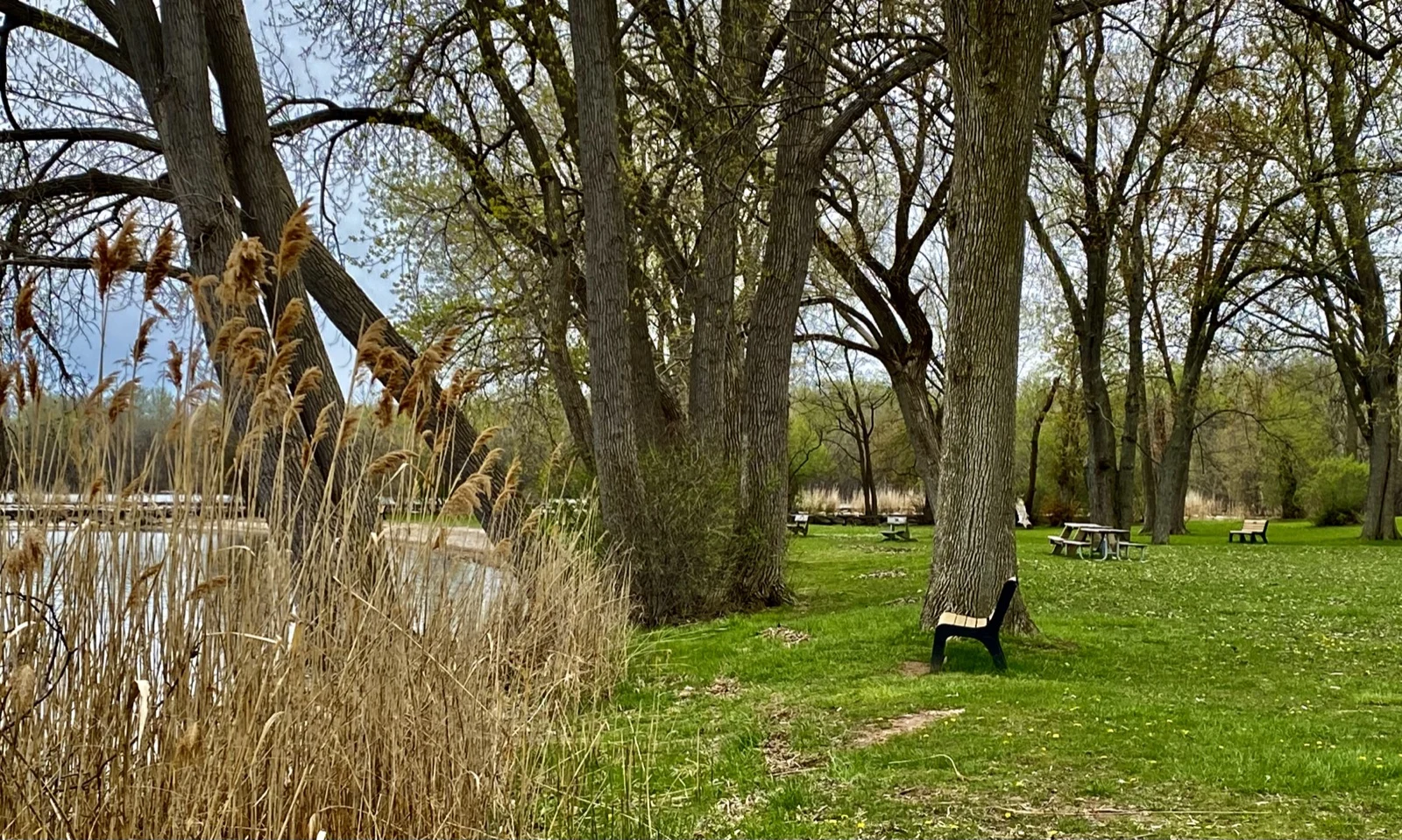
Onondaga Lake Park’s main address is 106 Lake Drive, Liverpool, NY 13088. Phone: (315) 451-7275. The park is dog-friendly along the trails and inside Wegmans Good Dog Park. The Salt Museum and Skä-noñh Center anchor the seasonal museum side; the West Shore Trail, the boat launch and Willow Bay anchor the active side. Lights on the Lake operates from roughly mid-November into early January, with proceeds supporting youth recreation programs through the county parks system.
Reading the lake honestly means holding two things at once. The largest mercury Superfund site of its kind in the Northeast still carries restrictions on what you can pull out of the water. The same lake has the largest winter eagle roost in New York. Both are true. Both are why the park keeps drawing more than a million people a year.
Sources: Onondaga County Parks; Wikipedia “Onondaga Lake Park,” “Onondaga Lake,” “Sainte Marie among the Iroquois,” “Empower Federal Credit Union Amphitheater,” “Long Branch Park”; Onondaga Lake Cleanup (lakeCleanup.com); Audubon New York; New York State Department of Health 2024 fish advisories; New York State DEC June 2025 Visitor Center transfer release; New York State DEC Superfund profile; Onondaga Nation; Onondaga Historical Association; Skä-noñh Center; Liverpool Public Library local history collection; Lights on the Lake official site; Ticketmaster 2026 Empower Amphitheater schedule; CNY Central, localsyr.com and CNY Business Journal reporting on Loop the Lake. Photos via Wikimedia Commons under CC BY-SA license.
Related on CNY Signal: our coverage of the 2026 Onondaga Creekwalk season opening, the New York State Fairgrounds, also in Geddes, and CNY Signal’s town-by-town coverage of Central New York.
Frequently Asked Questions
How big is the Onondaga Lake cleanup?
Between 1946 and 1970, Allied Chemical and Dye Corporation discharged roughly 165,000 pounds of mercury into Onondaga Lake. The federal Superfund process produced a $451 million remediation plan, with $414 million in construction costs and $3 million in projected annual maintenance. Honeywell International, the corporate successor to Allied, ran the work.
Is it safe to eat fish from Onondaga Lake?
The state Department of Health 2024 advisory still tells women under 50 and children under 15 to eat no fish from the lake, citing mercury, dioxin and PCBs. The general public is told to skip largemouth and smallmouth bass over 15 inches, walleye, carp, channel catfish and white perch entirely; brown bullhead and pumpkinseed are limited to four meals a month.
How long is the trail at Onondaga Lake Park?
The park is an over 8-mile linear greenway shared between the towns of Salina and Geddes and the city of Syracuse. The four trails are the East Shore Recreation Trail at 2.5 miles, a parallel 2-mile Shoreline Walking Trail with distance markers, the West Shore Trail at 6.3 miles through woodlands, and the natural-surface Lakeland Trail. A direct connection to the 4.8-mile Onondaga Creekwalk opened December 31, 2020.
Are there bald eagles at Onondaga Lake?
Yes. Onondaga Lake supports a year-round eagle population of 5 to 10 birds and three active nests. The first nest documented along the shoreline since the early 1800s appeared in 2022. In winter, more than 50 bald eagles can be counted in a single day along the south end, with totals reaching 100 in cold winters. Adult fish species richness has grown from 13 in 1946 to more than 50 documented since 2000.
Will the Loop the Lake trail ever be completed?
Onondaga County still plans a complete 12-mile loop around the lake. The connected segment now totals 9.3 miles, with two more phases needed to close the ring. Construction on the final stretch through Murphy’s Island, the south-end parcel that anchors the winter eagle roost, is expected to begin in 2027 once core soil sampling required by state and federal agencies wraps up.