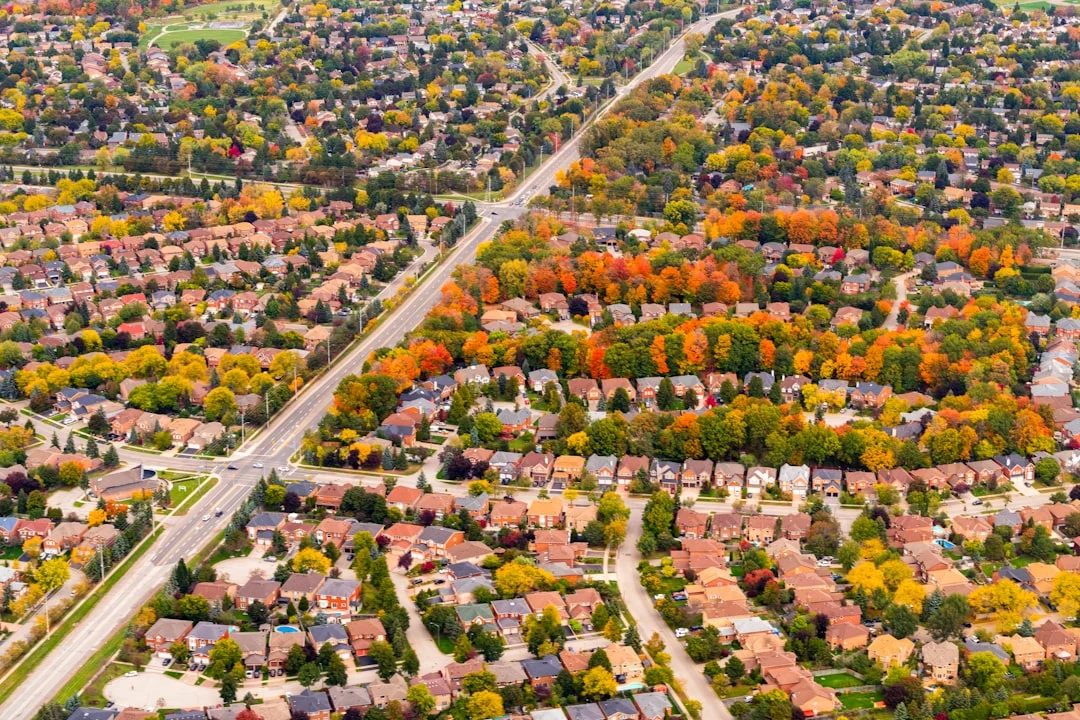
The $1.3 Million Question: Why San Francisco Homebuyers Keep Finding Their Way to Syracuse
In the Bay Area, half a million dollars buys a 500-square-foot studio. In Central New York, that same check gets you a four-bedroom colonial with a yard, a two-car garage, and enough left over to furnish every room twice.
The math is not subtle. And increasingly, people are doing it.
In December 2025, Redfin named Syracuse one of the housing markets most likely to heat up in 2026, citing its affordability and relative safety from climate disasters. Realtor.com went further, forecasting a 12.4% rise in Syracuse-area home prices over the coming year. The signals are converging: Central New York, long overlooked by coastal homebuyers, has become one of the most closely watched real estate markets in the country.
The question is no longer whether outsiders are discovering Syracuse. It is what happens to the city they find when they get here.
The Gap That Launched a Thousand Zillow Searches
Consider the numbers side by side. In February 2026, the median sale price of a home in San Francisco was $1.5 million, according to Redfin, with the average home value at $1.27 million per Zillow. That same month, homes in Syracuse sold for a median price of $180,000.
That is not a rounding error. It is an 8-to-1 ratio.
San Francisco’s price per square foot hovers above $1,000. In Syracuse, it sits at $103. A record 32.6% of Redfin users in 2025 searched for homes in a metro area different from where they currently lived—up from roughly 26% before the pandemic—and Syracuse’s top inbound migration metro is New York City. The pattern is clear: people priced out of expensive markets are looking east, and some of them are looking all the way upstate.
The $500,000 comparison tells the story most vividly. In San Francisco, that budget lands a studio or cramped one-bedroom condo. In the Syracuse metro, $500,000 puts you in the luxury tier: a six-bedroom lakeside home in Skaneateles, a 3,000-square-foot colonial in Baldwinsville, or a renovated four-bedroom in the city itself with money to spare. The purchasing power difference runs roughly six to seven times in terms of square footage.
Who Is Moving, and Why Now
The migration is not a single wave but a confluence of forces that have been building for years.
Remote work reshaped the calculus first. Since 2020, nearly 4.9 million Americans have relocated because of remote jobs, and in 2025, one in five remote workers planned to move, with 37% citing cost of living as the primary motivation. The pandemic proved that a software engineer in Strathmore or a product manager in the Westcott neighborhood could do the same job they did in SoMa or the Mission District—at a fraction of the housing cost.
Then came Micron.
The chipmaker’s planned semiconductor campus in Clay—a $100 billion investment expected to generate 9,000 direct jobs and nearly 50,000 across New York State over the next two decades—transformed Syracuse from an affordable curiosity into an economic story. Housing prices in Central New York have climbed 12.3% since June 2023, outpacing the national increase of 7% over the same period. Listings near Clay, Liverpool, and Syracuse proper are going under contract within days. Two Micron supply chain partners, Korea-based Wonik Materials and Texas-based Target Hospitality, have already announced Onondaga County operations.
Climate anxiety is playing a quieter but measurable role. Redfin’s analysis of Census and First Street data found that high-flood-risk areas saw a net domestic outflow of 29,027 people in 2024—the first such outflow since 2019. Midwest and Great Lakes cities, Syracuse among them, are drawing buyers who want distance from wildfire smoke, hurricane exposure, and flood insurance premiums that have tripled in parts of Florida and the Gulf Coast.
And then there is the simple appeal of a 15-minute commute, Green Lakes on a Tuesday afternoon, and a mortgage payment that does not consume two-thirds of a household’s income.
What They Find When They Get Here
Syracuse is not pretending to be San Francisco, and that is part of the draw.
The Finger Lakes are 30 minutes away. Dinosaur Bar-B-Que, which earned national attention on “Man Vs. Food,” anchors a food scene that punches well above its weight class. The Syracuse Jazz Festival remains the largest free jazz festival in the Northeast. Syracuse University brings Division I athletics, world-class theater at Syracuse Stage, and a steady current of cultural energy. Green Lakes State Park, with its two glacial lakes and 15 miles of trails, and Highland Forest, with 20-plus miles of hiking, offer the kind of outdoor access that coastal transplants find startling in its proximity.
Healthcare infrastructure is substantial. Upstate University Hospital and Crouse Hospital are among the region’s largest employers, and healthcare costs in Syracuse run below both state and national averages. The average commute time is 15.25 minutes—a number that would make a Bay Area commuter weep.
U.S. News & World Report has ranked Syracuse among its Best Places to Live, and Redfin named it the No. 6 market nationally for first-time homebuyers in 2026. Niche ranks it the best place to live in New York State, ahead of Rochester, Albany, and Buffalo.
The winters are real—114 inches of snow on average—but transplants tend to discover that a snowblower and a good pair of boots cost considerably less than a million-dollar mortgage premium.
The Other Side of the Boom
Not everyone in Syracuse is celebrating rising home values.
The city’s housing crisis predates the current wave of outside interest, and the influx of higher-income buyers is compounding pressures that were already severe. At least 60% of Syracuse residents are renters, and the economics are tightening: average rents for a two-bedroom apartment have climbed to $1,500, a 20% increase since 2024. An analysis of Census data by Housing Justice For All found that 46% of Central New Yorkers spend a third or more of their earnings on rent.
The hardest-hit residents are those who could least afford it. More than 16,000 Syracuse households earn less than $20,000 per year and can afford no more than $500 per month on housing; 88% of renters in that income range are considered cost-burdened. Eviction filings have risen steadily since 2019. Out-of-state investors, drawn by strong rental demand, have entered the market alongside the remote workers and Micron-linked professionals, adding another source of competition for a limited housing stock.
City and county leaders are responding with scale. The Syracuse Housing Authority, in partnership with McCormack Baron Salazar, broke ground in December 2025 on “The Langston,” a $102 million mixed-income development that will replace 672 distressed public housing units at Pioneer Homes and McKinney Manor with modern, energy-efficient apartments, ultimately adding 732 new units across several phases. Governor Hochul announced a $271 million affordable housing investment for Central New York in December 2025, part of a $2 billion statewide initiative. The former Syracuse Developmental Center on Jensen Avenue is being transformed into a $100 million mixed-use development with more than 250 housing units.
Onondaga County is selling 30 acres of vacant land at discounted rates to developers, with the requirement that savings be passed to homebuyers or renters. The county’s O-CHIP program has tripled its maximum per-unit grant from $5,000 to $15,000, backed by $7 million in available funds. State infrastructure grants are targeting developers who build single-family homes priced at $375,000 or less. The first project under that initiative: 89 new homes in Clay.
Whether the construction pipeline can keep pace with demand is the central tension of Syracuse’s housing story. The majority of units under construction are multifamily—9,075 apartments compared with 3,225 single-family homes across the region. Clay alone has 1,350 single-family units planned. But the county estimates it could need at least 3,000 additional rental units by 2040, and over 4,000 if Micron’s full impact materializes.
What Comes Next
Redfin’s characterization of the national housing landscape as “The Great Housing Reset” applies with particular force in Syracuse. The brokerage expects wages to grow faster than home prices nationally for the first time since the aftermath of the 2008 financial crisis—a development that could ease pressure on local buyers if it holds.
But Syracuse is also running a different experiment than most American cities. It is absorbing a generational infrastructure investment, a wave of climate-motivated migration, a remote work dividend, and a housing construction boom simultaneously. The outcome depends on whether the region can build fast enough, equitably enough, and smartly enough to ensure that the people who kept Syracuse running through the lean decades are not priced out of the prosperity that followed.
For now, the listings keep moving. The Zillow searches from Bay Area IP addresses keep climbing. And somewhere in the Westcott neighborhood, a family that left the fog for the snow is shoveling their driveway in front of a house they bought outright for less than a San Francisco down payment.
They do not seem to mind the cold.
By the Numbers
| Syracuse median home price (Feb. 2026) | $180,000 |
| San Francisco median home price (Feb. 2026) | $1,500,000 |
| Price per square foot, Syracuse | $103 |
| Price per square foot, San Francisco | $1,000+ |
| CNY home price growth since June 2023 | 12.3% |
| Micron investment | $100 billion |
| Expected Micron-linked jobs (statewide) | ~50,000 |
| New affordable housing investment (state, CNY) | $271 million |
| Housing units under construction (region) | 12,300 |
| Syracuse avg. commute time | 15.25 min |
| Average annual snowfall | 114 inches |
Sources: Redfin, Zillow, Realtor.com, U.S. Census Bureau, Onondaga County, NY Governor’s Office