By Jen Okafor, Staff Reporter

Four miles west of the Baldwinsville traffic circle, where East Mud Lake Road slips through the hardwoods of the Town of Lysander, a 200-acre glacial lake sits ringed by black ash, tamarack, and a floating boardwalk that bobs faintly under your weight. Ten thousand years ago, a stranded chunk of Wisconsin-era ice pressed itself into the till plain here, melted in place, and left behind a kettle. Geologists also call these depressions pothole ponds; when the meltwater pools stay acidic and accumulate decomposing plant matter, they become kettle bogs, and a portion of the southern fen at Beaver Lake fits that description. Today the kettle is the centerpiece of Beaver Lake Nature Center, a 661-acre Onondaga County Parks preserve that has quietly become one of Central New York’s most-visited working classrooms.
It is also one of the most consistently undersold pieces of public land in the region. About 12,000 schoolchildren walk these trails every year. More than 200 species of birds and roughly 800 varieties of plants have been documented across its bog, fen, meadow, and climax forest habitats. The price of admission is five dollars per car. For visitors who join the supporting nonprofit, the gate is free.
Beaver Lake Nature Center at a glance
From farmhouse field station to county anchor
The center opened in late spring 1970 after the Onondaga County Parks Commission, prodded by local naturalists and school teachers, commissioned a feasibility study that recommended acquiring at least 250 acres around the lake to safeguard water quality and create a nature-study facility. The county and a handful of private donors assembled a roughly 246-acre starter parcel from families whose farms abutted Beaver Lake, set up a converted farmhouse as a “field station,” and let the public in.
The footprint has grown by a factor of nearly three in the half-century since. Heidi Kortright, who arrived as a seasonal naturalist in 1986 and has served as director since roughly 2011, oversees a year-round operation that ranges from preschool nature camps to moonlit owl walks. Kortright holds a B.S. from West Virginia University and a master’s in professional studies from SUNY College of Environmental Science and Forestry, and she once tended the sugarbush herself before stepping into program leadership. Park Naturalist Marissa Lathrop runs much of the school-group programming.
The supporting nonprofit, Friends of Beaver Lake, Inc., a 501(c)(3) chartered in 1980, underwrites events, equipment, exhibits, and land acquisition. Membership covers admission and helps fund the rotating cast of volunteers who staff the visitor desk and maintain trails.

Nine miles of trail, four habitats, one boardwalk that floats
The trail map names nine routes. Lake Loop is the headline at 3.0 miles, with nearly three quarters of a mile of boardwalk that lets walkers cross open marsh dryshod. Three Meadows runs 1.5 miles. Deep Woods, on the west side of the lake, is 1.4 miles. Woodland totals 1.1 miles, Pine Meadow 0.5, Lakeview 0.3, and Hemlock Hollow 0.4. The Bog Trail is 0.6 miles and ends at the floating boardwalk, which sits on the surface of a southern fen and rises and falls with seasonal water levels. The fen supports cranberries and three carnivorous species: sundew, pitcher plant, and bladderwort.
Named loops by length
The bird ledger
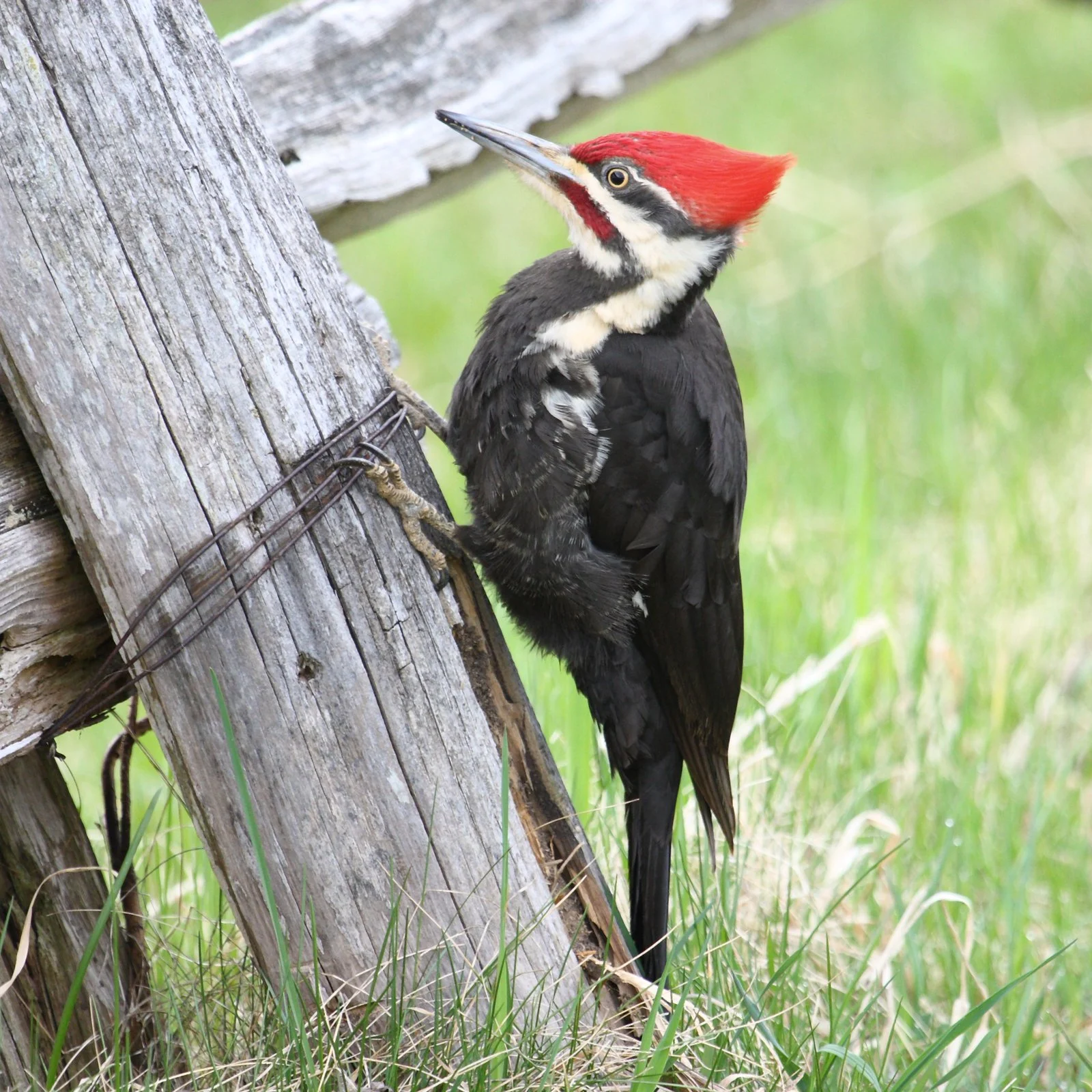
The site sits along the Atlantic Flyway and shows it. NYS DEC’s Watchable Wildlife program lists osprey, bald eagle, double-crested cormorant, great horned owl, belted kingfisher, great blue heron, indigo bunting, and pileated woodpecker among the documented species. In autumn, the lake holds thousands of migratory Canada geese along with dabbling and diving ducks moving south. Spring and fall are the densest viewing windows.
The center runs a free guided bird walk on the first Saturday of every month: 9 a.m. from October through March, 8 a.m. from April through September. Year-round, the staff promote the “100 Bird Challenge,” a low-stakes ledger program for visitors who want a target list rather than a competition.
The seasonal calendar, in order
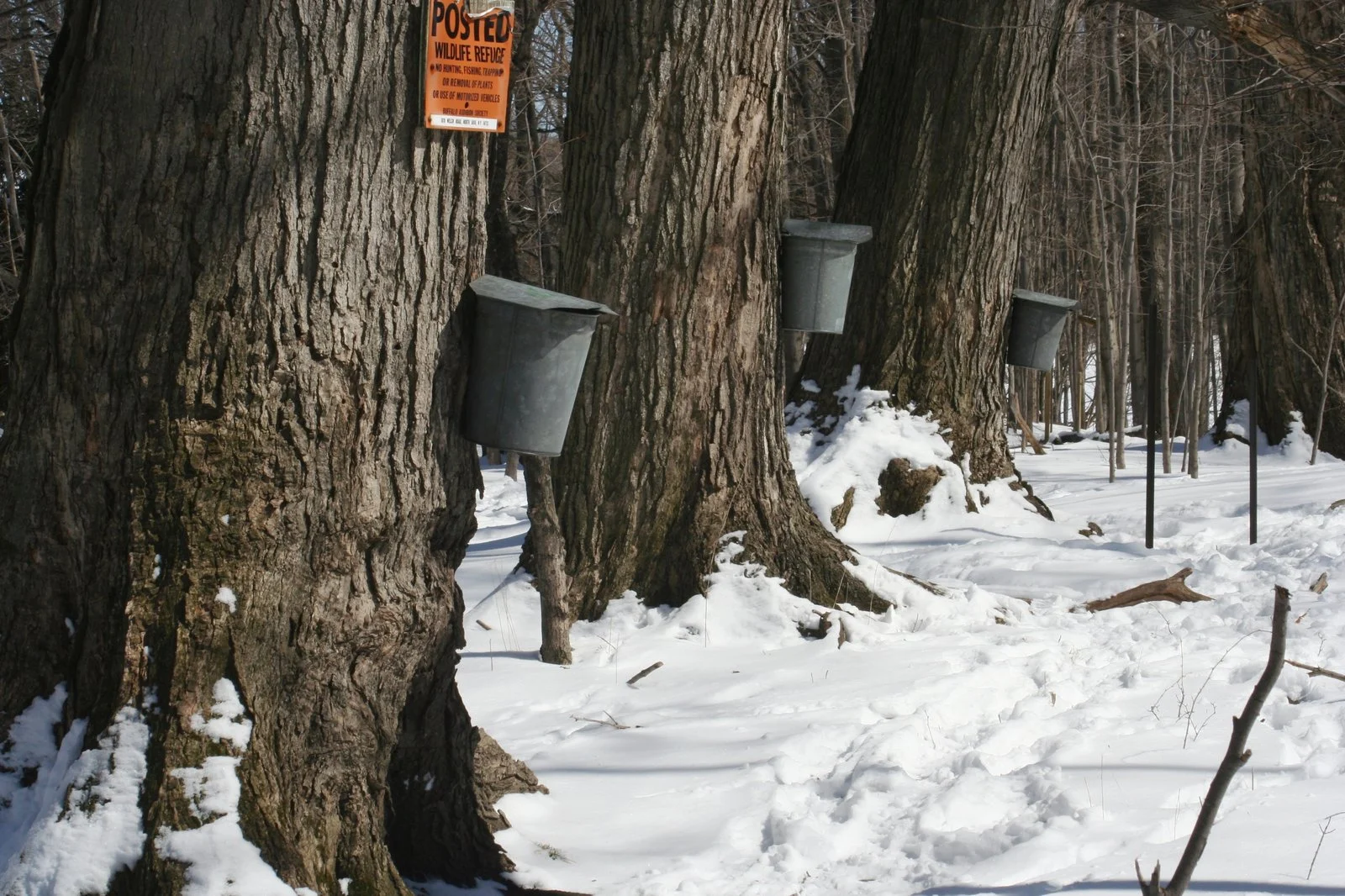
The year at Beaver Lake follows a tight rotation that the staff have refined for half a century. Maple Sugaring Season runs in March, with tree-tapping demonstrations, evaporator viewings, and a pancake-friendly weekend that draws families from across Onondaga and Oswego counties. Spring brings warbler waves and the wildflower bloom along Hemlock Hollow. Summer opens canoe and kayak rentals on the lake at $10 per hour, available 9 a.m. to 3:30 p.m., with all watercraft off the water by 4:30. The dock is staffed weekends and holidays from May 10 through June 22, then daily through the warm months.
BioBlitz, an all-hands species-survey day, runs at midsummer. The Golden Harvest Festival, the largest single event on the calendar, falls on the weekend after Labor Day. The 2025 edition ran September 6 and 7, drew musicians to three stages, and charged $5 for adults and $1 for children ages 4 to 15. Cash only at the gate. Lakeview Brew, Spooky Sips, and the holiday-season Enchanted Beaver Lake round out the special-event lineup.
Winter is when the personality of the place shifts. The center maintains designated snowshoe and cross-country ski loops separately from foot trails and rents both snowshoes and skis through the visitor center for a small fee. The Owl Prowl, a guided after-dark walk timed to the late-winter calling season of great horned and barred owls, is the headline winter program.
A season-by-season program guide
What goes on the calendar in 2026
The 2026 program calendar is locked in. Pancake breakfasts run every Saturday from February 28 through March 28, 9 a.m. to noon, with proceeds funneled to Friends of Beaver Lake. Sugarbush Saturday tours follow on March 21 and March 28, walking visitors through tap-to-syrup demonstrations on the working sugarbush. Lakeview Brew, the summer adult-focused craft beverage night, returned to the lakefront for the 2025 season on June 20. Spooky Sips, the 21-and-over October event, falls on Wednesday, October 21, 2026, from 7 to 9 p.m. The 43rd annual Golden Harvest Festival drew musicians, more than 75 local artisans, and the center’s own homemade donuts to the grounds across September 6 and 7, 2025, running 10 a.m. to 5 p.m. both days. Enchanted Beaver Lake closes the calendar in the fall with more than 400 hand-carved pumpkins and luminaria lining the trails.
Camp Beaver Lake fills the summer weeks, with sessions aimed at building a long-term naturalist habit in children rather than a one-week sugar high. Friends of Beaver Lake, the supporting nonprofit chartered in 1980 with EIN 16-1189720, underwrites equipment, exhibits, and event programming. The visitor center sells memberships at the front desk; admission is included.
What you can’t do here
The rules at Beaver Lake are tighter than at most county parks, and that is intentional. Bicycles are not allowed on the trails. Dogs and other pets are prohibited except for service animals. Fishing and open fires are also banned across the preserve. Professional photography requires a permit from the visitor center, which staff issue for portraits, weddings, and commercial shoots; standard amateur photography needs no paperwork. Wedding ceremonies and small private gatherings can be booked through the facility-rental office for indoor and outdoor venues on site.
The wider neighborhood
Beaver Lake is the polished front door of a much larger conservation footprint. To the east, the New York State Department of Environmental Conservation manages the 3,607-acre Three Rivers Wildlife Management Area, sitting between Baldwinsville and Phoenix and named for the confluence where the Seneca and Oneida rivers meet to form the Oswego. DEC biologists have logged 26 mammal species, 119 bird species, six reptiles, eight amphibians, and 11 fish in that single block. Henslow’s sparrow, grasshopper sparrow, vesper sparrow, American woodcock, bobolink, Cooper’s hawk, and northern shrike all turn up there, alongside resident bald eagle and osprey populations. The two properties function in concert during the spring and fall flyway pulses, with waterfowl moving between the kettle lake and the river corridors.

Practical notes
The visitor center is open year-round, generally 7:30 a.m. to dusk, and is closed only on Thanksgiving and Christmas. Daily admission is $5 per vehicle and $25 per bus. Veterans and active-duty military with valid ID enter free in one vehicle. Friends of Beaver Lake members enter free as a benefit of membership. Bicycles, fishing, fires, and pets other than service animals are not permitted on the trails.
Plan your trip
For a 661-acre preserve that opened in a converted farmhouse in 1970, the math has held up well. Five dollars buys access to a glacial lake, a working sugarbush, a floating bog walk, a hawk-counting overlook, and a staff that can name every warbler that drops in on its way through. Baldwinsville built a village on a river bend two centuries ago. The county added a wild back yard in 1970. Both have aged better than most of what came after.
Reporting based on Onondaga County Parks records, NYS DEC Watchable Wildlife data and the Three Rivers WMA habitat management plan, the Beaver Lake Nature Center trail map (Aug 2024 revision), beaverlakenature.org event calendar pages for Maple Sugaring, Golden Harvest, Lakeview Brew, Spooky Sips, and Enchanted Beaver Lake, IRS Form 990 filings for Friends of Beaver Lake (EIN 16-1189720), and reporting on director Heidi Kortright by Eagle News Online and Life in the Finger Lakes. Photos: stock landscape via Unsplash; pileated woodpecker by Cephas (CC BY-SA 3.0); maple sap buckets by Dave Pape (public domain), both via Wikimedia Commons.
Related on CNY Signal: Highland Forest, the county’s oldest park, Onondaga Lake Park, an Audubon Important Bird Area, and every Central New York town we cover.
Frequently Asked Questions
Where is Beaver Lake Nature Center?
Beaver Lake Nature Center sits four miles west of the Baldwinsville traffic circle on East Mud Lake Road in the Town of Lysander. It is a 661-acre Onondaga County Parks preserve that opened in late spring 1970. Admission is five dollars per car, and Friends of Beaver Lake members enter free.
How long are the trails at Beaver Lake?
The trail map names nine routes covering more than nine miles. Lake Loop is the headline at 3.0 miles, with nearly three quarters of a mile of boardwalk that lets walkers cross open marsh dryshod. The Bog Trail is 0.6 miles and ends at a floating boardwalk that sits on the surface of a southern fen and rises and falls with seasonal water levels.
What wildlife can visitors see at Beaver Lake?
More than 200 species of birds and roughly 800 varieties of plants have been documented across the bog, fen, meadow and climax forest habitats. NYS DEC’s Watchable Wildlife program lists osprey, bald eagle, great horned owl, belted kingfisher, indigo bunting and pileated woodpecker among documented species. The fen also supports cranberries and three carnivorous plants: sundew, pitcher plant and bladderwort.
When is maple sugaring season at Beaver Lake?
Maple Sugaring Season runs in March, with tree-tapping demonstrations, evaporator viewings and a pancake-friendly weekend that draws families from across Onondaga and Oswego counties. The Golden Harvest Festival, the largest single event on the calendar, falls on the weekend after Labor Day. The 2025 edition ran September 6 and 7.
Are canoe rentals available at Beaver Lake?
Yes. Summer opens canoe and kayak rentals on the lake at $10 per hour, available 9 a.m. to 3:30 p.m. with all watercraft off the water by 4:30. The dock is staffed weekends and holidays from May 10 through June 22, then daily through the warm months. About 12,000 schoolchildren walk the trails every year.