The Camillus Sewer Pipe That Burst Into Nine Mile Creek Is Getting a $29 Million Fix, a Year Late
Onondaga County’s adopted capital plan and its own construction updates show the Camillus force main replacement running roughly 15 months behind the schedule the county published, on a project that began after the existing pipe failed and discharged into Nine Mile Creek.
Underneath the lawns of Woodmont Drive, through Reed Webster Park and across Warners Road, Onondaga County work crews are threading resin liners into a sewer pipe that has broken down again and again since it went into the ground decades ago. The Camillus force main, a 24 inch, 7 mile pipeline that carries wastewater from the Town and Village of Camillus to the Westside Pump Station on Onondaga Lake, has “failed several times over the past 6 years releasing raw sewage to the ground and Nine Mile creek,” according to the Onondaga County Department of Water Environment Protection’s own capital project documents.
This story came from public records we pulled ourselves
Get the next one, plus overnight incidents, in your inbox at 6 AM. Free, no spam.
The county is now more than a year into the second and larger phase of a two-part fix. County records put the combined cost of both phases at $29.1 million, funded almost entirely through authorized county borrowing. Construction on the current phase started in December 2025 and is scheduled to run through March 2027, according to the Water Environment Protection project page, which lists a summer 2026 work schedule moving directly through Camillus neighborhoods.
The problem the county is trying to solve dates back to a 2018 internal inspection. Using “Smart ball” technology, a free swimming sensor that travels through a live pipeline recording acoustic and pressure data, WEP found “numerous pipeline anomalies” indicating what the county’s own capital plan calls “a high probability of failure.” The pipe’s age and the chemical makeup of the wastewater it carries have accelerated corrosion, the county says, and each failure has meant raw sewage reaching the ground or Nine Mile Creek, which the county’s capital plan describes as “a recreational resource in Onondaga County.”
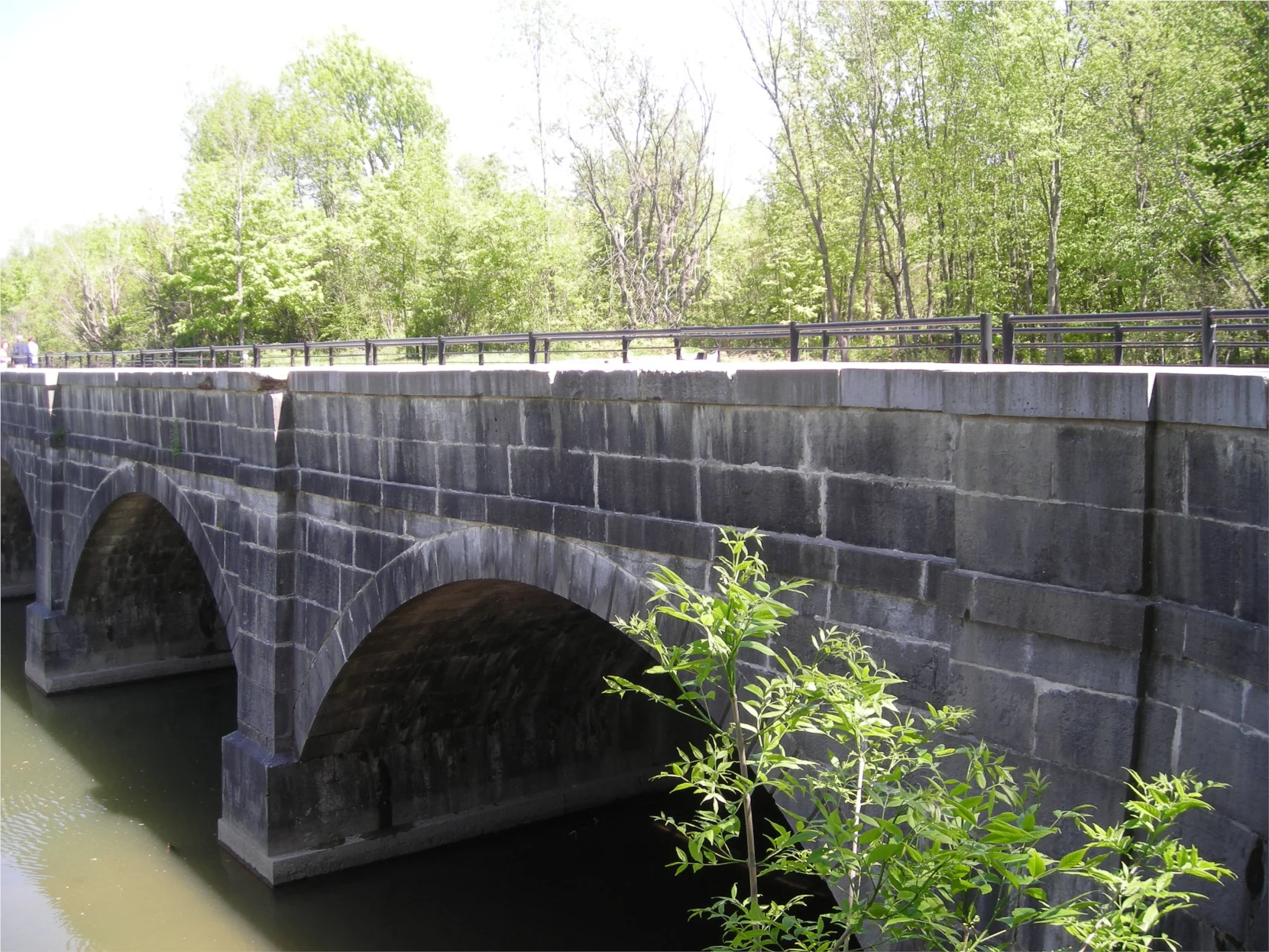
Nine Mile Creek runs through Camillus Erie Canal Park before it eventually feeds Onondaga Lake, whose own decades long cleanup has been one of the largest environmental undertakings in Central New York. A force main that keeps discharging into the creek’s watershed sits upstream of that broader restoration effort, which is part of why the county has treated this pipeline as a priority capital project rather than routine maintenance. The canal park itself, home to the Sims Store Museum and a restored stretch of the historic Erie Canal feeder, draws walkers and paddlers along the same water the county says the pipe has fouled during past failures, which is part of why the county’s own documents single out the creek’s recreational value as a reason to prioritize the repair over other pipeline work in its sewer system.
The county split the repair into two phases rather than replace the entire 7 mile run at once. Phase 1 was funded through two bond resolutions, 2017-022 and 2017-197, totaling $3.5 million, and went out to bid in early 2019. Crews lined roughly 7,700 feet of the pipe with high density polyethylene, or HDPE, a corrosion resistant material the county’s capital plan says should extend the pipe’s service life by 50 years or more. That phase is complete.
Phase 2 is the work underway now. Bond Resolution 2024-024 authorized $25 million in construction borrowing to line the remaining 28,900 feet of pipe, on top of $600,000 in cash funding authorized back in October 2019 to pay for Phase 2 engineering. Design work finished in fall 2023. A public solicitation for the Phase 2 construction contract, posted through the county’s procurement system on January 30, 2025 with proposals due that March 13, listed an estimated contract value of between $1 million and $5 million for the construction package, according to procurement listings that mirror the county’s bid record.
Put the two phases side by side and the price of fixing this pipe has climbed sharply. Phase 1’s $3.5 million bond covered 7,700 feet of lining, which works out to roughly $455 per linear foot. Phase 2’s $25 million construction bond covers 28,900 feet, or roughly $865 per linear foot, nearly double the per foot cost of the first phase. That comparison is CNY Signal’s own calculation from the county’s published bonding and footage figures; the capital plan does not state a per foot cost directly. The gap could reflect a longer, more complex second segment of pipe, inflation in construction pricing between 2017 and 2024, or both. The county’s capital plan does not break out the reasons for the difference.
The schedule has also moved. The county’s 2025-2030 Capital Improvement Plan, adopted in November 2024, told legislators that “work will continue until the end of 2025” on Phase 2. The current WEP project page instead shows work running from December 2025 through March 2027, a schedule roughly 15 months longer than what the county told its own Legislature to expect when the plan was last adopted. That comparison, too, is CNY Signal’s calculation, drawn from reading the adopted capital plan against the county’s currently posted construction schedule; neither document explains the change directly.
For residents along the route, the county’s project page lays out what to expect month by month. Crews installed temporary construction matting in May and June 2026 and have been working through Reed Webster Park from May through August. A crossing at Warners Road was scheduled for June. In July, crews began building an access road between 226 and 228 Woodmont Drive, and pipeline work through the Woodmont Drive neighborhood itself is scheduled to run from July through November 2026. The project then moves from the Westside Pump Station through the railroad tracks between October 2026 and January 2027, with the whole project wrapping up by March 2027.
The county says the work uses cured in place pipe, or CIPP, lining rather than open trench replacement. A resin saturated liner is pulled or inflated into the existing pipe and then cured with steam or hot water, which the county says produces “minimal surface disruption” compared to digging up the pipe. Work hours run 6 a.m. to 6 p.m., Monday through Saturday. The county says no water use restrictions are needed during construction, no road closures are expected, and residents near active work may notice a temporary chemical odor during the steam curing process, with a recommendation to keep windows closed during that stage. Each individual property along the route sees roughly five weeks of active work and surface restoration, according to the project page.
The Camillus force main work is one piece of a larger, ongoing program. A separate Legislature briefing on the county’s 2025 Wastewater Transportation System Improvements program, a roughly $15.8 million a year umbrella budget covering pump stations, force mains, trunk sewer lining and combined sewer overflow work across the county’s entire sewer district, lists “Camillus PS Improvements” (pump station work, distinct from the force main lining project) among the pump station projects targeted that year, alongside work at Lakeside, Liverpool, Nedrow and Manlius. That briefing estimated the sewer rate impact of the full 2025 program at $5.75 per billing unit per year for ratepayers across the county’s Consolidated Sanitary District, not Camillus alone.
Camillus is not a small side note in the county’s sewer system. The Town of Camillus had an estimated population of 25,270 as of 2024, according to the U.S. Census Bureau. The Village of Camillus sits inside the town along Nine Mile Creek, with the historic downtown and Sims Store Museum both close enough to the creek that any future failure in the pipe would put the same watershed at risk again. That is the case county officials made for why the project qualified for full capital funding rather than being deferred: repeated failures, a documented high probability of another one, and a waterway with recreational and ecological value already downstream.
Neither Onondaga County nor the Water Environment Protection department has published a running total of how much raw sewage has reached Nine Mile Creek across the “several” failures cited in county planning documents, and CNY Signal could not independently verify a volume figure for any individual spill from the materials the county has published online. The county’s public facing project materials focus on the current construction schedule and resident guidance rather than a failure history, and requests for that additional detail would need to go through the county’s Department of Water Environment Protection directly.
What is documented, in the county’s own adopted capital plan and current project page, is a pipe old enough and damaged enough that the county has now committed $29.1 million and roughly two and a half years of construction, spread across two phases and multiple Camillus neighborhoods, to keep it from failing again.
Residents along the remaining route, including the stretch through the Woodmont Drive neighborhood scheduled for work into November, can direct questions about scheduling, access, or restoration of their property to the Onondaga County Department of Water Environment Protection through the contact page linked from the project’s own listing. The county’s published schedule does not name a general contractor, and CNY Signal was unable to confirm one from the documents the county has made public; the Phase 2 construction solicitation that went out in January 2025 identified only the estimated dollar range of the contract, not the eventual awardee.
Sources and verification
This story is built from Onondaga County’s adopted 2025-2030 Capital Improvement Plan project sheet for the “Camillus Force Main Replacement,” the Onondaga County Department of Water Environment Protection’s current “Camillus Sewer Improvement” construction project page, a public procurement listing for the Phase 2 construction solicitation, an Onondaga County Legislature Environmental Protection Committee project briefing on the county’s 2025 Wastewater Transportation System Improvements program, and U.S. Census Bureau population data for the Town of Camillus. Two calculations in this story, the per linear foot cost comparison between Phase 1 and Phase 2, and the roughly 15 month gap between the capital plan’s stated 2025 completion target and the project page’s current March 2027 schedule, are CNY Signal’s own arithmetic from those published figures and are labeled as such above.