By Sarah Chen, Staff Reporter
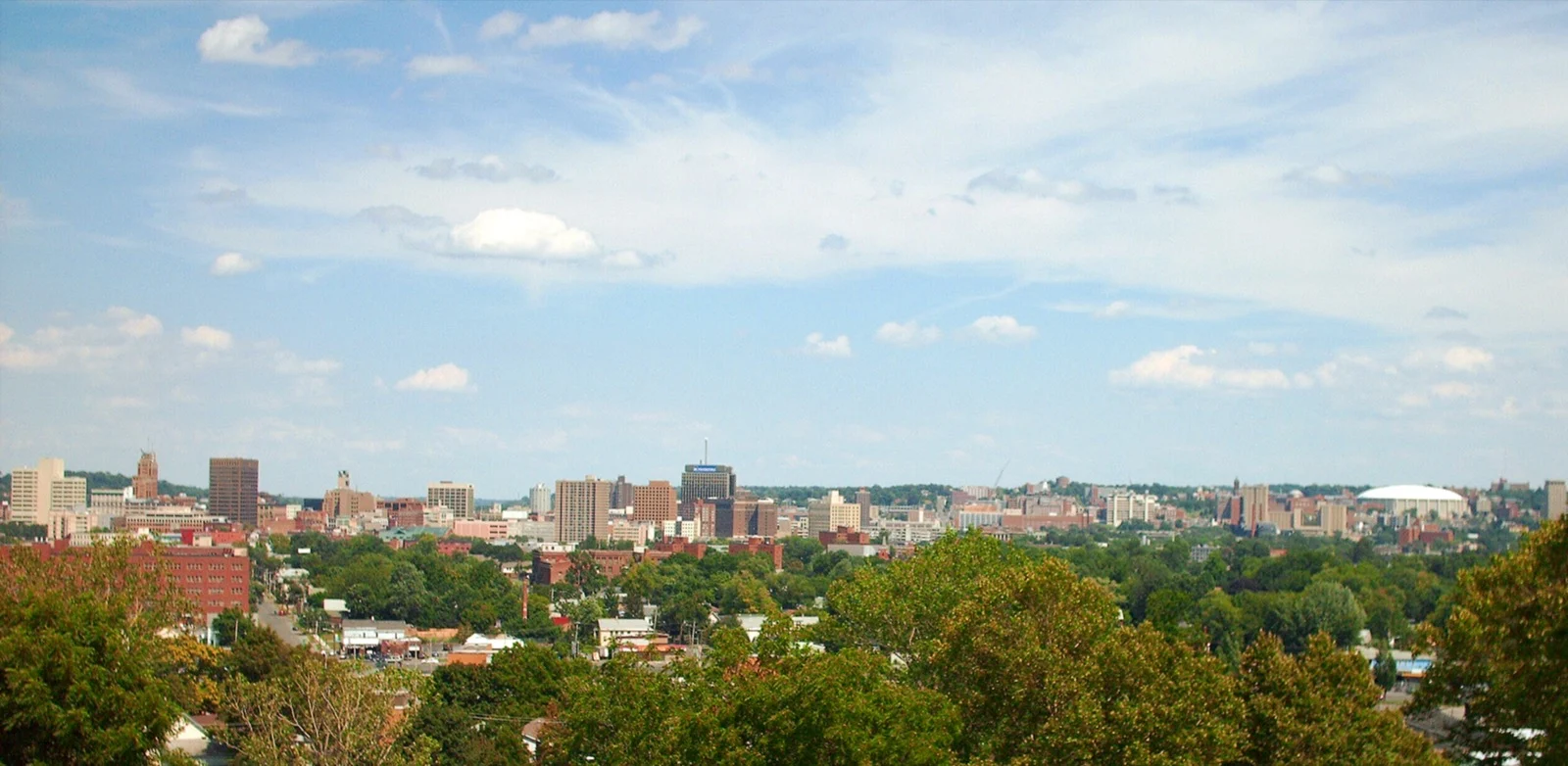
Syracuse is about to be rediscovered. A $100 billion Micron semiconductor campus breaking ground in the town of Clay will deliver roughly 9,000 on-site jobs and as many as 40,000 additional regional jobs over the next two decades, per Micron and the New York Governor’s office. That scale of hiring, combined with remote workers fleeing higher-cost metros, means tens of thousands of newcomers are running the same numbers: Can we afford it? Where do we live? Are the schools any good? How bad is the snow?
The short answer is that Syracuse is one of the most affordable midsize metros in the Northeast, the commute is among the shortest in the country, the top suburban schools compete with anything in the region, and yes, the snow is legitimately historic. This guide walks through the numbers relocators actually need.
Know before your neighbors do
The Morning Signal hits your inbox at 6 AM with everything that happened overnight. Real incidents, real data, zero fluff.
The Numbers That Matter
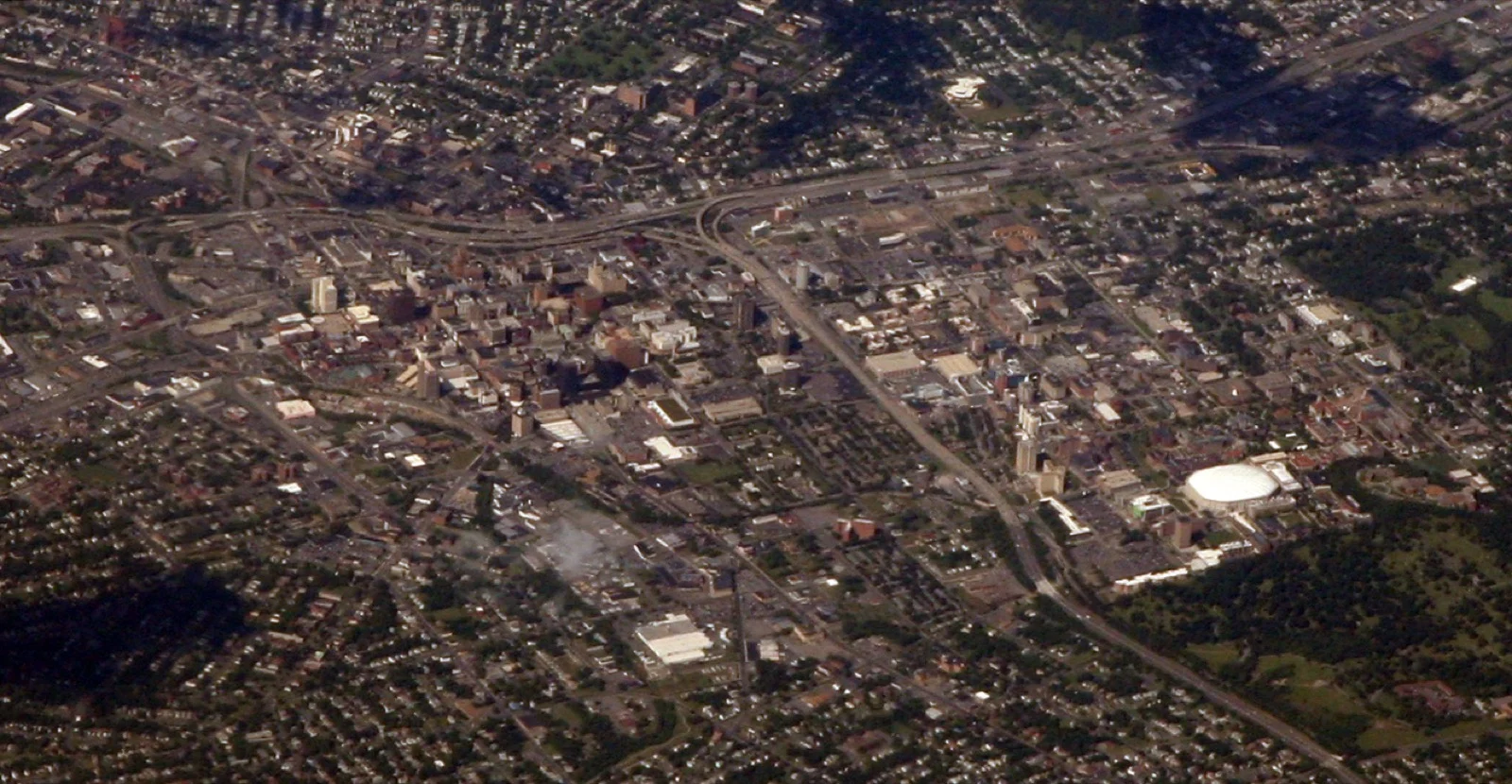
Onondaga County, which contains the city of Syracuse and most of its suburbs, had a median household income of $78,442 in the 2024 American Community Survey one-year estimate from the U.S. Census Bureau. The five-year estimate put it at $76,945. The city of Syracuse itself had a population of 146,091 in the 2024 ACS one-year estimate, down from a 2020 peak of 146,726. Onondaga County reached 469,812 residents in the July 2024 Census estimate, with projections around 471,000 for 2026. The county is 74.6 percent White, 10.2 percent Black, and 5.7 percent Hispanic or Latino, per Census data.
Syracuse by the Numbers
Housing: Cheap by Northeast Standards
The city of Syracuse sold homes at a median price of $179,000 in March 2026, up 27.9 percent year over year, per Redfin. Zillow pegged the typical home value at $175,622, up 7.7 percent annually. Realtor.com’s median listing price for the Syracuse metro was $289,900 in March 2026, reflecting suburbs pulling the asking-price figure higher. For context, Onondaga County’s median home value is roughly $236,300, per SmartAsset analysis of Census data, about half the statewide figure of $449,800.
Rents vary sharply by neighborhood. Apartments.com put the citywide average near $1,692 in 2025. Downtown’s Armory Square averaged about $2,000 for a one-bedroom, while Eastwood averaged around $982 for a one-bedroom with a $1,395 median across unit types in July 2025, per Zumper. Syracuse rents run slightly higher than Buffalo ($1,419) and Rochester ($1,509) per RentCafe 2026 data, a gap most relocators did not expect.
Property tax is where New York State’s reputation catches up. Onondaga County homeowners paid a median annual property tax bill of about $5,001, per SmartAsset. That is lower than the statewide median of roughly $6,500 and well below Monroe County (Rochester), which had an effective rate of 2.36 percent. The national ATTOM 2025 property tax report ranked Rochester highest among metros of one million or more at 1.82 percent, followed by Chicago at 1.78 percent and Buffalo at 1.73 percent. Syracuse did not make that top list, but property taxes here are still higher than most of the country.
Compared to New York City, the savings are drastic. NerdWallet puts the overall cost of living in Manhattan at roughly 69.7 percent higher than Syracuse, with housing costs running about 75 percent lower here. A $4,630 Manhattan one-bedroom rents for about $1,142 in Syracuse; a $2.5 million Manhattan condo corresponds to about $517,000 in Onondaga County on the same cost-of-living model.

Cost of Living
Syracuse runs cheaper than the national average overall, though housing-owner costs are close to parity. BestPlaces put the composite cost of living at 87.4, meaning 12.6 percent below the U.S. average. Apartments.com’s 2025 renter-weighted index pegged the metro at 1.3 percent below the national average. Groceries came in 0.7 percent cheaper, utilities 5.7 percent cheaper, and transportation 7.1 percent more expensive than the national figure. For a homeowner, the overall index ran about 5.1 percent above the national average, driven by property taxes.
Climate: The Snow Is Real
Syracuse averages 115.6 inches of snow per year according to the National Weather Service, making it the snowiest major U.S. city with a population above 100,000 in most seasons. The 2024-2025 season logged roughly 109.7 inches. Buffalo averages around 92 inches, Rochester around 89.3. The reason: Syracuse sits directly south of Lake Ontario, in the path of lake-effect snow bands that form when cold Arctic air crosses warmer lake water.
Winter temperatures run cold but not Siberian. Average January highs sit near 28 to 31 degrees Fahrenheit; average lows run about 12 to 17 degrees. Heavy snowfall stretches from mid-December into mid-March. Summers compensate: humid, warm, with July highs around 81 degrees. Unlike the Sun Belt, Syracuse has real shoulder seasons. Spring arrives later than in New York City, but peak autumn color in Central New York typically hits around October 25, with a 7 to 10 day peak window per SUNY-ESF foliage tracking, and Skaneateles Lake and Cazenovia Lake are roughly 30 minutes away.

Top School Districts for Relocators
- Fayetteville-Manlius. U.S. News 2025 ranked #1 in the Syracuse metro and #804 nationally; #82 in New York State.
- Skaneateles. #2 in the metro, #842 nationally, #85 in New York State.
- Jamesville-DeWitt. Rounds out the top five Syracuse-area high schools per U.S. News 2025.
- Baldwinsville. A consistently strong suburban district near Micron’s Clay site; home to the Anheuser-Busch brewery.
- Syracuse City School District. 19,440 students, $578.1 million budget for 2024-2025, opening a new STEAM high school in September 2025.
Schools: Huge Suburban Gap
The school picture divides sharply between the city and the top suburban districts. Fayetteville-Manlius Senior High School ranked #1 in the Syracuse metro area and #82 in New York State in the U.S. News 2025 Best High Schools list, with a national rank of #804. Skaneateles ranked #85 in New York (#842 national). Jamesville-DeWitt sits in the top five locally. Niche gave Fayetteville-Manlius an A-minus at 4.1 of 5 and Skaneateles a B-plus at 4.01.
The Syracuse City School District serves 19,440 students across a district roughly the size of Buffalo’s. The board approved a $578.1 million budget for 2024-2025, up about $50 million from the prior year, and is opening a new STEAM high school in September 2025. The district has publicly prioritized reading intervention, math intervention, and mental health support.
Where People Actually Live
Syracuse has 26 named neighborhoods and a dozen major suburbs. Here are the ones newcomers ask about most.
Armory Square and Franklin Square are downtown’s restaurant and loft districts. Armory Square sits on the west edge of downtown around the former Syracuse Armory, redeveloped in the 1990s into a nightlife and retail corridor. Franklin Square, a former industrial park north of downtown, is now apartments and offices.
Westcott, east of Syracuse University, is the city’s arts and indie-music neighborhood, anchored by the Westcott Theater and Thornden Park’s rose garden. It draws students, professors, artists, and families who want to walk to campus.
Eastwood, called “the village within the city,” is built around a James Street retail strip and the historic Palace Theatre. Eastwood averaged a one-bedroom rent of $982 in 2025 per Zumper, making it one of the most affordable Syracuse neighborhoods with real walkable character. Crime grade tracking by CrimeGrade.org ranked Eastwood among the safer Syracuse neighborhoods.
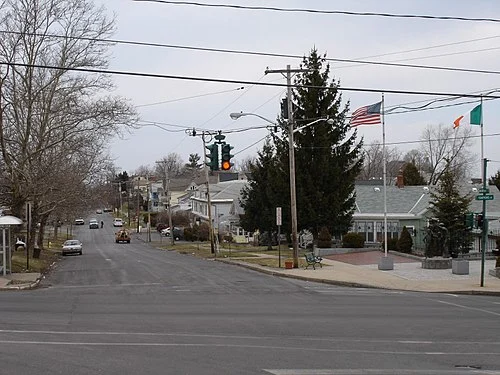
Tipperary Hill, on the west side, is the Irish-American neighborhood best known for the only permanently green-over-red traffic light in the United States. Irish residents repeatedly smashed the originally red-over-green signal installed in 1925, and in 1928 the city flipped the light. Every St. Patrick’s Day residents paint a green shamrock on the road at 12:01 a.m.
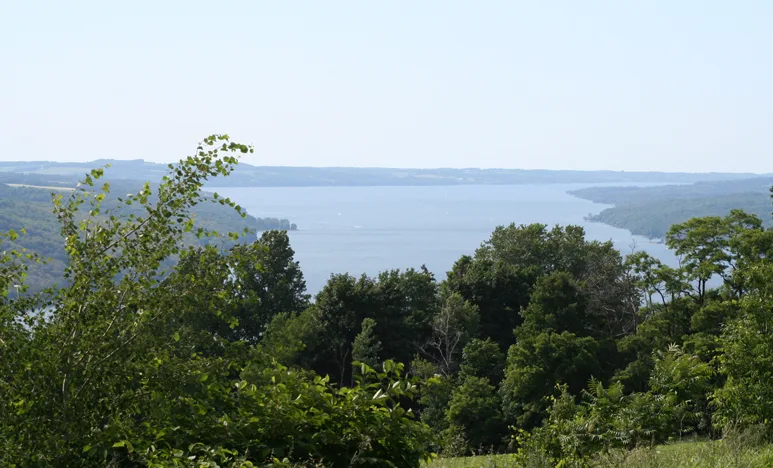
The suburbs. Liverpool (north, on Onondaga Lake), Clay (where Micron is building), Cicero, and Baldwinsville form the northern ring and will absorb much of Micron’s hiring. DeWitt, Fayetteville, and Manlius sit east of the city and contain the region’s top-ranked school districts. Camillus and Marcellus are suburban west. Skaneateles, about 20 miles southwest on Skaneateles Lake, is the high-end village that draws doctors, executives, and second-home buyers. Cazenovia, about 20 miles southeast, is a college town around Cazenovia Lake. Typical suburban commute into downtown Syracuse runs 15 to 25 minutes off-peak.
Safety varies neighborhood to neighborhood. The city’s overall crime rate sits higher than the national average, and CrimeGrade.org ranks the University-Syracuse area in the 19th percentile nationally for safety. Meadowbrook, Strathmore, Sedgwick, Far Westside, Eastwood, and Skytop grade among the safest city neighborhoods.
Jobs: Health Care, Education, Now Chips
Before Micron, health care and higher education drove the economy. That has not changed; Micron simply adds a new layer.
- SUNY Upstate Medical University is the largest employer in Central New York with about 9,460 employees. Upstate University Hospital has 752 beds plus 71 pediatric beds at Golisano Children’s Hospital. Upstate contributes roughly $3.2 billion annually to the state economy and opened a new Upstate Neurological Institute in November 2025 to consolidate neurology and neurosurgery services.
- Syracuse University enrolled 22,589 students in the 2024-2025 academic year, including 15,957 undergraduates and 6,632 graduate students, with a 15-to-1 student-faculty ratio. International students make up about 15 percent of the enrollment (3,403 students).
- Onondaga Community College, the SUNY two-year college just south of downtown, enrolled 8,537 students in fall 2024 and is the main pipeline for Micron operator-technician programs.
- Crouse Hospital, a 506-bed teaching hospital on Irving Avenue, operates adjacent to Upstate.
- St. Joseph’s Health Hospital on the near North Side operates 451 inpatient beds and is part of the Trinity Health network, the third major Syracuse hospital system.
- Lockheed Martin operates a major radar and defense electronics facility in Salina.
- Wegmans, the Rochester-based grocer, runs nine stores in the Syracuse and Auburn area. The DeWitt store is the chain’s largest at about 160,000 square feet.
- Anheuser-Busch brews in Baldwinsville and is that town’s largest private employer.
- Carrier Global maintains a headquarters presence in DeWitt.
- Micron Technology broke ground on January 16, 2026 at White Pine Commerce Park in Clay, targeting up to four fabs on a 1,377-acre campus over 20-plus years with potential $100 billion investment. Major Fab 1 construction is scheduled to begin in the second quarter of 2026, with first-fab operations now projected for the third quarter of 2030 after timeline revisions. Fab 2 is expected to open in late 2033. Construction itself supports up to 40,000 construction and supply-chain jobs during the buildout, per the Governor’s office.
Getting Around
Onondaga County’s average one-way commute is 20.2 minutes per the 2024 ACS, among the shortest in the nation. The city of Syracuse itself averages about 15 minutes. For comparison, the New York-Newark-Jersey City metro averages over 35 minutes and Boston runs roughly 30. Roughly 71.7 percent of Onondaga County workers drove alone in 2024; 13.1 percent worked from home and 7.6 percent carpooled.
Interstates 81 and 90 (the New York State Thruway) cross in Syracuse. I-481 forms an eastern bypass. The state is rebuilding the elevated I-81 viaduct downtown as a community grid, a multibillion-dollar project that will reshape traffic flow through the city’s core.
Centro runs the local bus network. A one-way adult fare on Syracuse-area Centro buses was cut to $1 on March 7, 2025 (50 cents for seniors, riders with disabilities, and children ages 6 to 9) as part of a countywide simplified fare rollout; passes can be purchased at the farebox. The William F. Walsh Regional Transportation Center on Park Street is the Amtrak and intercity bus hub, with Empire Service trains to Albany, New York City, Rochester, and Buffalo. Syracuse Hancock International Airport offered nonstop service to 29 destinations in 2025 on nine commercial airlines (Allegiant, American, Breeze, Delta, Frontier, JetBlue, Southwest, Sun Country, and United), including Atlanta, Boston, Chicago-O’Hare, Dallas-Fort Worth, Denver, Detroit, Minneapolis, Orlando, and Washington Reagan. SYR handled 3,004,747 passengers in 2024, a record in its 75-year history and up about 5 percent over 2023. JetBlue resumed year-round Fort Lauderdale service on March 5, 2026.
Utilities and Everyday Services
National Grid covers the city and most of the county; the utility’s average upstate residential rate ran about 14.89 cents per kilowatt-hour before a three-year rate plan took effect April 1, 2026, raising typical residential bills about 7.32 percent.
National Grid in the city; NYSEG in outlying areas.
Onondaga County Water Authority (OCWA) serves most suburbs; the City of Syracuse Water Department serves the city.
Handled by the Onondaga County Resource Recovery Agency (OCRRA).
Spectrum is the dominant cable provider; Verizon Fios available in parts of the metro; Greenlight Networks fiber expanding.
Upstate University Hospital (752 beds), Crouse (506 beds), St. Joseph’s Health Hospital (451 beds).
Food and Culture
Salt City Market, at 484 South Salina Street downtown, opened in early 2021 as a 10-vendor food hall incubating small-business owners including Mamma Hai (Vietnamese), Habiba’s Ethiopian Kitchen, Masala Heaven (Indian), Erma’s Island (Jamaican), and Soulutions (Southern barbecue). The four-story Allyn Family Foundation building also houses the Syracuse Cooperative Market grocery and mixed-income apartments. It draws more than 350,000 visitors a year.
Wegmans occupies a cultural position in Central New York that mainland supermarkets rarely reach. Founded in Rochester in 1916 as the Rochester Fruit and Vegetable Company, Wegmans opened its first Syracuse-area store in 1968 and now runs nine locations in the Syracuse and Auburn region. The DeWitt store on East Genesee Street is the chain’s largest at about 160,000 square feet. The Onondaga Boulevard store, Fayetteville store, and Liverpool store each pull from wide suburban catchments.
Other landmarks that show up in local orientation: Dinosaur Bar-B-Que started in Syracuse in 1988 before becoming a regional chain. Destiny USA in Syracuse, at roughly 2.4 million square feet across seven floors with more than 300 stores, is the largest shopping complex in New York State. The New York State Fair runs 13 days at the State Fairgrounds in Geddes in late August and early September; the 2025 edition drew 925,989 people, up 7 percent over 2024 but short of the 1 million mark the fair used to routinely clear before the pandemic. Parking is free, which makes it the largest free-admission-adjacent annual event in the state outside New York City. Onondaga Lake, once one of the most polluted lakes in the country, was declared at its cleanest in 100 years in 2022 after Honeywell’s federally supervised cleanup; the lake reopened to fishing in 1986 and now supports more than 65 documented fish species, although swimming remains off the table.
What to Plan For
A realistic relocation budget for Central New York, coming from a coastal metro, needs three adjustments.
First, winter gear is not optional. Expect to spend $300 to $800 per adult on a true cold-weather coat, boots, and a snow shovel the first year. Budget for snow tires if you drive anything other than all-wheel drive, and confirm off-street parking when renting in the city.
Second, property taxes will feel high relative to sticker price. A $300,000 home in Onondaga County will typically carry a $5,500 to $8,500 annual property tax bill depending on school district and municipality. The highest-tax districts are Fayetteville-Manlius and Jamesville-DeWitt. The lowest for the demand level are often Westhill, Liverpool, and Baldwinsville.
Third, the city itself is small, and so is the network of in-person professional services. Pediatricians, dentists, and specialist waitlists run longer than in bigger metros. Lining up providers before arrival is worth the time.
Bottom Line
Syracuse is not trying to be Brooklyn. It is a midsize Upstate city where a household earning a Boston salary can buy a turnkey four-bedroom in a top school district for what a studio costs in Manhattan, where the commute is 20 minutes, and where the biggest downside is six months of winter. For the thousands of Micron engineers, construction supervisors, medical residents, and remote workers heading here over the next five years, the math works.
Sources: U.S. Census Bureau 2024 ACS and July 2024 population estimates; Redfin and Zillow market data, March 2026; RentCafe 2026 rent data; NerdWallet cost-of-living calculator; SmartAsset and ATTOM 2025 property tax analyses; National Weather Service climatology; SUNY-ESF fall foliage tracking; New York State Education Department and U.S. News 2025 Best High Schools; Syracuse City School District budget documents; Syracuse Hancock International Airport; Centro (CNYRTA) fare schedule; Micron Technology; New York Governor’s office; Syracuse University facts and figures; SUNY Upstate Medical University; Onondaga Community College; Crouse Health; St. Joseph’s Health; New York State Department of Environmental Conservation (Onondaga Lake); New York State Fair attendance records; Destiny USA; Salt City Market; BestPlaces and Apartments.com cost-of-living indices.