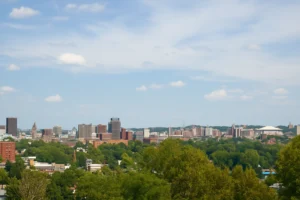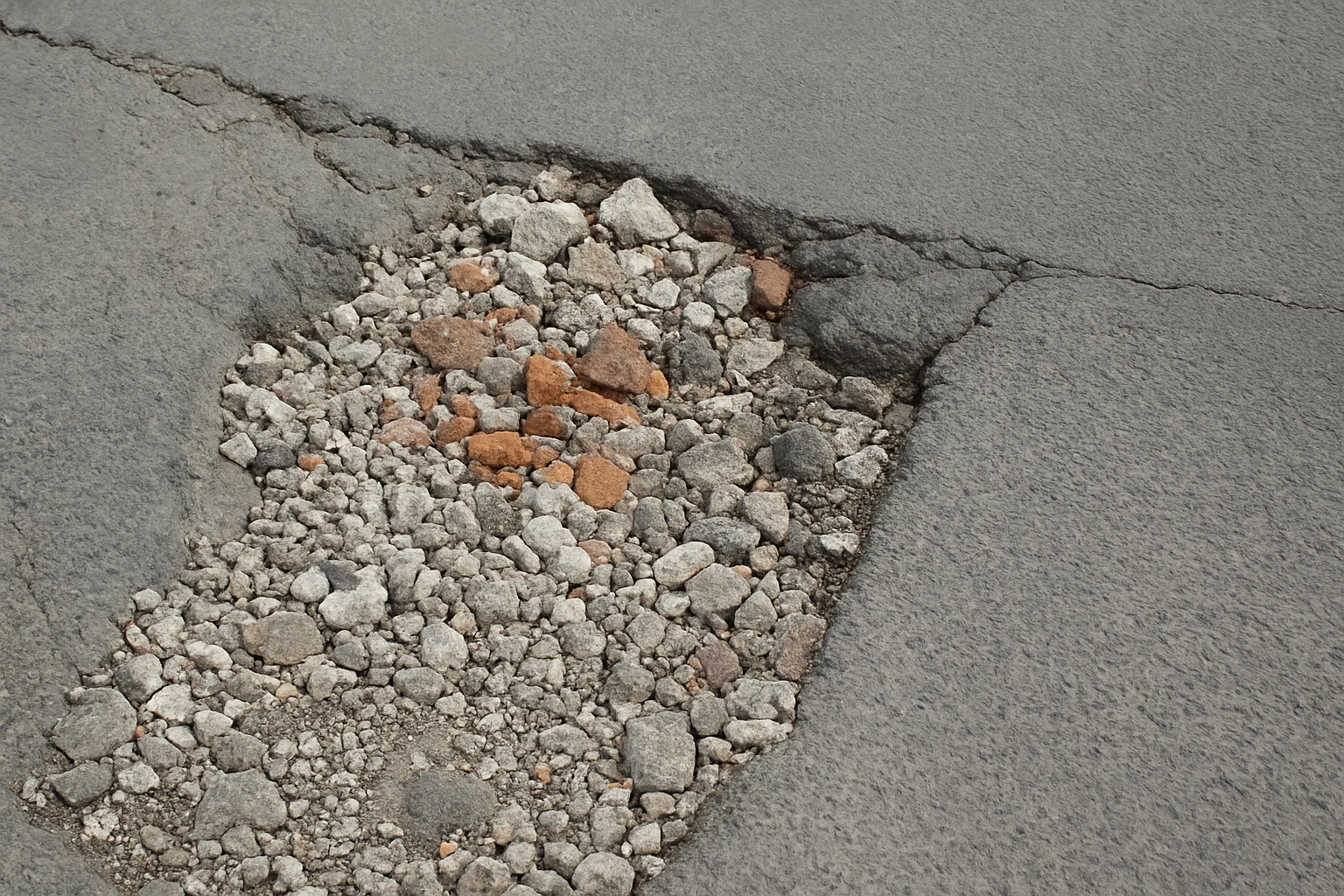
Pothole Season: What $1.2B in State Paving Means for CNY Roads
After another brutal freeze-thaw cycle, relief is on the way — and Central New York is getting a serious slice of the pie.
If you’ve driven anywhere in Syracuse this month, you already know. That sickening thunk as your front tire drops into a crater on South Salina Street. The slalom course that Erie Boulevard East becomes every March. The quiet prayer you mutter crossing the Burnet Avenue railroad bridge. Pothole season is here, and it arrived right on schedule.
But here’s the thing: 2026 might actually be the year the cavalry shows up.
New York State has committed $1.2 billion to its statewide paving and road preservation program this year — the largest single-year investment in pavement maintenance in state history. And Central New York, which sits in NYSDOT Region 3, is positioned to see substantial funding flow into the roads that residents have been white-knuckling since the first hard freeze in November.
Why Syracuse Roads Are Especially Brutal
It’s not your imagination. Syracuse consistently ranks among the worst cities in the country for road surface quality, and the reasons are baked into geography. The National Weather Service station at Syracuse Hancock International Airport records an average of 127 inches of snowfall per year, making it the snowiest major city in the United States. But snow alone doesn’t destroy roads — the freeze-thaw cycle does.
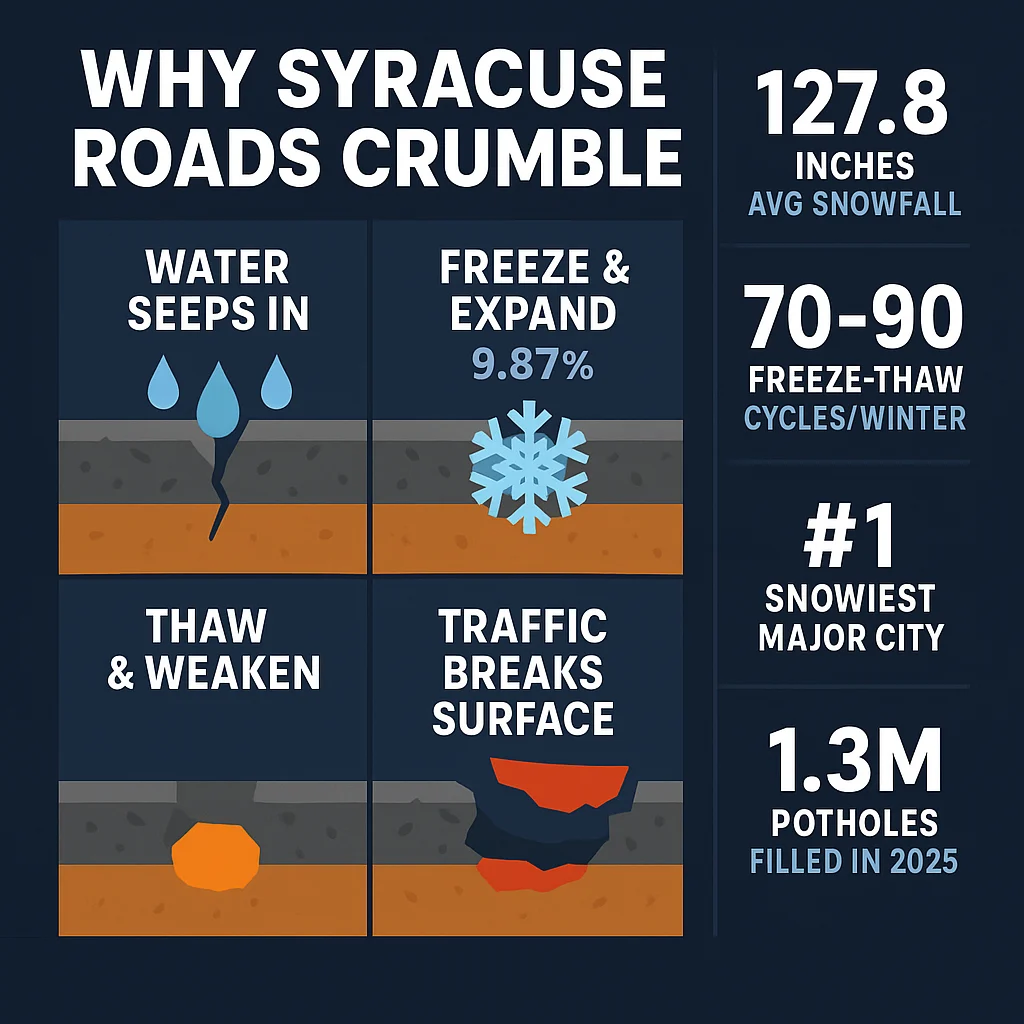
Syracuse typically experiences between 50 and 60 freeze-thaw cycles per winter, according to NOAA climate data. Each cycle works the same way: water seeps into cracks in the pavement, freezes, expands by roughly nine percent, and forces the crack wider. When it thaws, the void remains. Traffic loads push the weakened surface downward. Repeat that process dozens of times between November and March, and you get the moonscape that greets drivers every spring.
The city maintains approximately 720 lane-miles of road. With an annual paving budget that has historically covered only a fraction of that network, Syracuse has faced a structural deficit in road maintenance for decades. The result is a backlog — one that grows faster than crews can patch it.
What $1.2 Billion Buys — and What CNY Gets
Governor Hochul’s office announced the $1.2 billion paving program as part of the state’s broader transportation capital plan. The program targets resurfacing, preservation treatments, and bridge deck repairs across all 11 NYSDOT regions. Statewide, the goal is to resurface or treat more than 9,300 lane-miles of highway in 2026.
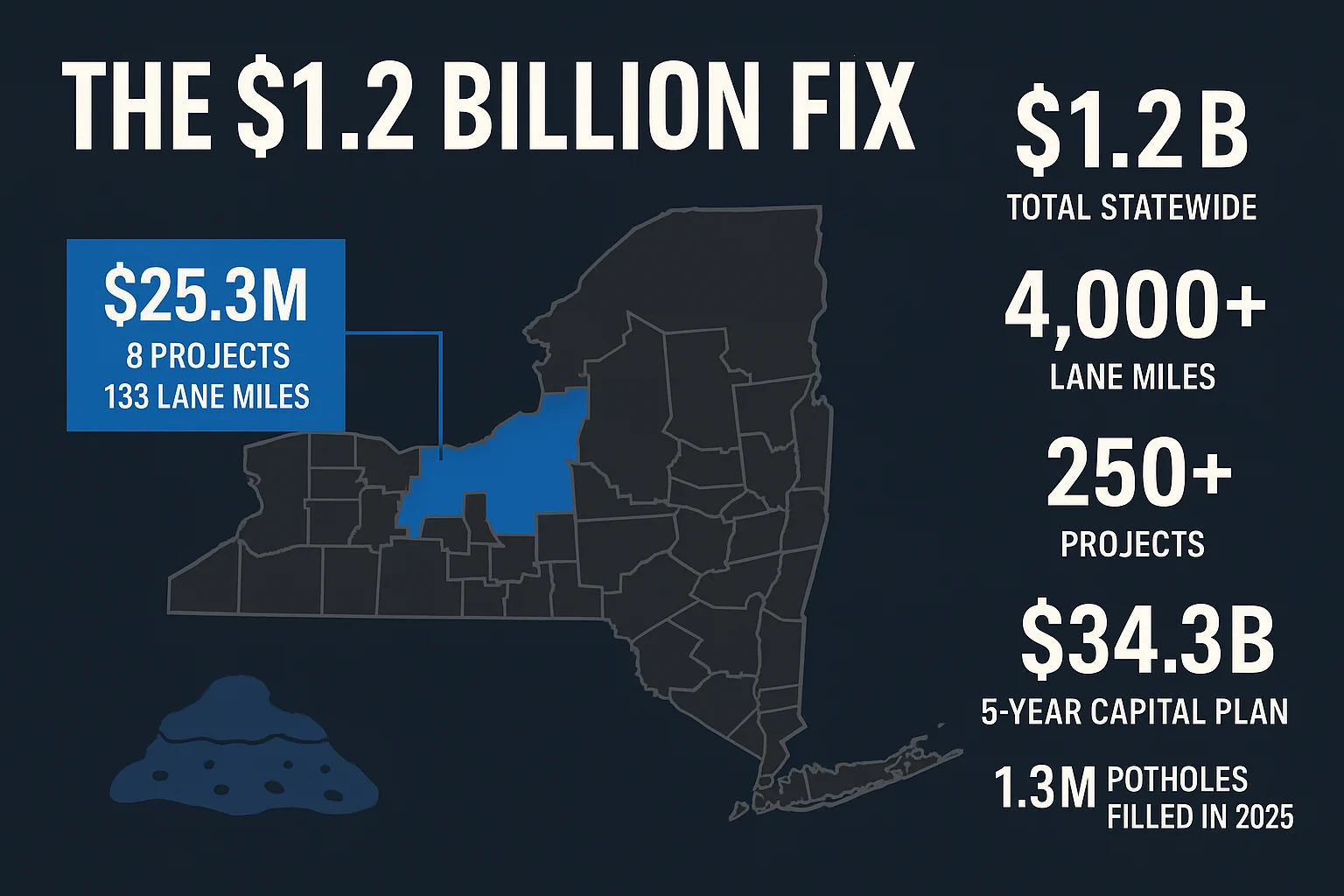
NYSDOT Region 3 covers a wide swath of Central New York: Onondaga, Oswego, Madison, Oneida, Cayuga, Cortland, Seneca, Tompkins, Tioga, Broome, Chenango, and several surrounding counties. In recent funding cycles, Region 3 has received between $80 million and $110 million annually for paving and preservation work. With the expanded statewide commitment, this year’s allocation is expected to land at the higher end of that range or above it.
Among the projects already on the books for Region 3 in 2026: resurfacing work on Route 5 in Onondaga County, pavement preservation on segments of Route 11 between Syracuse and Cortland, and bridge deck rehabilitation projects on Interstate 690 within the Syracuse metro area. Route 31 in Oneida County and Route 104 in Oswego County are also flagged for surface treatments this construction season.
These are state roads. But state investment matters to city drivers too, because every dollar NYSDOT spends on the arterials and highways feeding Syracuse is a dollar the city doesn’t have to backstop with its own limited budget.
The I-81 Factor
No conversation about Syracuse roads in 2026 happens without mentioning the Interstate 81 viaduct project — the largest infrastructure undertaking in Central New York history. The $2.25 billion project to replace the elevated highway through downtown with a street-level community grid is deep into construction, and the detour routes are taking a beating.
Sections of I-481 (now redesignated as I-81), Almond Street, and the surrounding grid streets are absorbing traffic loads they were never designed to handle at current volumes. NYSDOT has acknowledged this and built supplemental maintenance into the project plan, but the reality on the ground is that some local roads near the construction zone are deteriorating faster than usual. Drivers on Genesee Street, West Street, and portions of the Route 695 corridor have felt it.
The silver lining: when the community grid is complete, Syracuse will have miles of brand-new road surface downtown, engineered to modern standards. That’s years away, but it’s coming.
The Cost of Doing Nothing
Potholes aren’t just an annoyance — they’re expensive. AAA estimates that pothole-related vehicle damage costs U.S. drivers approximately $3 billion per year. The average individual repair bill — covering tire replacement, wheel rim damage, suspension components, and alignment — runs north of $600 per incident. In a city like Syracuse, where encountering multiple potholes on a single commute is routine, those costs compound fast.
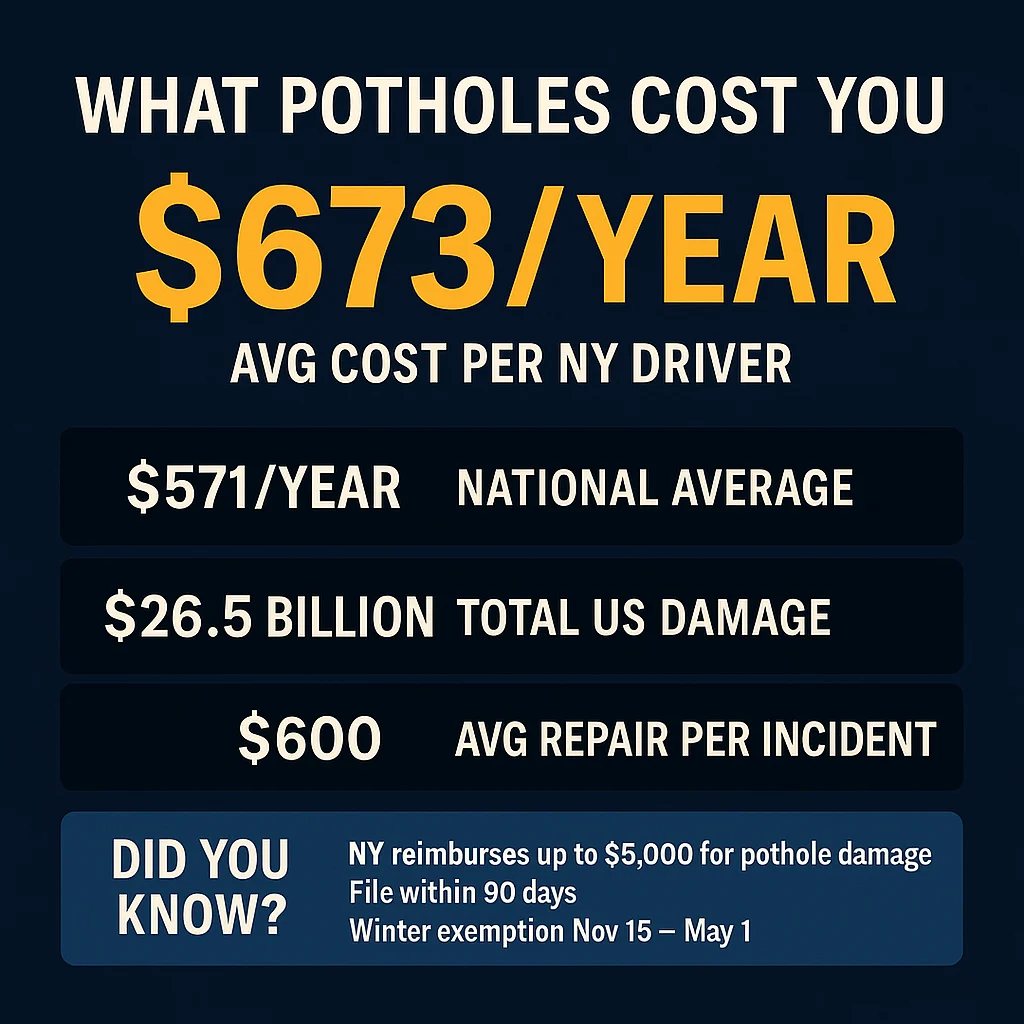
A 2023 analysis by TRIP, the national transportation research nonprofit, found that New York drivers pay an average of $627 per year in additional vehicle operating costs attributable to rough road conditions. For Syracuse-area drivers navigating some of the roughest surfaces in the state, the real number is likely higher.
How to Report Potholes — and Actually Get Them Fixed
The city has been pushing residents to report potholes early and often, and the systems for doing so are more responsive than they used to be.
For City of Syracuse streets, the primary reporting line is 315-448-CITY (2489). The city also accepts reports through the SeeClickFix app, which lets residents drop a pin, upload a photo, and track the status of their request. SeeClickFix reports are routed directly to the Department of Public Works, and the city has committed to responding to pothole complaints within 48 hours during peak season.
For state roads and highways — including Routes 5, 11, 20, 92, and any Interstate — reports should go to NYSDOT directly. You can call the Region 3 office or submit reports through NYSDOT’s online maintenance request system at dot.ny.gov.
A practical tip: if you hit a pothole and sustain damage, document it. Photograph the pothole, note the exact location, and file your report. Both the city and NYSDOT accept damage claims, though the process requires evidence that the agency had prior notice of the hazard.
What the City Is Doing Differently
Syracuse DPW has expanded its pothole response protocol for 2026. The department is running dedicated pothole crews seven days a week through April, compared to the standard five-day schedule in previous years. The city has also increased its stockpile of hot-mix asphalt — the durable, permanent repair material — earlier in the season than usual. In prior years, early-spring repairs often relied on cold patch, a temporary fill that deteriorates quickly under traffic. The shift to hot-mix earlier in the calendar means repairs done in March and April should hold through the summer.
The Bottom Line
Syracuse roads have always taken a beating. That’s what happens when you’re the snowiest city in America sitting on aging infrastructure. But $1.2 billion in state paving money, expanded city repair crews, and a construction season that’s about to kick into high gear add up to something that feels different this year. Not perfect — nobody’s promising that. But measurably better.
In the meantime, watch your speed on South Salina. And maybe avoid that stretch of Lodi Street near the train tracks until DPW gets there.
You know the one.
CNY Signal — Local news, real-time. Always free, always Central New York. Tips: [email protected]