By Jen Okafor, Staff Reporter
Step inside the gates at 1 Conservation Place and you are immediately standing in a piece of Syracuse history that stretches back to 1914. The Rosamond Gifford Zoo at Burnet Park sits on 43 acres overlooking the city, and in the spring of 2026 it is home to more than 900 animals representing 216 species. Admission stays under ten dollars, parking is free, and families can spend three or four hours winding past elephants, tigers, penguins and a pack of critically endangered red wolf puppies that represent one of the most urgent conservation stories in North America.
Rosamond Gifford Zoo at a Glance
How the zoo got its name
The facility opened in 1914 as Burnet Park Zoo on a four-acre site carved out of the hilltop Major John P. Burnet had donated to Syracuse back in 1886 when the village of Geddes joined the city. It started modestly, with stone bear exhibits and a waterfowl pond added in 1916. The whole operation closed in 1982 for a $13 million rebuild and reopened in 1986. A year later the Association of Zoos and Aquariums granted its first accreditation, a credential the zoo has carried continuously ever since. The current name arrived in 1999 after the Rosamond Gifford Charitable Corporation committed a $2 million endowment to the zoo. Rosamond Gifford herself was a Syracuse woman born in 1873, the daughter of attorney William H. Gifford, and she lived until 1953. Her bequest seeded a foundation that has since awarded more than $44 million in grants across Onondaga, Oswego and Madison counties.
Eight Asian elephants and the miracle twins
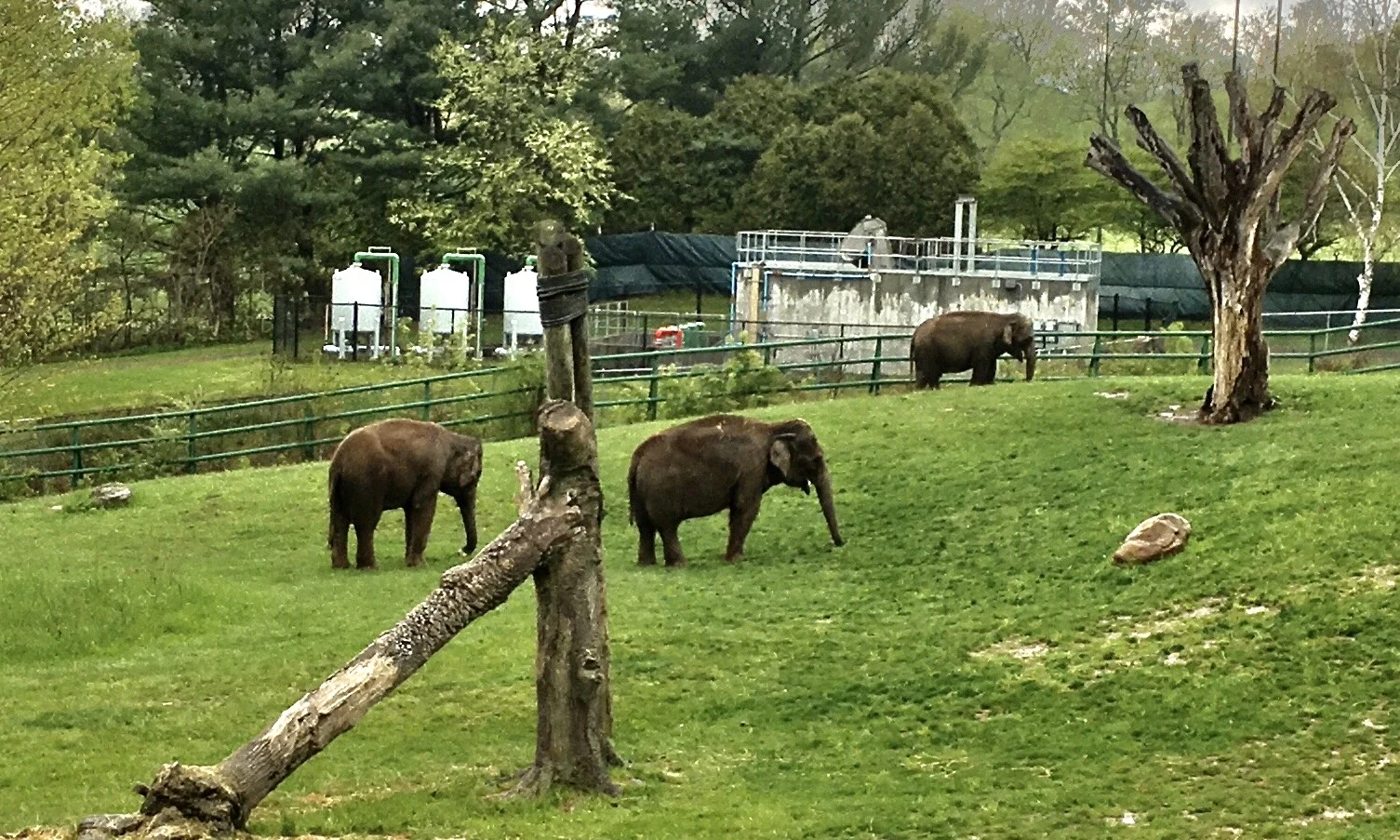
The Helga Beck Asian Elephant Preserve is the heart of the zoo, and it is also one of the most significant elephant facilities in the United States. Of the 237 institutions accredited by the Association of Zoos and Aquariums, only eight are active Asian elephant breeding facilities, and the Syracuse program has produced genuine conservation milestones. The herd includes matriarch Targa, her daughters Mali and Kirina, bull Doc, Romani, and young Batu. Keeping them company are Yaad and Tukada, the male twins born to Mali and Doc on October 24, 2022. Yaad, the firstborn, weighed 220 pounds. Tukada, born second, came in heavier at 237 pounds but was noticeably weaker than his brother at birth and needed round-the-clock keeper intervention to survive. The pair became the first surviving elephant twins born in the United States and only the second set of surviving elephant twins on record in the world. Less than one percent of elephant pregnancies produce twins, and until 2022 nearly all such calves died within days.
The herd has not been spared by Elephant Endotheliotropic Herpesvirus. In December 2020 the zoo lost two calves in a single week. Ajay, not yet two years old, died on a Tuesday morning after showing symptoms for only about two hours. Five days later, his five-year-old half-brother Batu succumbed to the same disease. EEHV is the biggest killer of young Asian elephants worldwide and can move from the first eye swelling to death in under 24 hours. That brutal history is what made the 2024 vaccine trial at the zoo so meaningful. On October 28, 2024, Yaad and Tukada became the first elephants in North America to receive a multi-antigen mRNA vaccine targeting the 1A strain of EEHV, the same strain that killed both Ajay and Batu. The vaccine was developed at Baylor College of Medicine and administered through a collaboration that included Cornell University veterinarians, the International Elephant Foundation, Colossal Biosciences and the Houston Zoo. Both twins had previously tested near seronegative for 1A, meaning they had almost no natural antibodies before the shots.
The Pachyderm Pavilion, a 10,000 plus square foot barn with public viewing windows and a private maternity ward, makes it possible for visitors to watch the herd through all four Central New York seasons. The zoo also opened a dedicated Animal Health Center in 2022 to centralize veterinary care for all 900 residents.
The Herd: Eight Asian Elephants
The baby boom of 2025 continues into 2026
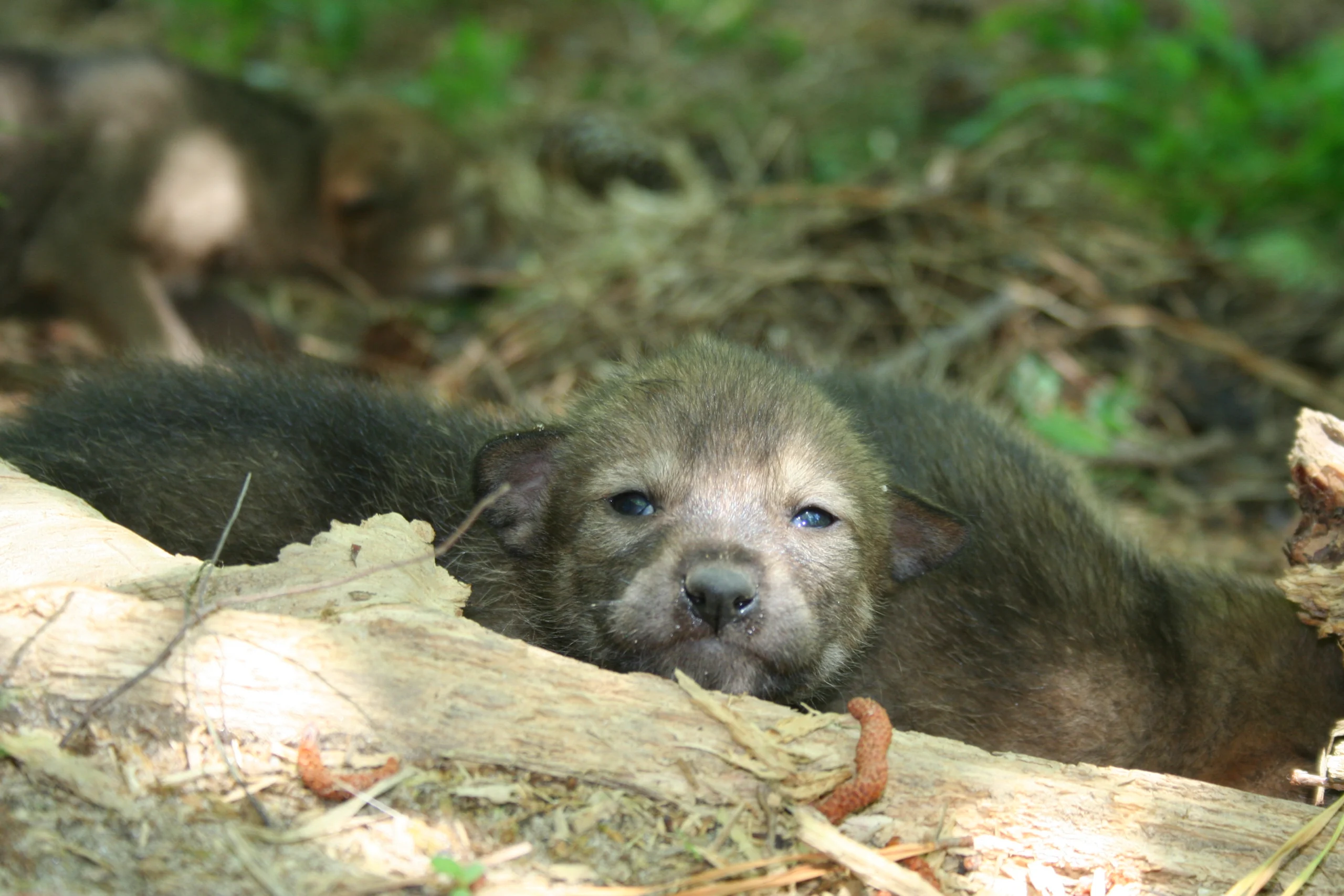
On May 3, 2025, parents Evie and Sage welcomed six red wolf puppies at the Matthews Auto Group Red Wolf Preserve. The litter of four females and two males represents a staggering fraction of the remaining population. Red wolves are the most critically endangered canine species in the world, with fewer than 20 believed to remain in the wild, concentrated in a narrow corridor of coastal North Carolina. The pups born in Syracuse are the first red wolves raised at the zoo since the 1990s, and because the Species Survival Plan tracks every animal by genetics, some may one day be candidates for release through the U.S. Fish and Wildlife Service recovery program.
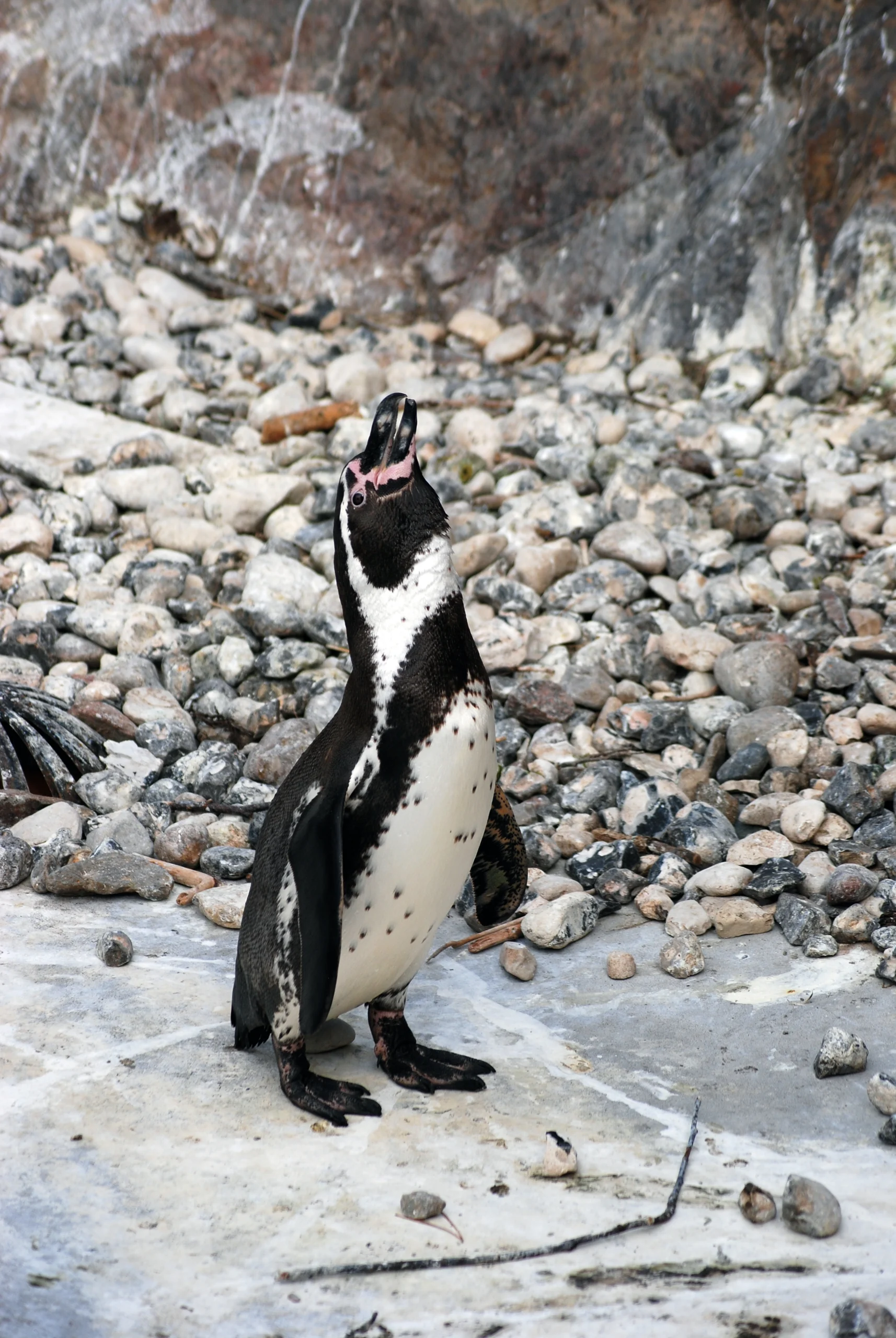
The same month, two male Humboldt penguin chicks named Domingo and Ramon hatched at Penguin Coast to parents Peru and Cuatro. Since that exhibit opened in 2005, the zoo has hatched more than 55 Humboldt penguin chicks as part of its Species Survival Plan work, a number that places it among the most productive Humboldt breeding colonies in the country. The IUCN lists Humboldt penguins as vulnerable, and their Pacific coast range in Peru and Chile continues to contract because of overfishing and climate shifts.
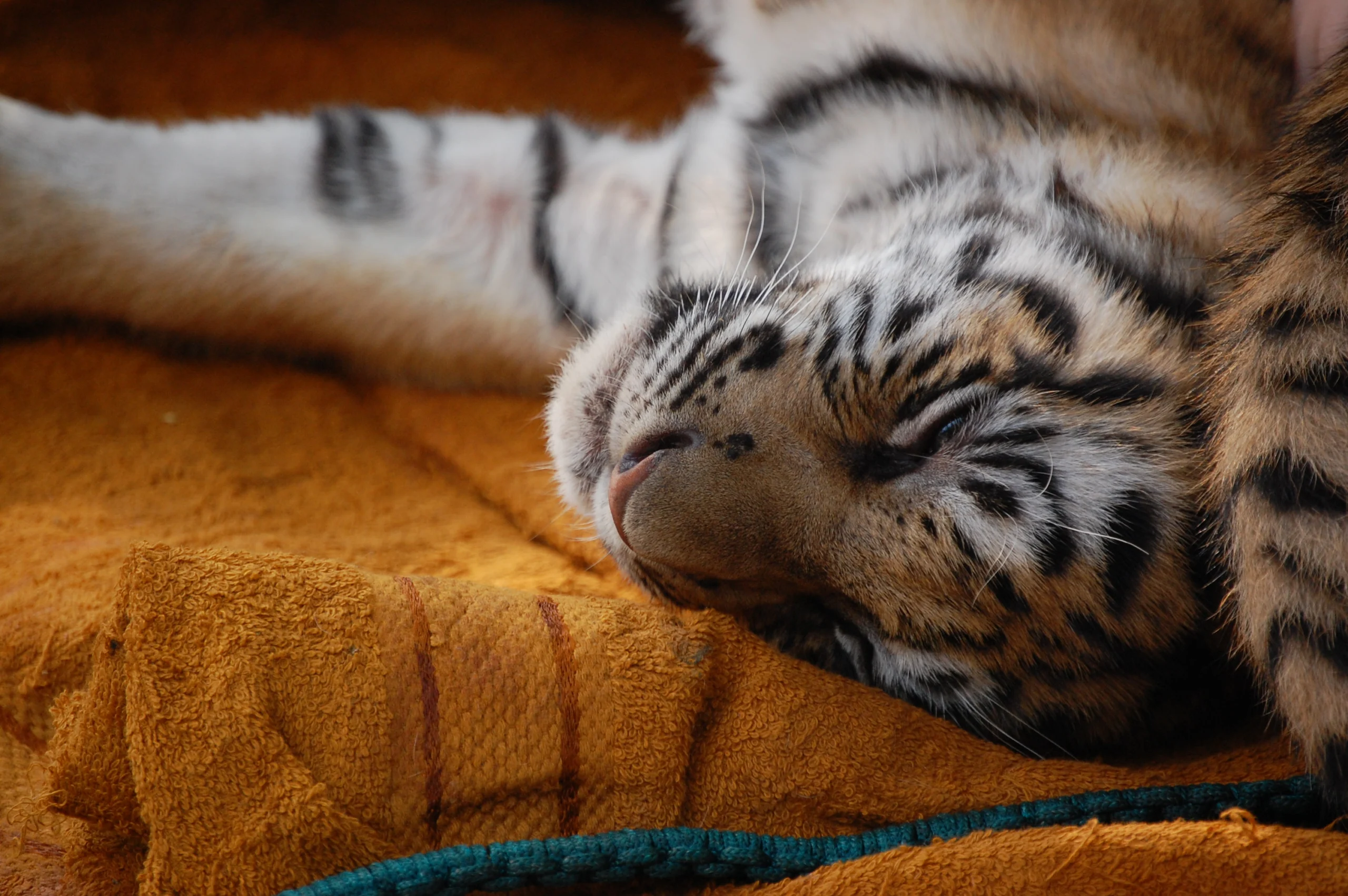
On the Wildlife Trail, mother Zeya continues to raise Amur tiger twins Zuzaan and Coba. The cubs were born April 29, 2024, to Zeya and father Thimbu, a pairing the AZA Species Survival Plan recommended after Zeya arrived from Connecticut\’s Beardsley Zoo in late 2020 and Thimbu came from Colorado\’s Cheyenne Mountain Zoo in 2019. Zuzaan is a male whose name means thick in Mongolian, and Coba is a female named for the Russian word for owl, inspired by a birthmark on her neck. The pair made their public debut on September 5, 2024. With fewer than 400 Amur tigers left in the wild, their arrival was a significant win for the global breeding program.
2025 Baby Boom, Still on Exhibit in 2026
Planning a 2026 visit
The zoo is open daily from 10 a.m. to 4:30 p.m., every day of the year except Thanksgiving, Christmas and New Year\’s Day. Adult admission from March through December is $9, youth aged 3 to 17 pay $5, seniors 62 and older pay $5, and children 2 and under get in free. U.S. veterans and active military members are admitted free with valid ID, and up to three family members can join them at no charge. Winter discount rates in January and February drop adult admission to $5, senior admission to $2.50 and youth admission to $2. Parking is free, and overflow street parking is available in the Tipperary Hill neighborhood bordering Burnet Park. The zoo accepts cash, personal checks with valid ID, Visa, Mastercard and Discover, but weather-related refunds and rain checks are not offered.
Inside, the half-mile Wildlife Trail threads past Amur tigers, red pandas, Turkmenian markhor, Andean bears, Bactrian camels, snow leopards, Steller sea eagles, gray wolves and blue cranes. The Social Animals building houses Naga the Komodo dragon and the Zalie and Bob Linn Amur Leopard Woodland, a habitat dedicated to the rarest big cat in the world. Primate Park rotates siamangs, colobus monkeys and patas monkeys into an outdoor space with rope swings and a waterfall feature during warm months. The HoneyBee Cafe keeps families fed with grilled items, sandwiches and ice cream.
Kids, camp and calendar
Summer Zoo Camp returns in June, July and August for kids who want hands-on projects, animal encounters and STEAM challenges. Member registration opens February 4, 2026, and non-member registration follows on February 18. Programs include Wild Beginnings for ages 3 to 5, traditional Zoo Camp weeks for grades 1 through 6, and Kids Night Out sessions for date night families. Full day camp runs 9 a.m. to 4 p.m. at $320 per week, with half day AM sessions for preschoolers priced at $200. Year round, keeper encounters let visitors get close to specific animals alongside the staff who care for them.
The 2026 events calendar also brings back the Annual Asian Elephant Extravaganza in August, when the herd smashes watermelons and splashes in kiddie pools while traditional Indian music and dance honors the elephants\’ home range. Brew at the Zoo, the adult only summer fundraiser, returned August 1 for the 2025 season with more than 100 craft beers, wines and canned cocktails, and the 2026 edition is expected to carry the same format into its 30th year. Zoo Boo takes over October with costumes, trick-or-treating stations and a fall festival built around the Squishing of the Squash, when bears, tigers and otters romp and chomp through hundreds of pounds of donated pumpkins. The 2025 Zoo Boo ran across four evenings on October 18, 19, 25 and 26, a pattern the zoo is likely to repeat in 2026.
2026 Planning Cheat Sheet
Conservation work with teeth
The Rosamond Gifford Zoo has held continuous AZA accreditation since 1987, and the most recent renewal in October 2024 carries that status through 2029. Accreditation means the zoo clears a site inspection every five years on animal welfare, veterinary care, safety, staffing and conservation funding. The zoo participates in Species Survival Plan programs for Asian elephant, Amur tiger, Amur leopard, snow leopard, red panda, red wolf, black and white ruffed lemur, Humboldt penguin, Turkmenian markhor and white-lipped deer, among others. It also cares for the Panamanian golden frog, a species now considered extinct in the wild and surviving only through breeding programs at AZA institutions.
Less visible to the public is the Chittenango Ovate Amber Snail program, a joint effort with SUNY-ESF, the U.S. Fish and Wildlife Service, state parks and the Seneca Park Zoo. The Chittenango Ovate Amber Snail exists nowhere on earth except at Chittenango Falls State Park east of Syracuse, where the wild population recently fell to roughly 70 individuals. A climate-controlled incubator at the Rosamond Gifford Zoo holds about 400 captive snails as an insurance colony, and nearly 2,000 have been propagated across ESF and the zoo since the program began.
The zoo is owned and operated by Onondaga County Parks, with supplemental funding and programming from Friends of the Rosamond Gifford Zoo, a nonprofit founded in 1970. Executive Director Carrie Large leads the Friends organization, and Dan Meates is serving as interim director of the zoo after longtime director Ted Fox announced his retirement in 2025 following 34 years of service. County Executive Ryan McMahon has repeatedly pointed to the zoo as a cultural anchor for the west side. An expansion planned through the county capital improvement budget would add an African Savanna habitat with giraffes, gazelles, antelopes, African cranes and lions under a $7.85 million construction envelope, bringing that concept back to the Syracuse skyline.
Why it matters locally
On a Saturday morning in April, the Burnet Park hillside fills up with strollers, field trip buses from Liverpool and Baldwinsville, and grandparents who remember when the zoo was four acres of bear cages. In a city that keeps looking for reasons to celebrate itself, a zoo that hatches penguins, raises critically endangered wolf puppies and stands at the center of the country\’s elephant breeding program is an honest answer. Admission for a family of four with two adults and two kids comes out to $28. Three hours, maybe four. The red wolves alone are worth the trip.