The adopted 2026-2027 budget totals $7,713,353. Property taxes cover 66 percent of it, the police department accounts for another 24 percent, and one debt line shows $150,000 in interest with no principal payment beside it.
Most villages in Central New York buy their electricity from National Grid like everybody else. Solvay generates a general fund line item from it instead.
This story came from public records we pulled ourselves
Get the next one, plus overnight incidents, in your inbox at 6 AM. Free, no spam.
The Village of Solvay owns its own electric utility, one of a small number of New York municipalities that do. The village’s adopted final budget for 2026-2027 shows what that ownership is worth to the general fund, and the answer is $899,000 across three separate lines.
The full general fund budget totals $7,713,353. Here is where the money comes from and where it goes.
The electric money, in three pieces
The electric contribution does not appear as one line. It appears as three, and reading them together is the only way to see the size of it.
Contributions from Electric is the largest at $510,000. Reimburse Electric Fund Expense adds $259,000. And Electric Payment in Lieu of Tax adds $130,000.
That totals $899,000, or roughly 11.7 percent of general fund revenue.
The three lines describe different relationships. The payment in lieu of tax is what the electric operation pays instead of the property taxes a private utility would owe. The reimbursement covers general fund costs incurred on the electric operation’s behalf. The contribution is a transfer of surplus.
Take that $899,000 away and the village would need to find it in the tax levy, in service cuts, or in fund balance. For a village this size, it is the difference between a routine budget year and a hard one.
Where the rest of the revenue comes from
Real estate taxes are the backbone at $5,060,000, which is 65.6 percent of the total.
County sales tax distribution comes next at $771,450, an even 10 percent. That is the village’s share of Onondaga County sales tax, and it moves with the regional economy rather than with anything the village controls.
State aid arrives in two main forms. AIM revenue, the state’s Aid and Incentives to Municipalities program, is budgeted at $173,093. CHIPS, the Consolidated Local Street and Highway Improvement Program, is budgeted at $200,000 and is restricted to road work.
After that the lines get small and specific, and they are worth reading because they show what a village actually charges for. Fines and forfeited bail, $100,000. Cable television commissions, $70,000. Permits, $30,000. Mortgage tax from the state, $50,000. Rental of real property, $12,000, plus other rental, $20,000. Interest income on deposits, $10,000, and income from NYCLASS, the state’s local government investment pool, $26,000.
There is a $6,000 line labeled Funding from Geddes, the town that surrounds the village. Gifts and donations for the summer celebration are budgeted at $25,000, with another $1,000 in general gifts and $1,000 specifically for police.
Pool fees are budgeted at $9,950. The pool costs $97,105 to run. The village recovers about a tenth of what the pool costs from the people who swim in it, which is a policy choice most municipalities make and few state plainly.
Policing is the single largest department
The police department is budgeted at $1,859,314, which is 24.1 percent of the general fund.
That figure needs one clarification to be read correctly. Employee benefits in this budget are pooled into a separate personnel section rather than distributed across departments. So the $1,859,314 is the department’s own operating cost, and the retirement and insurance costs of its officers sit elsewhere.
Where they sit is the personnel block, which totals $1,858,460, almost exactly matching the police department line. Inside it, police retirement alone is $513,000. Health insurance across all village employees is $715,000. Employee retirement, the non-police system, is $238,000. Social security is $231,160, workers compensation $145,000, life insurance $9,500, state unemployment $5,000, and disability insurance $1,800.
Add the police department line and its share of the personnel block and policing is comfortably the largest thing the Village of Solvay does with its money.
The rest of the department totals give the shape of the village. Street maintenance, $734,248. Snow removal, $270,000. Engineering, $179,000. The justice court, $149,736. Code enforcement, $142,137. Street administration, $139,400. Parks and recreation, $133,100. Sidewalks, $127,500. The treasurer’s office, $82,490. Community, $66,500. Building, $59,560. The central garage, $56,174.
The elected and administrative offices are the small numbers. The board of trustees is budgeted at $49,078, the village clerk at $36,663, village hall at $22,600, the zoning board at $13,599, and the mayor’s office at $14,164.
The debt line worth a second look
Debt repayment totals $416,429, about 5.4 percent of the budget, and most of it is ordinary.
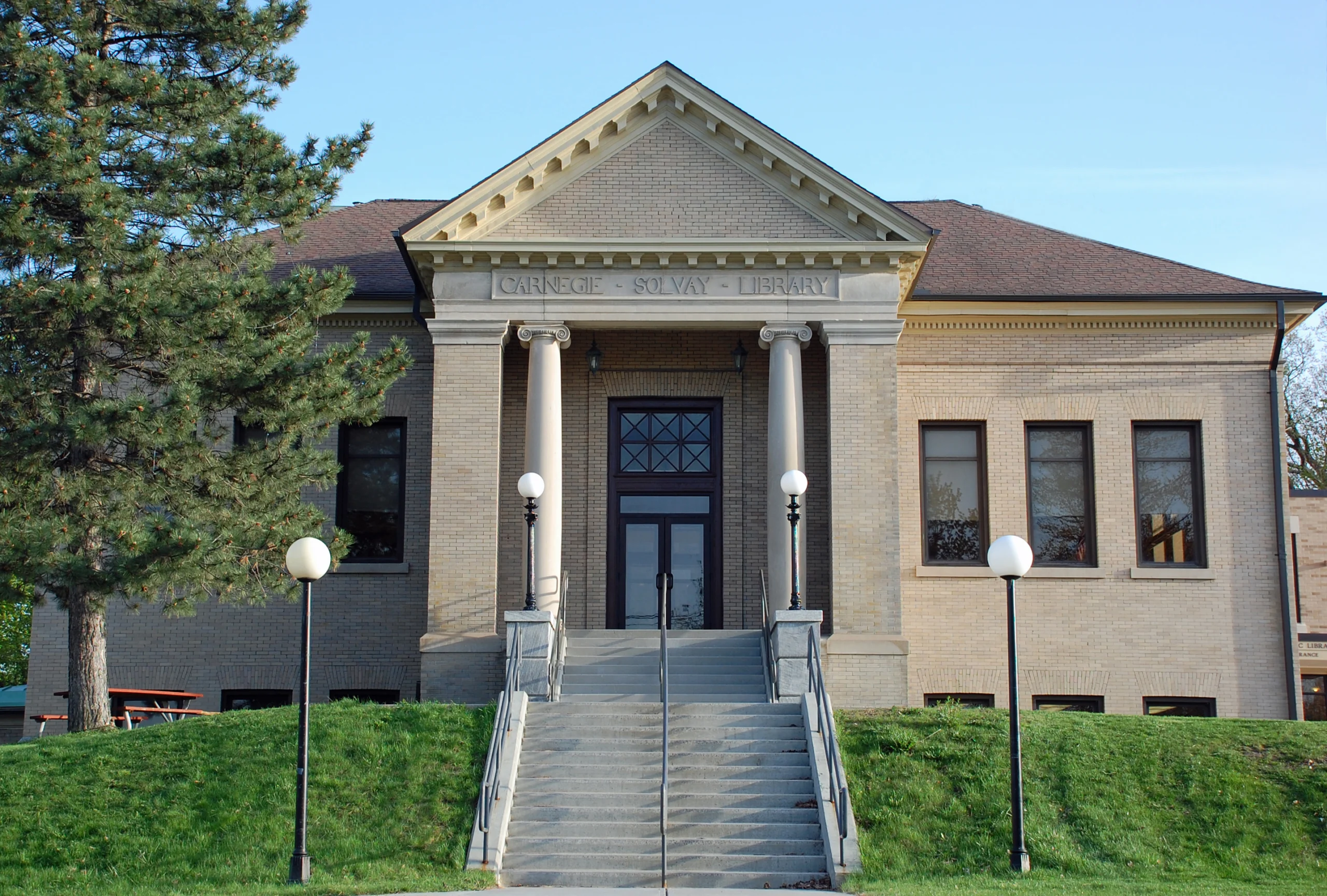
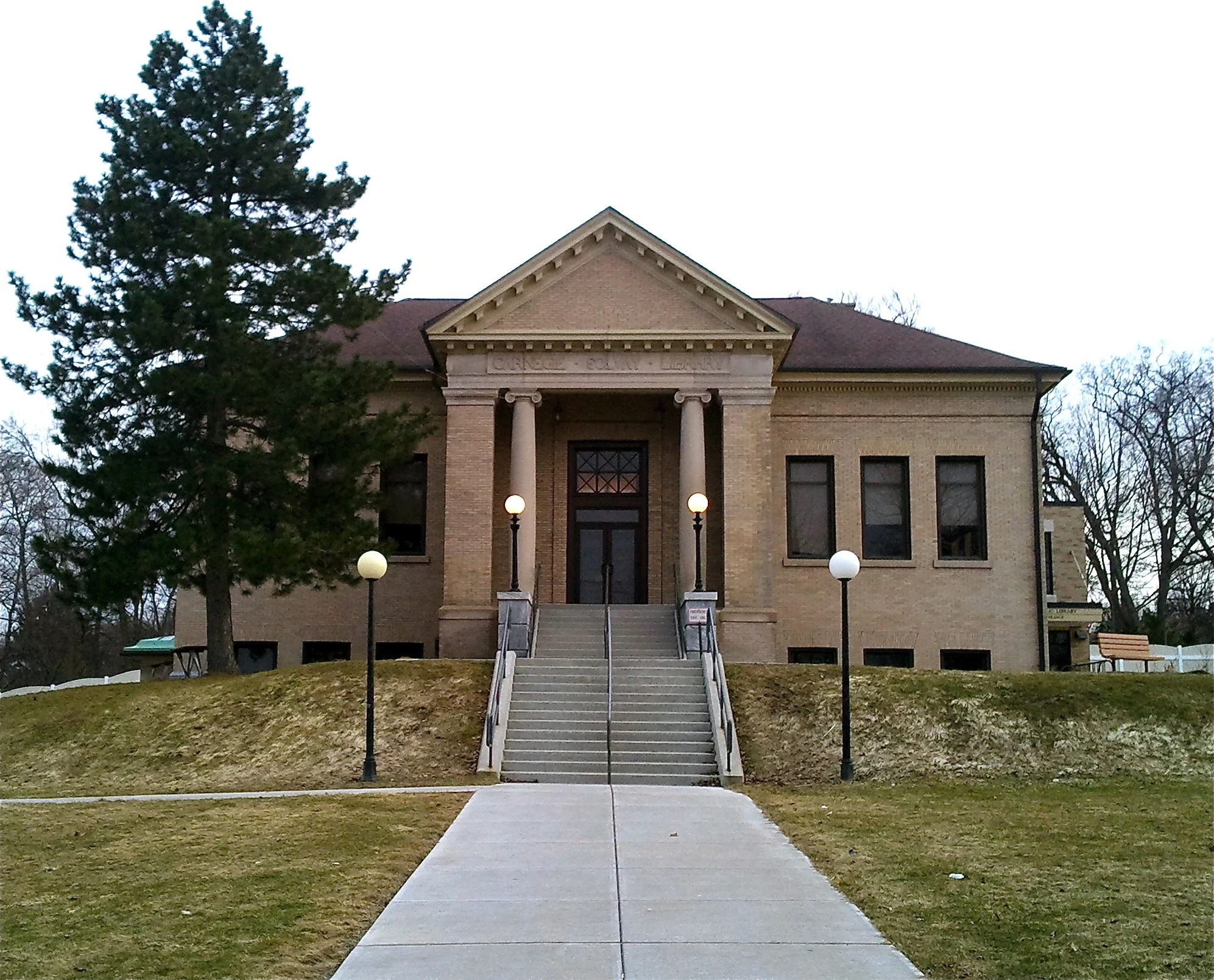
The library bond takes $85,000 in principal and $8,650 in interest. A police relocation bond takes $55,000 in principal and $5,319 in interest. A DPW bond takes $45,000 and $2,363. A separate DPW state infrastructure bank obligation takes $56,799 in principal and $8,298 in interest.
Those four are structured the way municipal debt normally is, principal and interest side by side, the balance going down each year.
The fifth line is different. It reads Milton Construction Loan, Interest, $150,000. There is no corresponding principal line in the debt repayment section.
On the revenue side of the same budget there is a line reading Interest Income Money Market, Milton, budgeted at $125,000.
So the adopted budget shows the village paying $150,000 in interest on a Milton construction loan while earning $125,000 in interest on money market funds labeled Milton, a net interest cost of $25,000 for the year, with no principal reduction budgeted on the loan.
The budget document does not explain the arrangement, and CNY Signal is not characterizing it beyond what the lines say. It is the largest single interest payment in the village’s debt service and the only one carrying no principal alongside it, which makes it the first question a resident should ask at a village budget hearing.
The funds that sit outside the general fund
Three services in Solvay are paid for by special benefit assessments rather than the general tax levy, and each balances separately.
Refuse is the largest. The special assessment brings in $660,507 against a refuse contract costing $588,708, leaving $71,799 added to surplus. Solvay contracts its trash collection out rather than running trucks, and the assessment more than covers the contract.
Sanitary sewers bring in $109,150 and spend exactly $109,150, balancing to zero. That spending includes $8,500 in wages, $650 in social security, $15,000 in materials and supplies, $60,000 in contractor and engineer expenses, and $25,000 paid to Onondaga County Water Environment Protection.
Storm sewers bring in $113,178, with $52,000 in wages, $3,978 in social security, $40,000 in materials and supplies, and $15,000 in contractor and engineer expenses.
Separating these into assessment areas means residents pay for refuse, sanitary sewer and storm sewer service in proportion to benefit rather than in proportion to assessed property value. It also means those costs are visible on their own rather than buried in a general levy.
The small lines tell you what a village charges for
Budget documents get read for the big numbers. The small ones describe the daily life of a municipality more precisely.
Solvay budgets $7,500 in village clerk fees and $1,400 in police fees. Safety inspection fees bring $10,000 and safety registration fees another $10,000. Other public safety income adds $1,500. Business licenses are budgeted at $1,500 and permits at $30,000, which together are the village’s read on how much construction and commercial activity it expects.
Parks and recreation fees are budgeted at $1,600. Refuse and garbage charges inside the general fund are $3,500, separate from the much larger refuse assessment that sits outside it. Miscellaneous sales are $1,500, sale of equipment $5,000, and insurance recoveries $1,000.
Police service to other governments is budgeted at $500, and Stop DWI revenues at $5,000. Interest and penalties on taxes are budgeted at $14,200, which is the village’s estimate of how many property owners will pay late. Other payments in lieu of tax come to $660.
None of these change the outcome of the budget. Together they show a village that charges modestly for services and depends overwhelmingly on the levy, the sales tax share and the electric utility.
What to watch through the year
Three things in this document are worth tracking rather than reading once.
The first is the electric contribution. At $899,000 across three lines, it is the village’s second largest revenue source and the one least like the others, because it depends on the performance of an operation the village runs rather than on a tax base or a state formula. A weak year in the electric operation is a general fund problem.
The second is the Milton loan. An interest payment of $150,000 with no budgeted principal reduction means the balance does not fall this year through scheduled repayment. Whether that reflects a construction period arrangement, a balloon structure or something else is not stated in the budget, and it is a fair question at any public session where the budget is discussed.
The third is the surplus. Budgeting $307,813 into fund balance is a choice, and choices reverse. If mid-year amendments spend that line down, the village finishes closer to break-even than the adopted document suggests. Budget amendments are made by board resolution and appear in the meeting minutes.
What the bottom line says
The budget closes with two lines that describe the village’s posture for the year.
An interfund transfer of $100,000 moves money between village funds. And Addition to Surplus is budgeted at $307,813.
That second number is the important one. Solvay is not budgeting to spend down its fund balance. It is budgeting to add to it, by about 4 percent of the general fund.
That is a materially different position from towns that close a projected gap by drawing on reserves. The Town of Geddes, which surrounds Solvay, adopted a 2026 budget projecting $15,961,300 in spending against $15,826,356 in revenue, using fund balance to cover the $134,944 difference. Two adjacent municipalities, two opposite directions.
The comparison has limits. Geddes is a town with different obligations and roughly twice the budget, and one year of surplus does not establish a trend. But the contrast is real and it is in both adopted documents.
For Solvay residents, the practical summary is this. Two out of every three dollars come from property taxes. About one in eight comes from the electric utility the village owns. Roughly a quarter goes to the police department before benefits, and another quarter goes to benefits for all village staff. And the village expects to finish the year with more in reserve than it started with.
The adopted 2026-2027 budget is posted on the village website. Village board meetings are where amendments to it happen, and the fee schedules and assessments described here are set by board resolution.
Sources
- Village of Solvay, Final Budget 2026-2027, general fund revenue and expense and special benefit assessment areas: https://solvayny.gov/wp-content/uploads/2026/04/Final-Budget-2026-2027-1.pdf
- Town of Geddes adopted 2026 budget, used for the adjacent-municipality comparison, as previously reported by CNY Signal.
- New York State Aid and Incentives to Municipalities program, and the Consolidated Local Street and Highway Improvement Program, the two state aid lines named in the budget.
Every figure in this story is drawn from the records above. Links go to the primary documents.