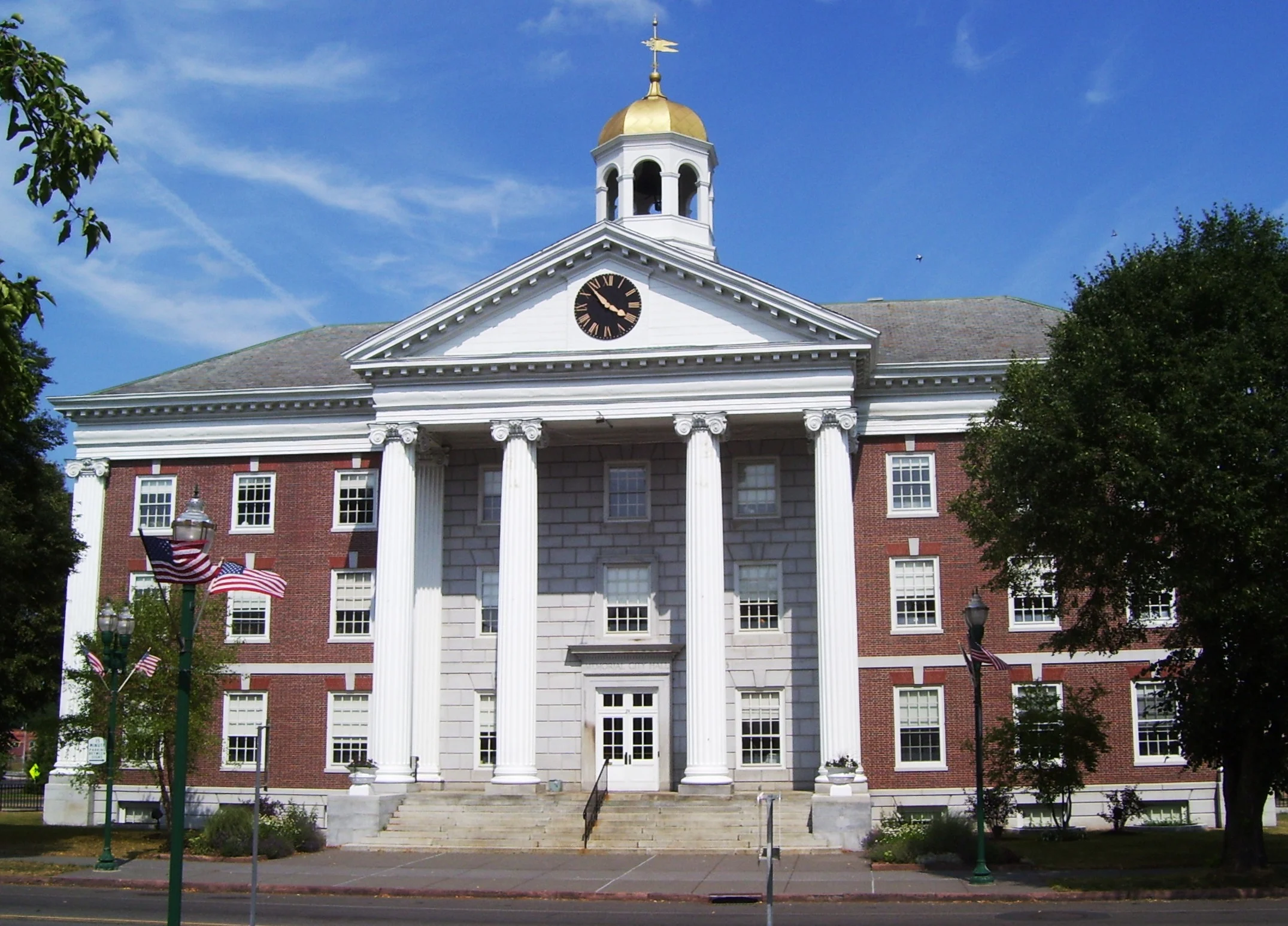
A July 9 resolution at Memorial City Hall asked Albany to pause an industry that Auburn officials fear could reach into the Owasco Lake watershed. By July 14, the governor had ordered her own statewide halt.
Auburn did not wait for a data center application to land at Memorial City Hall. On Thursday, July 9, Mayor James Giannettino Jr. and the Auburn City Council voted unanimously to call on Gov. Kathy Hochul to sign a one-year statewide moratorium on new data center construction, backing a resolution that cites a 43 percent rise in New York residential electricity rates between 2020 and 2025.
This story came from public records we pulled ourselves
Get the next one, plus overnight incidents, in your inbox at 6 AM. Free, no spam.
Five days later, Hochul answered with something bigger than a signature. On Tuesday, July 14, the governor signed an executive order creating what her office calls the first statewide moratorium on new hyperscale data centers in the country. The order pauses state environmental permitting for facilities capable of drawing 50 megawatts of electricity or more while regulators write new rules on energy, water and community impacts.
The back-to-back moves leave Auburn in an unusual spot for a city of its size: it asked Albany to act on July 9, and Albany acted on July 14, though not in the exact form the council requested. For a city that pulls all of its drinking water from Owasco Lake, and that has spent a decade fighting algal toxins in that lake, the difference between the two versions matters.
What the council approved
The resolution passed July 9 urges Hochul to sign the Responsible Data Center Development Act, which cleared both houses of the state Legislature on June 4. The bill would pause new data center construction for one year while the state studies the industry’s effects on utility rates, water supplies, public health, communities and the environment.
Auburn’s resolution leans on numbers. It cites the large amounts of electricity and water needed to run data centers, along with noise, electronic waste, land consumption and the small number of permanent jobs the buildings create. It also notes that residential electricity rates in New York climbed 43 percent between 2020 and 2025, and warns that new data center demand could push those bills higher. The measure directs the city clerk to send the resolution to the governor.
The vote came during the council’s regular 5 p.m. meeting at Memorial City Hall, 24 South St. It binds no one. The resolution does not stop a data center from being proposed or built in Auburn, and the council did not introduce a local moratorium that night. What it did do, in the words of several members, is start the clock on local rules.
A resident pointed 30 miles northeast
The public comment that framed the night came from Auburn resident Ian Phillips, who urged the council to support the measure and pointed to the fight over a proposed data center in the town of Lysander, in Onondaga County. Phillips said thousands of residents have packed meetings there as communities across the state weigh large-scale data infrastructure.
“We need to treat this like the crisis it is, as if it was in our own backyards,” Phillips said.
Phillips told the council the proposed Lysander facility could use several times as much water each day as the entire city of Auburn. He also warned that a rush of construction tied to artificial intelligence could leave communities holding oversized or abandoned buildings if projected demand never shows up.
The Lysander project is real and large. Ranalli Super DC, LLC applied to the New York Independent System Operator in May 2025 to connect a proposed 300-megawatt data center to the grid, on a 124-acre industrial-zoned property near Hencle Boulevard and Oswego Road. By April 18 of this year, a resident petition against the project had collected more than 1,600 signatures, and the Lysander Town Board voted 5 to 0 that month to have the town attorney draft a moratorium. “A data center would be an allowed use under our current zoning regulations on an industrial parcel,” Town Supervisor Kevin Rode said at the time. On May 7, the board approved a six-month moratorium on data center applications, with violations carrying a $1,000 daily penalty.
Council members want Auburn’s own rules
Auburn’s council members treated the state resolution as a floor, not a ceiling. Councilor Terrence Cuddy said the city should look past a letter to the governor.
“I do think there’s value in seeing what we could do locally, whether it be through ordinances or bans ourselves, just to protect us from the kinds of fallout from these data centers,” Cuddy said.
Councilor Christina Calarco said she has been researching how other municipalities use zoning and environmental regulations to protect water supplies. “We need to make sure we’re protecting the lake and protecting this area,” Calarco said. “Our lakes are our most valuable asset.”
Councilor Craig Diego said Auburn could impose a local moratorium rather than wait on the governor. Giannettino agreed, and listed the tools on the table: zoning rules, water restrictions, wastewater limits or an outright prohibition.

Why the lake is the pressure point
Auburn draws its drinking water from Owasco Lake, but much of the watershed sits outside the city’s borders. A large project elsewhere in the watershed could affect the city’s water even though Auburn officials would have no authority over the approval. That gap is what makes a statewide pause more useful to Auburn than a city ordinance alone.
The stakes run through the city’s recent history. After harmful algal blooms threatened the water supply, Auburn installed a powdered activated carbon treatment system at its water intake pumping station; the system became operational in early August 2017 and runs seasonally whenever blooms are detected in the lake. The Cayuga County Health Department collects both untreated and treated water samples from the Auburn and Town of Owasco treatment plants when blooms appear. Auburn’s system also supplies water beyond the city line, reaching the towns of Aurelius, Throop, Mentz, Brutus, Montezuma and Sennett, water districts in Fleming and Springport, and the villages of Port Byron, Weedsport and Cayuga.
The legal exposure is current, not historical. In early May, Judge Thomas Leone allowed a lawsuit against the city over algal toxins to move forward, giving plaintiffs 30 days to file an amended complaint. The case claims contaminated Owasco Lake drinking water caused brain tumors and other serious illnesses, and the estate of a plaintiff who died in February 2026 was permitted to join with a wrongful death claim.
The same July 9 meeting that produced the data center resolution also closed the books on two Owasco Lake water projects, both finished under budget. The council returned $117,509.34 from a water filtration plant improvement project and $1,017.19 from an Owasco Lake stream corridor assessment to the Water Fund, with the filtration surplus also used to reduce borrowing. City Manager Jennifer Haines credited Comptroller Mary Beth Leeson and Capital Projects Director Seth Jensen for closing the accounts. “It’s very important for us to clean these things up,” Haines said.
The bill and the order are not the same thing
The Responsible Data Center Development Act, sponsored by Sen. Kristen Gonzalez with Assemblymember Didi Barrett carrying the companion bill, passed the Senate 43 to 17 on June 4; the Assembly passed the companion measure, A11560, the same day. The bill defines a large data center as one with a peak demand of 20 megawatts or more and pauses new permits for one year.
Hochul’s executive order draws the line at 50 megawatts, a higher bar that covers hyperscale projects but not every large facility the Legislature targeted. The order directs the state Department of Environmental Conservation to hold discretionary permit applications in abeyance if they were not deemed complete before July 14. It does not suspend local approvals, and it has no fixed end date; the pause runs until the Department of Public Service completes a statewide environmental review. Facilities used mainly for manufacturing, education, medical care or research, including the Empire AI consortium, are excluded.
“These hyperscale AI data centers consume enormous amounts of power, truly threatening to outpace our grid’s capacity, and they drive up costs for local rate payers. I refuse to let those costs be passed on to New Yorkers,” Hochul said in announcing the order.
The scale of the demand is why the state moved. According to the executive order, nearly 12 gigawatts of proposed data center demand sits in New York’s electric interconnection queue, with more than 8 gigawatts of that added during 2025 alone. The order declares it state policy that everyday utility customers should not pay for grid upgrades required by large new loads, and it floats a New York Grid Acceleration Fund that could require developers to make upfront capital contributions. Hochul also said she will pursue legislation repealing sales tax exemptions for massive data centers.
The governor has not said whether she will sign the bill Auburn asked her to sign. Her staff has called the legislation complicated, and the environmental law group Earthjustice, which welcomed the order, urged her to sign the act anyway and pressed the Public Service Commission to create a separate rate class for large data centers. New York is out front nationally: Maine Gov. Janet Mills vetoed a data center ban in April 2026, and 14 states are weighing moratorium legislation.
The deadlines that matter now
The executive order sets a calendar. Empire State Development has 60 days to publish a Community Investment Framework that towns, cities and industrial development agencies can use when negotiating with data center developers, covering items like infrastructure commitments, child care investment and direct financial support. The Department of Public Service must form a Data Center Interconnection Working Group within 60 days, and the state’s transmission owners owe the Public Service Commission a report on reliability and cost estimates within 90 days. DEC has 12 months to report on whether New York needs new water withdrawal regulations, the piece most directly aimed at lakes like Owasco.
In Auburn, the next move belongs to the council that started this month’s sequence. No local law has been introduced yet, but the July 9 discussion pointed one direction. “I think we do need to take action locally,” Giannettino said. “Hopefully the governor signs it, but I’m in favor of also passing legislation here locally.”
Sources & Verification
FingerLakes1.com, “Auburn backs statewide data center moratorium, eyes local restrictions,” July 10, 2026. FingerLakesDailyNews.com, “Auburn to Vote on Support for Data Center Moratorium,” Ed Vivenzio, July 8, 2026. FingerLakes1.com, “Auburn council to weigh SRO deal, police grant and data center moratorium tonight,” July 9, 2026. FingerLakes1.com, “Hochul orders temporary pause on large data centers as New York rewrites rules,” July 14, 2026. Governor Kathy Hochul press office, “First Statewide Moratorium on New Hyperscale Data Centers Launched by Governor Kathy Hochul,” July 14, 2026, governor.ny.gov. New York State Senate, bill S10642 status page, nysenate.gov. Route Fifty, “New York governor signs nation’s first moratorium on large data centers,” July 2026. Spectrum News NY1, “Hochul enacts first statewide data center moratorium,” July 14, 2026. FingerLakes1.com, “What else happened at last week’s Auburn City Council meeting?” July 13, 2026. City of Auburn, Harmful Algal Blooms Information page, auburnny.gov. FingerLakes1.com, “Judge keeps Auburn woman’s HABs lawsuit alive,” May 7, 2026. Eagle News, “Possible massive data center in Lysander faces community opposition,” April 20, 2026. CNY Central, “Lysander Town Board to vote on six-month moratorium for new data centers,” May 7, 2026. Reporter: Mike Rivera. Edited by: the CNY Signal news team. Published: July 15, 2026.