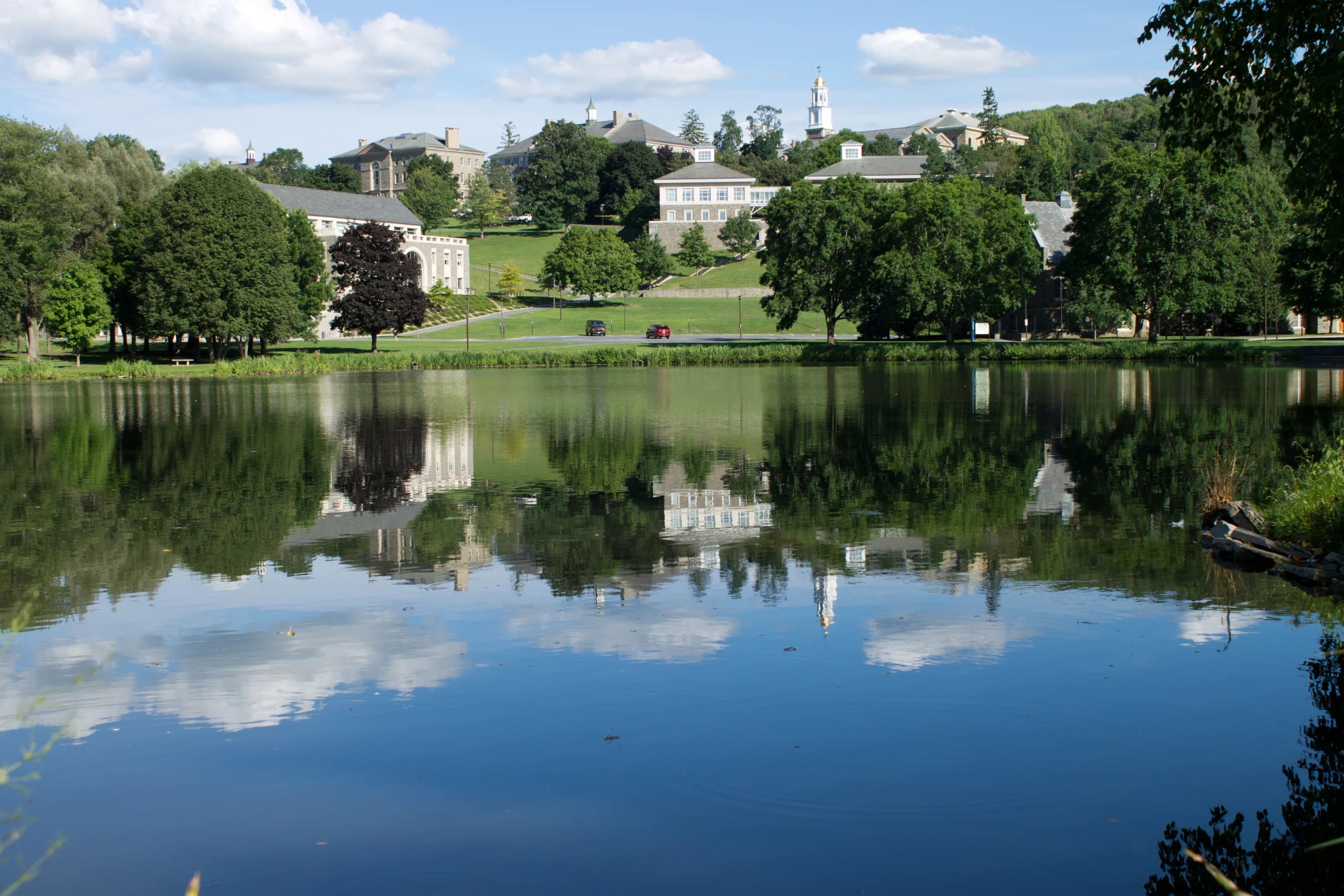
Colgate Trains More Than 20 Professors in Machine Learning, Sets Second Hamilton Workshop for August 24
A $5,000 Picker Institute grant paid computer scientist Noah Apthorpe to teach political scientists, biologists and psychologists how to build a model. The institute put more than $250,000 into research on the hill above the village this year.
Noah Apthorpe spent two days in June teaching more than 20 of his Colgate University colleagues how to build a machine learning model. The assistant professor of computer science ran the sessions June 4 and 5 on the Hamilton campus, walking faculty from political science, biology, psychology, and mathematics through data preparation, model training, and how to judge whether the results can be trusted. The university announced July 3 that a second round is already on the calendar for August 24 and 25.
Know before your neighbors do
The Morning Signal hits your inbox at 6 AM with everything that happened overnight. Real incidents, real data, zero fluff.
The workshop, titled AI-Powered Machine Learning for Research Across the University, was funded by a $5,000 Picker Interdisciplinary Science Institute Interdisciplinary Training Workshop Grant awarded to Apthorpe in the institute’s 2026 grant cycle, announced March 9. It was built for professors with no background in artificial intelligence or programming, and it drew several students alongside the faculty.
“One thing I emphasized in the workshop is that the availability of these AI tools makes it possible to bring some of the more powerful techniques from computer science, especially around data analysis, into different fields,” Apthorpe said in the university’s July 3 report.
For the village of Hamilton, population 4,107 at the 2020 census, the sessions are a small window into a larger bet. Colgate’s Picker Institute put more than $250,000 into faculty and student research in 2026, by the university’s own accounting, spread across three major grants, one minor grant, two microgrants, and the training grant that paid for Apthorpe’s workshop.
A quarter million dollar year for research in Hamilton
The Picker Interdisciplinary Science Institute is Colgate’s in-house funder for research that crosses departmental lines. Its 2026 awards, announced March 9, read like a map of where science is headed on the hill above the village.
The largest single award, $73,052, went to Santiago Juarez, associate professor of anthropology, and Josuhe Lozada Toledo, an archaeologist with Mexico’s Instituto Nacional de Antropologia e Historia, for a project called Immersive Archaeology at Iglesia Vieja. The team will use lidar, photogrammetry, and virtual environments to rebuild an ancient Mexican site digitally, with Joseph Eakin directing the work at Colgate’s Ho Tung Visualization Lab.
A $70,000 grant went to Ewa Galaj, assistant professor of psychology and neuroscience, and Jacob Goldberg, associate professor of chemistry, to investigate the role of zinc in heroin addiction. Their project will locate zinc stores in brain regions tied to addiction and test whether the metal plays a causal role in addictive behavior, groundwork that could feed drug discovery research.
Gongfang Hu and Stephanie E. Sanders, both assistant professors of chemistry, received $62,117 to develop bismuth and nickel catalysts that use sunlight to convert carbon dioxide into usable fuels, a form of artificial photosynthesis.
A $29,990 minor grant supports Karen Harpp, professor of earth and environmental geosciences, and collaborators at the University of Edinburgh, the University of Bremen, and Ecuador’s Escuela Politecnica Nacional. The team will install a small geophysical monitoring network on San Cristobal Island in the Galapagos to track earthquakes and open future research slots for Colgate students.
The institute also awarded $4,300 to Damhnait McHugh, Raab Family Chair and professor of biology, to train in ancient DNA analysis at the American Museum of Natural History during her sabbatical, with the goal of bringing those techniques back to Hamilton for student instruction.
The students are already there
Three undergraduates were named Picker ISI Scholars in the same March 9 announcement, and their project list suggests the June workshop was catching faculty up to work their students had already started.
Richelle Gao, class of 2027, is building a diagnostic model for urothelial carcinoma, a bladder cancer, that pairs molecular biomarkers with machine learning to sharpen the accuracy of urine cytology screening. Her mentors are Bineyam Taye at Colgate and Jian Yu Yao of UCLA Health.
Ray Ou, class of 2028, is studying the hidden costs of strategic secrecy, the cognitive and relational toll of information asymmetry in workplaces, with mentors Takao Kato of Colgate and Michael Slepian of Columbia Business School. Le Dinh, class of 2027, is examining the emotional quality of interactions between teachers and minimally speaking or nonspeaking children with autism, working with Ashley de Marchena of the A.J. Drexel Autism Institute and Colgate’s Spencer Kelly.
A junior applying machine learning to cancer screening is precisely the kind of student a political scientist or biologist might now advise with more confidence after two days in Apthorpe’s workshop.
Money is not always enough
Ahmet Ay, professor of biology and mathematics and the Picker Institute’s director, framed the workshop grant as a deliberate shift in how the institute supports its campus.
“Just giving faculty and students money may not be enough sometimes. Sometimes they need a skill,” Ay said in the July 3 university report.
Apthorpe, who earned his doctorate in computer science at Princeton University in 2020 and studies privacy and security in connected devices, designed the two days to be usable by researchers who had never written a line of code. Attendees worked through the full arc of a machine learning project: cleaning and preparing data, training a model on it, and assessing whether the output means anything.
He did not run it alone. Tolga Dincer, a systems and security operations engineer with Colgate’s Information and Technology Services, helped facilitate, and participants were given access to Claude, the AI assistant, as a working tool during the sessions. Course materials, including video lectures, slides, and prompts, now live on Moodle, Colgate’s learning management platform, so faculty who missed June can work through them before the August session.
What the professors plan to do with it
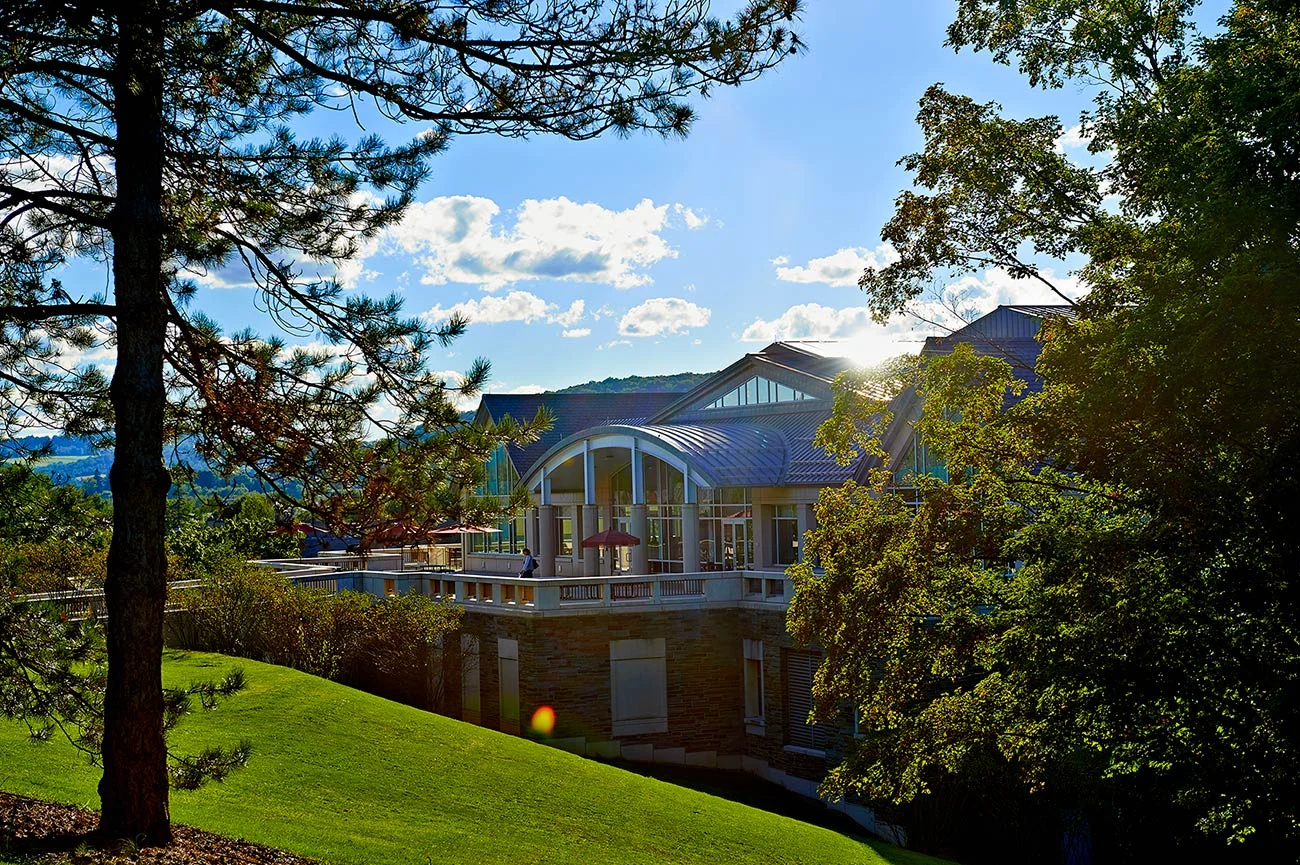
The attendee list crossed most of the campus map. Bruce Rutherford, associate professor of political science, came looking for a way to add a quantitative dimension to his research on Middle Eastern politics, which increasingly involves large datasets.
Ken Belanger, Russell Colgate Distinguished University Professor of Biology, sees the techniques as a way through the flood of data that modern biology produces, including the microbiome work in his field.
“Using AI can help us understand these very large data sets and the complex information that’s present there in ways that we can’t do if we’re just trying to just manually analyze data,” Belanger said in the university’s report.
Erin Cooley, associate professor of psychological and brain sciences, arrived with statistical training and left with a framework for how machine learning differs from it. “Going through this workshop helped me put everything into place in a structured way,” she said.
For Apthorpe, the point is confidence as much as capability. “Then when you’re talking about it with students or colleagues, you’re speaking from a position of having some experience,” he said.
AI on a campus of 3,143 students
The workshop is one piece of a broader institutional posture. According to Colgate’s AI at Colgate resource page, 275 faculty members now have at least one AI touchpoint in their teaching, research, or professional work. That is a striking share at a university with 354 full-time faculty, an 8 to 1 student to faculty ratio, and 57 majors.
Colgate has also chosen to host several AI applications on its own infrastructure rather than routing everything through commercial cloud services. The university runs locally hosted tools for transcription, translation, code development, and image object detection, an arrangement that keeps research data on campus systems.
Provost and Dean of the Faculty Lesleigh Cushing has described the university’s approach as sequenced rather than restrictive. “Students learn to think without AI before they rely on it, and to use it critically once they do,” Cushing said on the university’s AI resource page.
The university describes a fourfold model: human centered learning first, then AI within the curriculum, AI in research and innovation, and AI beyond the classroom. The training on offer extends past research methods. Colgate lists modules on AI agents, AI for image manipulation, and Google’s Gemini and NotebookLM tools, and it has a partnership with the Dartmouth Tuck Bridge program that offers micro credentials. AI use on campus is governed under the university’s Honor Code rather than a standalone policy regime.
That posture matters in Hamilton more than it would in a college town with a diversified economy. The village covers 2.49 square miles of Madison County, and its 4,107 residents share the zip code with a university enrolling 3,143 students. Almost all of Colgate’s land sits inside the village line, and the university is the dominant economic force in town. When Colgate decides its faculty should learn machine learning, that decision lands on Broad Street as surely as it lands in the classroom buildings up the hill.
The August session
The Picker Institute’s grant cycle runs annually, and the 2026 awards were announced March 9 for projects that will stretch across the academic year and beyond. The Galapagos monitoring network, the Iglesia Vieja digital reconstruction, and the zinc addiction study will all generate exactly the kind of large, messy datasets the June workshop was designed to prepare faculty for. Harpp’s seismic sensors on San Cristobal Island will stream earthquake data. Juarez’s team will produce lidar point clouds of an entire archaeological site. Galaj and Goldberg will map zinc concentrations across brain regions. None of that is analyzed by hand.
The nearer date is firmer. The second run of AI-Powered Machine Learning for Research Across the University is scheduled for August 24 and 25, 2026, on the Hamilton campus, timed to catch faculty returning for the fall semester before classes begin. The video lectures, slides, and prompt libraries from the June session are already posted on Moodle for anyone who wants a head start.
Sources & Verification
- Colgate University News, “Picker ISI Training Workshop Helps Apply AI-Powered Machine Learning Skills for Research,” July 3, 2026. https://www.colgate.edu/news/stories/picker-isi-training-workshop-helps-apply-ai-powered-machine-learning-skills-research
- Colgate University News, “Picker Interdisciplinary Science Institute Announces 2026 Research and Training Grants,” March 9, 2026. https://www.colgate.edu/news/stories/picker-interdisciplinary-science-institute-announces-2026-research-and-training-grants
- Colgate University, “AI at Colgate” resource page, accessed July 16, 2026. https://www.colgate.edu/ai-colgate
- Colgate University, “Colgate at a Glance,” accessed July 16, 2026. https://www.colgate.edu/about/colgate-glance
- Princeton University GradFUTURES profile, Noah Apthorpe ’14 *20, accessed July 16, 2026. https://gradfutures.princeton.edu/NoahApthorpe
- U.S. Census Bureau 2020 decennial figures for Hamilton village, N.Y., via Wikipedia, “Hamilton (village), New York,” accessed July 16, 2026. https://en.wikipedia.org/wiki/Hamilton_(village),_New_York
Reporter: Sarah Chen. Edited by: Frank Mahoney. Published: July 16, 2026.