
By Charles Shack, Senior Reporter
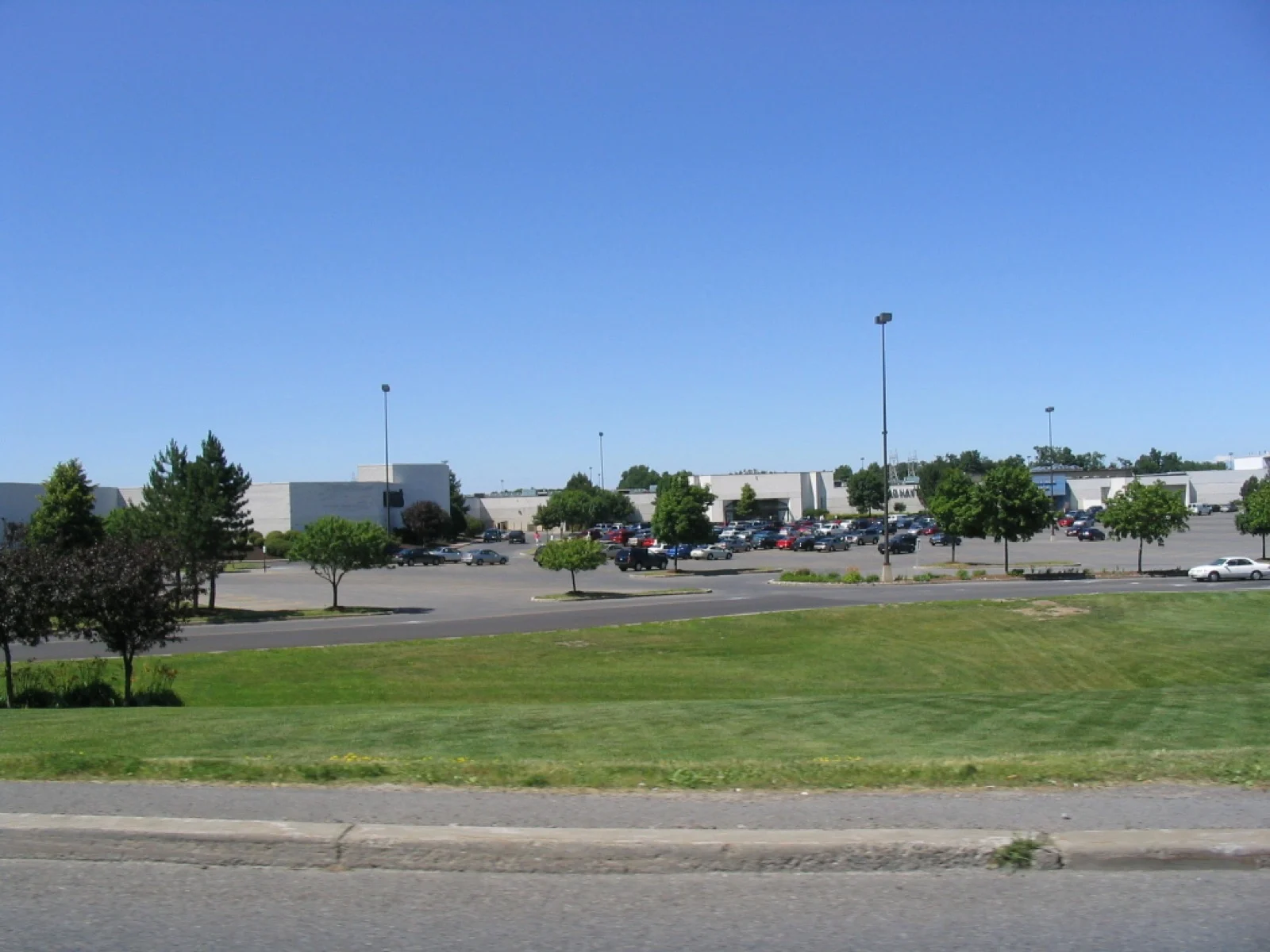
I grew up on Tipp Hill. I watched the Carousel Mall open, saw General Electric peel out of Electronics Park in stages, and remember when Carrier Corp still had a headquarters in DeWitt. Central New York has not had a generational employer announcement in my lifetime until Micron. So when the shovels finally moved dirt in Clay on January 16, it mattered.
The January 16 groundbreaking ended a three and a half year wait. Micron announced the Clay project in October 2022. The company spent the intervening years on state and federal environmental review, labor agreements, road realignments, and water and sewer design work. The federal Record of Decision, signed by the U.S. Commerce Department’s CHIPS Program Office on December 16, 2025, cleared the last permitting hurdle one month before shovels moved. On June 11, 2025, Micron’s New York entity signed its final direct funding agreement with Commerce, locking in the federal grant mechanics that had been announced in preliminary form in April 2024.
This story came from public records we pulled ourselves
Get the next one, plus overnight incidents, in your inbox at 6 AM. Free, no spam.
Now the clock is running. Here is what is actually happening at the site off Caughdenoy Road, and what Central New York should expect next.

The announced scope, in verified numbers
Micron has committed up to $100 billion over more than 20 years to build four semiconductor fabrication plants in Clay. The project is the largest private investment in New York State history. Under the CHIPS and Science Act, the U.S. Commerce Department awarded Micron up to $6.165 billion in direct federal funding, of which $4.6 billion is tied to the first two New York fabs, $1.5 billion to Idaho, and up to $275 million to the Manassas, Virginia plant. New York State has layered another $5.5 billion in Green CHIPS incentives on top.
The megafab campus will span 1,377 acres inside the expanded White Pine Commerce Park. Onondaga County’s Industrial Development Agency started acquiring that land in the late 1990s as the “Clay Business Park.” It sat on the market for more than two decades, courted by car makers, a biopharma plant, and a proposed 100 acre indoor farm, before OCIDA expanded it and renamed it White Pine in 2019.
Each of the four fabs will cover about 1.2 million square feet, with 600,000 square feet of cleanroom inside every building. Stack all four and Micron ends up with 2.4 million square feet of cleanroom in Clay, the largest announced in United States history. Fab 1 alone is engineered around Micron’s leading edge 1 gamma generation DRAM process, the same node the company has been qualifying in Taiwan and Japan. The 1 gamma node uses ASML extreme ultraviolet lithography alongside traditional deep ultraviolet multi patterning, pushes bit density per wafer more than 30 percent above the previous 1 beta node, lifts DDR5 speeds to 9,200 MT/s, and cuts power draw up to 20 percent.
The hiring curve is the most closely watched number in Onondaga County. Initial hiring for site clearing, utility work, and construction support is targeted at 2,500. Micron plans to employ roughly 9,000 people at the plant once Fab 1 reaches full operation, with an average construction workforce above 4,500 during peak build. County Executive Ryan McMahon said in his March 2026 State of the County address that the site will host 3,000 to 4,000 construction workers in 2027 as Fab 1 vertical work accelerates. Regional employment, when suppliers and contractors are counted, could reach 50,000 over the next two decades.
Micron Clay Megafab: The Numbers That Matter
The man turning the first shovel
Sanjay Mehrotra, 67, has led Micron since May 2017, taking over from Mark Durcan. He co founded SanDisk in 1988, ran it as president and CEO from 2011 until Western Digital bought the company for $16 billion in 2016, and holds more than 70 patents on flash memory architecture. He earned bachelor’s and master’s degrees in electrical engineering from the University of California, Berkeley, and was inducted into the National Academy of Engineering in 2022.
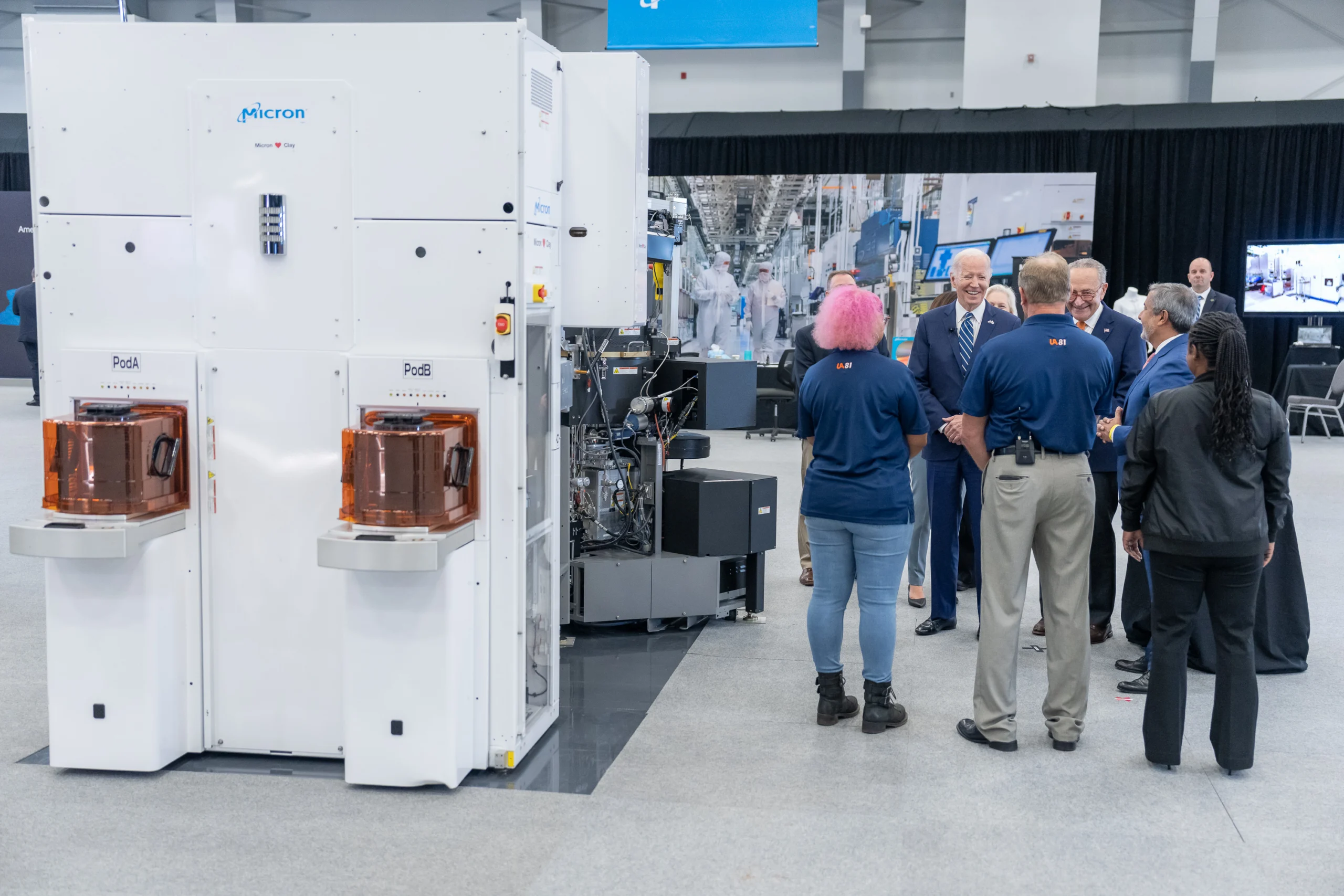
On the Clay stage January 16, Mehrotra kept his remarks tied to the broader bet: “By breaking ground on Micron’s New York megafab, we are taking another important step in creating a future where the most critical components of the AI economy are built on American soil.” Mehrotra was joined by Governor Kathy Hochul, Senators Chuck Schumer and Kirsten Gillibrand, U.S. Commerce Secretary Howard Lutnick, U.S. Labor Secretary Lori Chavez DeRemer, and Onondaga County Executive Ryan McMahon.
On the March 18, 2026 fiscal Q2 2026 earnings call, Mehrotra told analysts the company booked a record $23.86 billion in revenue, up 196 percent year over year, beat adjusted earnings expectations at $12.20 per share, and guided to $33.5 billion for the fiscal third quarter. He raised fiscal 2026 capital expenditures from $20 billion to $25 billion and said Micron had completed pricing and volume agreements with “almost all customers” for HBM3E through calendar 2026 and was working toward the same lock on HBM4. HBM4 entered volume shipment during the quarter as the 36 gigabyte, 12 high module that anchors NVIDIA’s Vera Rubin platform, running above 11 gigabits per second and 2.8 terabytes per second, a 2.3x jump in bandwidth over HBM3E.
What the timeline says now
Ground preparation began in calendar year 2026 following the state and federal environmental review process. Tree clearing across the Phase 1 and Phase 2 footprint wrapped up on schedule in March 2026. Micron said publicly that residents will see the first concrete poured at the site by September 2026. Fab 1 construction begins in Q2 2026. Fab 1 operations begin in late 2030 under the revised schedule Micron filed with the federal environmental review, a two to three year slip from the 2028 timeline originally advertised.
The four fab buildout stretches into the 2040s. Fab 2 through Fab 4 will follow Fab 1 at intervals determined by market demand and memory capacity needs. Micron’s own investor presentations say the completed Clay campus will eventually produce about 40 percent of the company’s total U.S. DRAM output by the 2040s. The fabs will be built sequentially from west to east, which Micron’s joint permit application says will produce continuous construction activity on the campus from 2025 into 2041.
Fab 1 alone is engineered to produce leading edge DRAM at a scale that would make Micron’s New York operation a measurable piece of the global memory chip supply. DRAM is the category of memory that goes into phones, cars, data centers, and the high bandwidth memory stacks now driving AI training hardware. That matters because the AI order book has already bent Micron’s financials: Q1 fiscal 2026 revenue hit a record $13.6 billion, up 57 percent year over year, with non GAAP operating income of $6.4 billion. Q2 fiscal 2026 nearly doubled that again at $23.86 billion. Cloud Memory revenue doubled. Micron said on the Q2 call its HBM customer list had grown to six hyperscale buyers, and confirmed it had already sold out its entire 2026 HBM production capacity.
The competition Micron is trying to close
For two decades Micron has been the smallest of the three big memory players. SK Hynix took the top DRAM spot in Q1 2025 with 36 percent revenue share. Samsung held 34 percent. Micron rounded out the podium at 25 percent. The HBM numbers told an even starker story. SK Hynix controlled 62 percent of high bandwidth memory shipments in Q2 2025. Micron held 21 percent. Samsung sat at 17 percent.
Clay is the plant that changes that math. It is the largest announced DRAM expansion by any company, anywhere, in at least a decade. U.S. Commerce has said the Micron investment should take the American share of advanced memory manufacturing from under 2 percent today to roughly 10 percent by 2035. Among the other CHIPS Act megaprojects, TSMC’s second Arizona fab is targeting 3 nanometer production in the second half of 2027, with equipment installation starting in Q3 2026. Intel’s two Ohio fabs slipped to a 2027 to 2028 production window. Samsung pushed its Taylor, Texas line from 2024 into 2026. Clay’s Fab 1 opening in late 2030 puts Micron at the back of that pack but at the front of the U.S. DRAM expansion, which none of the other CHIPS Act anchors are doing.
The local labor piece and the general contractor
Site enabling and preconstruction work is being led by Gilbane Building Company, a 152 year old, family owned firm headquartered in Providence, Rhode Island. Gilbane booked $7.3 billion in revenue in 2025, employs about 3,548 people, and is run by president and chief executive Adam Jelen. The company’s scope at Clay covers roughly 680 acres of the campus: aggregate production and delivery to rough grade, tree and brush removal across Phase 1 and Phase 2, perimeter fencing with permanent and temporary security, stormwater basin construction, and drainage infrastructure. Gilbane won the preconstruction contract in August 2024.
Micron has publicly targeted 80 percent local labor for the first phase, a number that includes construction trades, equipment installers, and operational staff. The company signed a Project Labor Agreement with the Central and Northern New York Building and Construction Trades Council, an umbrella body affiliated with North America’s Building Trades Unions and led by president Gregory Lancette since July 2009. The PLA covers the full construction period. The project will require about 3,000 electricians alone. IBEW Local 43 in Syracuse supplies members to more than 40 contractors across Onondaga, Oswego, and Oneida counties and is pouring $7 million into an expansion at its Clay training center, backed by a $1 million New York State grant, which will nearly double classroom capacity. Local 43 has also projected a need for up to 2,000 electricians to build the plant and 600 more to operate and maintain it once running.
Laborers Local 633, which covers Cayuga, Onondaga, and Oswego counties from its East Syracuse hall on Fly Road, is building a new training center in DeWitt and doubling apprentice capacity from 20 to 40 per class in preparation for Micron and the Interstate 81 viaduct rebuild. The North Atlantic States Regional Council of Carpenters cut the ribbon on a $3.6 million expansion of its Carpenters Local 277 training center at 6920 Princeton Court in Salina, tripling floor space from 6,000 to 18,000 square feet, adding 28 foot ceilings and an overhead crane, and building in a dedicated cleanroom curriculum. Plumbers and Steamfitters Local 81 is pulling in $5.48 million from Empire State Development announced March 27 for its own facility expansion. Together the four halls represent the core construction trades the PLA will lean on hardest.
Onondaga Community College launched a two year Electromechanical Technology degree in Fall 2023, starting with two cohorts of 18 students each, one daytime, one evening. Equipment for the program was donated by Micron. The first graduating cohort walked in May 2025, twelve students strong, with another 20 on track to finish in December 2025. OCC also opened a dedicated cleanroom lab on campus in Fall 2025 to give students hands on time with semiconductor protocols. Syracuse University went bigger. In May 2024 SU and Onondaga County committed $20 million, split evenly, to stand up the Syracuse University Center for Advanced Semiconductor Manufacturing at the campus Center for Science and Technology. The university plans to grow engineering undergraduate enrollment by at least 50 percent and hire 50 new faculty. Micron also wrote a $3 million check into SU’s D’Aniello Institute for Veterans and Military Families to build a veterans pipeline into the industry. On April 21, 2026, SU held its second annual Micron Day in the Ensley Athletic Center, with recruiters, a Boise State esports match, and a parents and students town hall.
Housing is the open question. A plant with 9,000 direct hires plus 41,000 regional hires is a regional housing demand shock. Clay is already the most populous suburb of Syracuse, with a 2020 census population of 60,527 across 48.8 square miles and 23,398 housing units. Median household income runs about $90,412. Most of the school age children on that land attend North Syracuse Central School District, which enrolls roughly 7,990 students across 11 schools on a $212.2 million annual budget. That figure is already down from 9,955 students in 2001, and the district launched a facilities utilization study in 2026 that cites Micron as a core variable in its long term planning.
County Executive Ryan McMahon has repeatedly connected the ShoppingTown District East redevelopment and other housing projects to Micron spillover. The District East plan alone calls for 912 new units in DeWitt. Micron’s $500 million Community Investment Framework, a pool funded by $250 million from the company, $100 million from New York State, and $150 million from local and other partners, is starting to move. In March 2026 Governor Hochul and Micron announced $43.55 million in first round disbursements during the first Micron Community Week. The headline line items: $30 million seeding the Housing Central New York Fund, a public private revolving loan run with Empire State Development and the Community Preservation Corporation targeting 2,500 new workforce housing units across Cayuga, Cortland, Madison, Oneida, Onondaga, and Oswego counties over seven years; $2.2 million to Centro for a new Syracuse to Clay bus route; $1.1 million to OCC for a high school Pre College Semiconductor Summer Program; $1 million to SUNY Oswego for STEM educators; $750,000 to Jefferson Community College for Mechatronics curriculum; $600,000 to RISE for a workforce building purchase; $300,000 to OCM BOCES trades pre apprenticeship; $200,000 to PEACE, Inc. for early childcare pathways; and $5.48 million to Plumbers and Steamfitters Local 81. A 2023 housing study commissioned by ESD found the region will need 30,000 additional units by the end of the Micron buildout, roughly triple the current annual production rate.
Workforce and Community Investment
What changed on the ground already
Caughdenoy Road is being rebuilt on both sides of Route 31 to accommodate the site’s main entrance, with local access routed through Maple Road and Stearns Road during closures. Route 31 has a new signalized intersection at the plant entry. Micron has also bought a separate parcel on the east side of Caughdenoy Road for an on site employee childcare center, and land west of the campus for a rail spur. Onondaga County Water Authority awarded contracts for a new water main serving the fab site. OCWA’s full build out is the most expensive utility project CNY has seen in a generation: three 54 inch pipelines running roughly 25 miles from a Lake Ontario intake, a new Oswego pumping station upgrade, and a 15 million gallon storage tank in Clay. Total cost estimates run from $550 million to $625 million. Micron has forecast 48 million gallons per day of water demand once all four fabs are operating in the 2040s.
Wastewater is the other side of the ledger. In late December 2025 the Onondaga County Legislature approved a $549.5 million upgrade to the Oak Orchard Wastewater Treatment Plant, the biggest bond authorization in county history. The project expands the plant from 10 million gallons per day to 15 million, with the first phase engineered to 16.5 MGD to handle Fab 1 and Fab 2. The county will borrow $515 million and expects construction to start in late 2026 and wrap by 2031. The Water Environment Protection department has estimated household sewer bills could rise about $115 over five years. The legislature also authorized a new Industrial Sewer District specifically for Micron on March 4, 2026, after a February 17 public hearing that drew residents worried about undisclosed fab chemicals and the addition of forever compounds to the waste stream.
Power is the other giant piece. In October 2025, the New York State Public Service Commission approved National Grid’s plan for a two mile, 345 kilovolt underground transmission line between an expanded Clay substation and the fab site. The substation footprint is growing by 10 acres. National Grid’s early estimates put the service line bill between $18.5 million and $31 million, with Micron covering the “vast majority” of the cost. At full build, the Clay campus is projected to pull as much power as two million households.

Environmental permitting was not trivial. The Final Environmental Impact Statement, accepted by the Onondaga County Industrial Development Agency on November 12, 2025, catalogued the ecological cost of the full campus: about 226 acres of federally regulated wetlands filled on the main site, another 18 acres on the rail spur property west of the campus, and 7,523 linear feet of regulated streams and ditches. Micron committed to a compensatory wetland mitigation plan and a U.S. Fish and Wildlife Service Biological Opinion under Section 7 of the Endangered Species Act. The New York Department of Environmental Conservation issued the Air Title V permit on March 31, 2026, one of the last regulatory gates before vertical work.
The OCIDA also authorized the tax piece on November 18, 2025, a day after the original vote was postponed. The agency cleared transfer of 820 acres to Micron and approved a 49 year payment in lieu of taxes agreement worth $84.5 million in Micron payments against $283.9 million in property tax exemptions. Micron separately asked the state for another $1.7 billion in sales tax relief during the same review cycle.
Opposition has a legal footprint now. On January 16, the same day officials broke ground, Neighbors for a Better Micron and the advocacy group Jobs to Move America filed suit in New York State court challenging the environmental review. The filing points to 1,200 public comments submitted during the FEIS review, raising concerns about roughly 200 acres of wetland loss, forever chemical use, carbon footprint under New York’s greenhouse gas reduction law, and what the plaintiffs call a rushed comment window of about one month. McMahon has repeatedly urged the public to separate the litigation from the construction work already underway.
The site itself has already been cleared for Fab 1’s initial footprint. On any recent drive past Caughdenoy Road you can see the scale of the clearing and preliminary earthwork. Gilbane has moved from tree and brush removal into grubbing and mass excavation. By September, concrete pads and footings will start to go in.
Where the Money Comes From
The risks that are actually real
Three things worth watching closely. First, Micron pushed back the Fab 1 construction start window in 2024 and 2025 before settling on Q2 2026, and the updated FEIS shifted first wafer output to late 2030. The company blamed demand uncertainty and market conditions. A further delay would not be unusual for a project of this size.
Second, workforce readiness. Syracuse has not had a skilled manufacturing base of this scale in a generation. Local 43, Local 633, Carpenters Local 277, and Plumbers Local 81 are all building capacity into their halls, but the pipeline is untested at volume. How quickly local training programs can deliver qualified technicians will shape the 80 percent local labor target.
Third, the litigation. If a state court finds the environmental review inadequate on any material count, the state or OCIDA could be forced to reopen parts of the SEQRA record. Nothing in the filing stops current earthwork, but a remand could reach the Air Title V permit or the wetland mitigation plan and hand opponents a second bite.
For Onondaga County residents, the near term view is concrete and trucks. The generational view is a different regional economy. On January 16, when Governor Hochul and Sanjay Mehrotra turned dirt on the site in Clay, that second view became a construction schedule.
Sources: Micron Technology investor releases and Q1 and Q2 FY2026 earnings calls (December 18, 2025 and March 18, 2026); Governor Kathy Hochul press office (January 16, 2026 and March 27, 2026 announcements); U.S. Department of Commerce / NIST CHIPS Program Office ROD (December 16, 2025) and final funding agreement (June 11, 2025); NYSDEC Final Environmental Impact Statement (November 12, 2025) and Air Title V permit (March 31, 2026); New York State Public Service Commission transmission line order (October 2025); Senator Schumer press release (January 16, 2026); Onondaga County Industrial Development Agency vote (November 18, 2025); Onondaga County Legislature Oak Orchard bond authorization (December 29, 2025) and Industrial Sewer District (March 4, 2026); Construction Dive (Gilbane preconstruction); Central New York Business Journal; Engineering News-Record; Empire State Development (Housing Central New York Fund); Central and Northern New York Building and Construction Trades Council; IBEW Local 43, Laborers Local 633, NASRCC Local 277, Plumbers and Steamfitters Local 81; Onondaga Community College; Syracuse University News (May 16, 2024, January 20, 2026, April 16, 2026); Spectrum News 1; WAER; WRVO; Central Current; CNY Central; Jobs to Move America press release (January 16, 2026); U.S. Census Bureau (Clay town profile, 2020); Counterpoint Research DRAM/HBM share; TrendForce; North Syracuse Central School District budget documents; Micron Joint Permit Application.