Grape Day returned to the State Fair on Thursday with a seminar on the 2026 New York Wine Classic winners and free tasting sessions in the Horticulture Building. The industry behind it is bigger than its reputation.
Ask someone to name American wine regions and you will get California, then probably Oregon or Washington, then a pause.
This story came from public records we pulled ourselves
Get the next one, plus overnight incidents, in your inbox at 6 AM. Free, no spam.
New York is the third largest grape producer in the country and the third largest wine producer, according to the New York Wine and Grape Foundation. That is not a marketing claim from a tourism board. It is the industry’s own trade organization stating its position in the national ranking.
Grape Day returned to the New York State Fair on Thursday, August 27, and the reason it exists is essentially that gap between the size of the industry and how well known it is.
What actually happens on Grape Day
The centerpiece is a seminar hosted by the New York Wine and Grape Foundation spotlighting the 2026 New York Wine Classic award winners.
The New York Wine Classic is the Foundation’s own competition, which it describes as one of the most respected wine competitions in the country. It is a judged event, and the seminar takes the winners and walks fairgoers through them.
Around that sits the New York State Tasting Yard, located in the Horticulture Building, which hosts a series of free interactive sessions for fairgoers who want to learn about New York products.
Also in the Horticulture Building, the Taste NY Vendor Marketplace features products from Colloca Estate Winery and Welch’s, alongside the Taste NY Pop-Up Market.
Welch’s appearing next to an estate winery is a good compression of what the New York grape industry actually is. It is not only wine.
The juice half of the business
This is the part that gets left out of most coverage, and it is the part that explains the scale.
New York grows a great deal of grape that never becomes wine. Concord and Niagara varieties, grown heavily in the belt along Lake Erie, go into juice, jelly and concentrate. That is a different business from a Finger Lakes riesling operation: different varieties, different economics, different customers.
When the Foundation says New York is the third largest grape producer, that number includes both halves. When it says third largest wine producer, that is the wine half specifically.
Both being true at once is the reason the industry is larger than its reputation. A state can be nationally significant in agriculture while being regionally obscure in wine, and New York manages both.
Why a fair seminar is the right venue
There is a practical logic to putting a wine competition’s results in front of a fair crowd rather than a trade audience.
A wine competition’s normal audience is the trade: buyers, distributors, restaurants, writers. Those people already know New York makes wine. The person who does not know is the one walking past the Horticulture Building on their way to the Midway, and they are the customer the industry needs.
State Agriculture Commissioner Richard A. Ball framed Grape Day as a chance to enjoy some of the best New York-grown products the state has to offer. Fair Director Julie LaFave described it as recognizing the work of grape growers, winemakers and processors.
Sam Filler, executive director of the New York Wine and Grape Foundation, put it in longer terms, describing Grape Day as representing something bigger than a single harvest or vintage.
That framing is worth taking seriously rather than reading as boilerplate. A vintage is one year. An industry’s public standing is built over decades, and a state fair is one of the few places where an agricultural sector gets direct access to a general audience at scale.
The Horticulture Building is doing a lot this year
If Grape Day sends you to one building, it is worth knowing what else is in it.
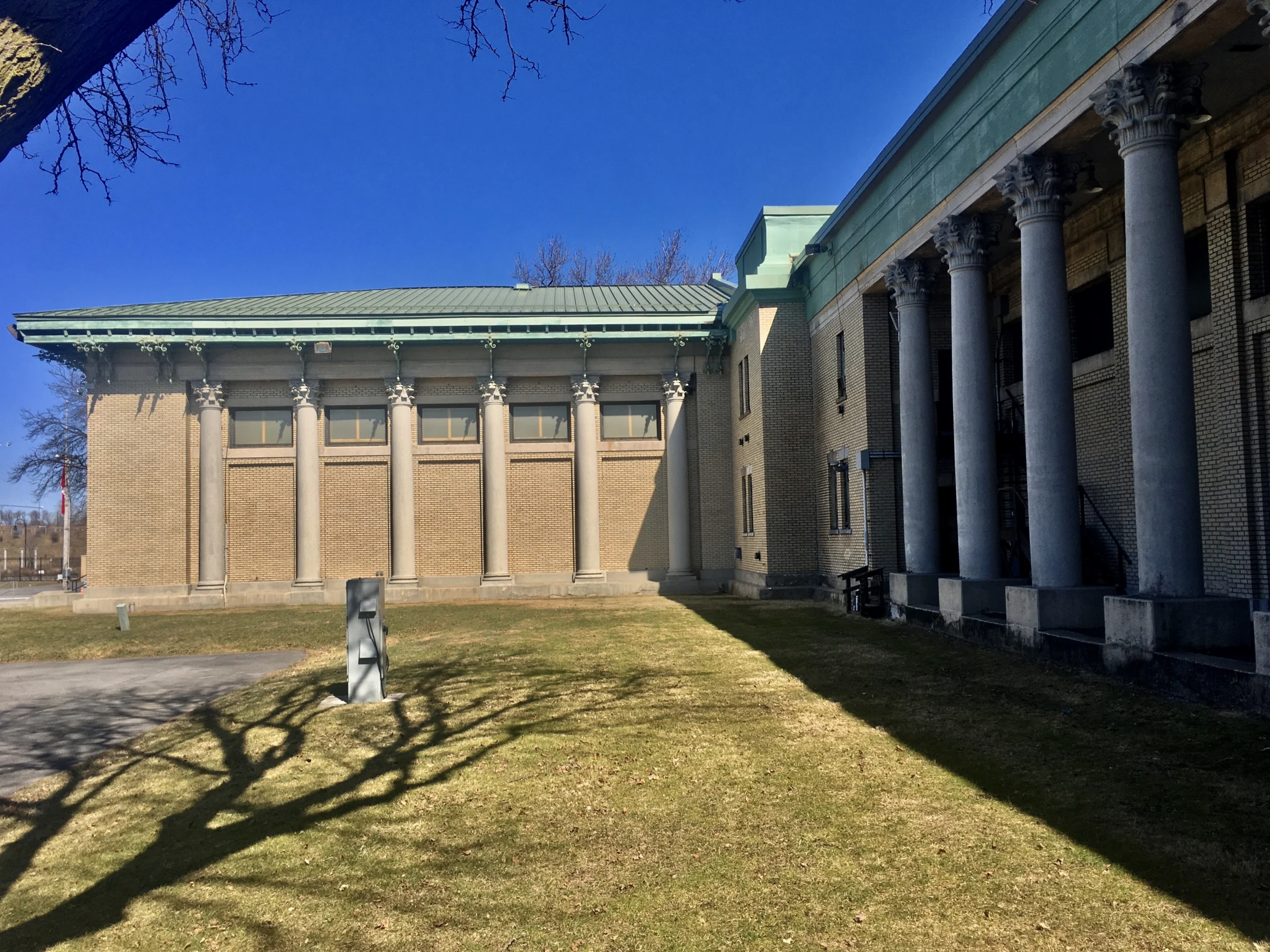
The Fair has consolidated its agricultural food and drink presence in the Horticulture Building this year. The Maple Booth, the Arborist Association, the Honey Producers, Taste NY and the Potato Booth are all in that one space.
The New York State Tasting Yard and the Taste NY Pop-Up Market and Marketplace are also there, which the Fair describes as creating a one-stop shop for New York products.
That consolidation is a real convenience. In previous arrangements, a fairgoer wanting to sample New York food and drink had to know where several separate booths were. Now the answer is one building.
It also means the Horticulture Building is where the $1 potato booth now lives, alongside the maple and honey producers.
What Taste NY is
Taste NY appears repeatedly in the Fair’s materials and is worth explaining once.
It is a state program that promotes New York food and beverage producers, with branded marketplaces at locations including Thruway rest stops and, seasonally, the State Fair. The premise is straightforward: give small in-state producers retail placement they could not otherwise afford, in places with high traffic.
At the Fair, that means a marketplace and a pop-up market where products from New York producers are sold directly to a crowd that arrives in the hundreds of thousands.
For a small winery, an appearance at a Taste NY marketplace at the State Fair is a marketing opportunity out of proportion to its size. That is the point of the program.
Why the Finger Lakes grow what they grow
The geography behind New York’s wine ranking is worth a paragraph, because it explains why an industry exists in a place with winters like ours.
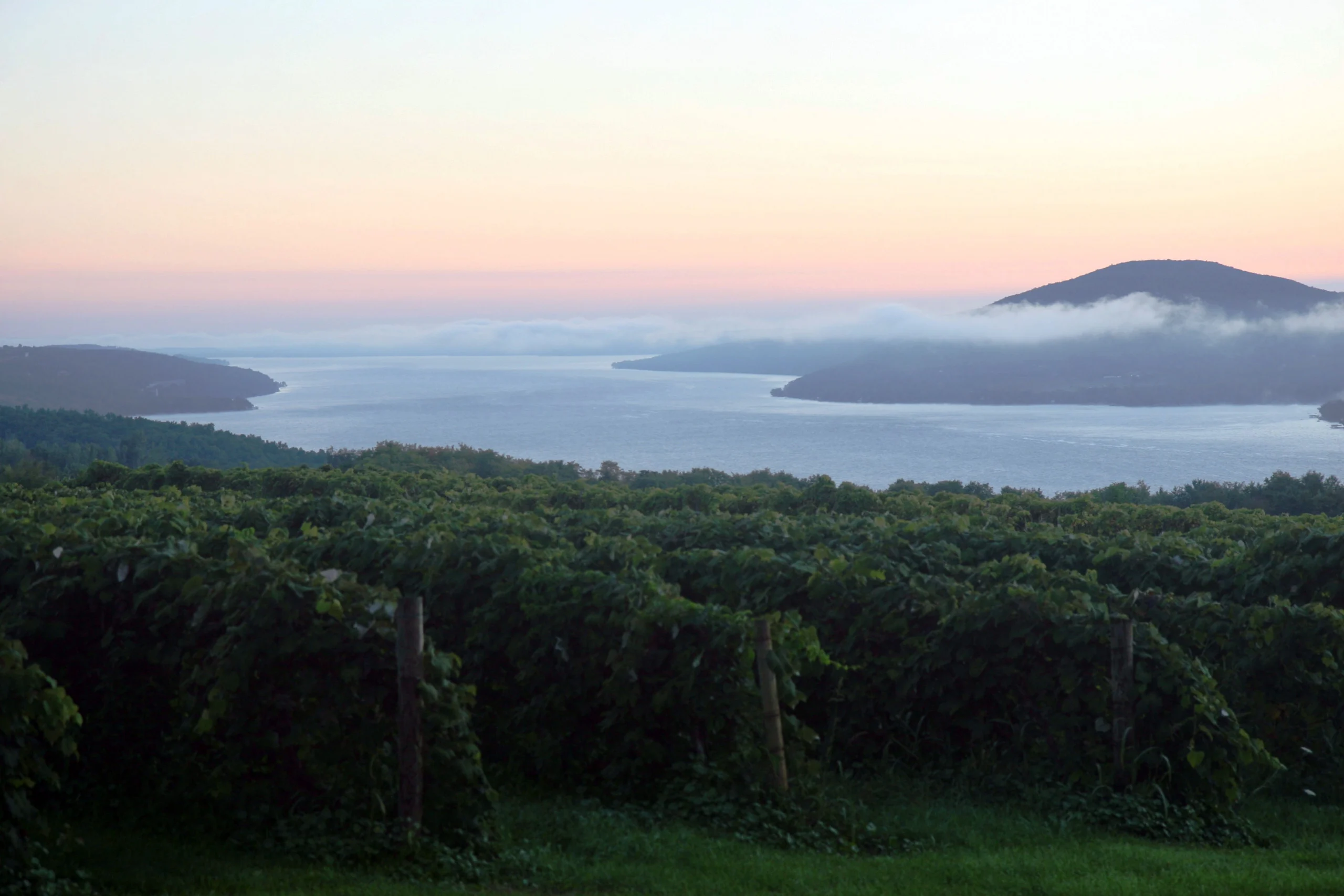
Grapes are perennial and they can be killed by cold. What makes the Finger Lakes viable is the lakes themselves. Deep, narrow bodies of water hold summer heat well into autumn and release it slowly, moderating the air on the slopes above them. That pushes back the first hard frost and softens the coldest nights, giving vines a longer season and a better chance of surviving winter.
That is why the vineyards sit on hillsides above the water rather than on flat ground away from it, and why the plantings cluster on particular slopes of particular lakes.
It also explains the varieties. Cool-climate whites, riesling most prominently, do well in that setting in a way that warm-climate reds do not. A region’s grape list is a description of its climate.
The Lake Erie belt works on a similar principle at a different scale, with a large shallow lake moderating a wide plain, and it produces the juice-grape volume that puts New York’s total grape ranking where it is.
What a wine competition actually does
Since the Grape Day seminar is built around competition winners, it is worth knowing what that means.
At a judged wine competition, panels taste blind. They do not see the label, the price or the producer. Wines are grouped by category and evaluated against a standard, with medals awarded on merit rather than by ranking against each other, so a category can produce several golds or none.
For a small winery, a medal is one of the few forms of third-party validation available. It can be printed on a shelf-talker, cited to a distributor, and used to get a wine list placement it would otherwise not get.
For a region, a competition serves a different purpose. It produces a defensible list of what is worth drinking, which is the raw material for exactly the kind of seminar the Foundation is running at the Fair.
The obvious limitation is the one noted above. When the organization running the competition is also the organization promoting the region, the medals are real but the framing is promotional.
The gap this is trying to close
Return to the number at the top. Third largest wine producer in the country, and most people in Central New York, an hour from the vineyards, could not name that ranking.
Part of that is volume versus visibility. California’s output dwarfs everyone, and national wine conversation follows it. Part of it is that New York’s grape tonnage is heavily juice, which does not build a wine reputation.
And part of it is simply that in-state marketing budgets for agricultural sectors are small. A trade organization cannot buy the kind of attention a state fair gives away for the cost of a booth and a seminar.
Which is why Grape Day happens at the Fair rather than at a wine event. The audience is the point.
The honest caveats
Two things worth being precise about, since this is a story built on an industry’s own numbers.
The third-largest rankings come from the New York Wine and Grape Foundation, which is the industry’s trade organization and therefore an interested party. The figure is widely used and CNY Signal has quoted it as attributed rather than as an independent finding.
And the Fair’s Grape Day is a promotional event. It is organized to sell New York wine and grape products, and the seminar showcases winners of a competition the promoting organization runs itself. None of that makes the underlying industry smaller than it is, but readers should know the frame.
What is not in question is that the sector is substantial, that it spans juice and wine, and that most people in Central New York would not guess the state’s national ranking.
If you want to go
Grape Day itself was Thursday, August 27. The Tasting Yard sessions, the Taste NY Marketplace and the Taste NY Pop-Up Market in the Horticulture Building continue through the Fair.
The Fair runs through Labor Day, Monday, September 7. Gates are open 9:00 a.m. to 11:00 p.m. daily, with no entry or re-entry after 9:00 p.m.
Admission is $8.32 online with fees included. Children 12 and under and adults 65 and older get in free every day. Anyone tasting wine will need to be 21 and able to prove it.