Sunday’s Holstein competition is the headline, but the more telling numbers are elsewhere: llama and meat goat entries are up, the goats have a new pavilion, and New York’s FFA students got a 4,000 square foot building of their own.
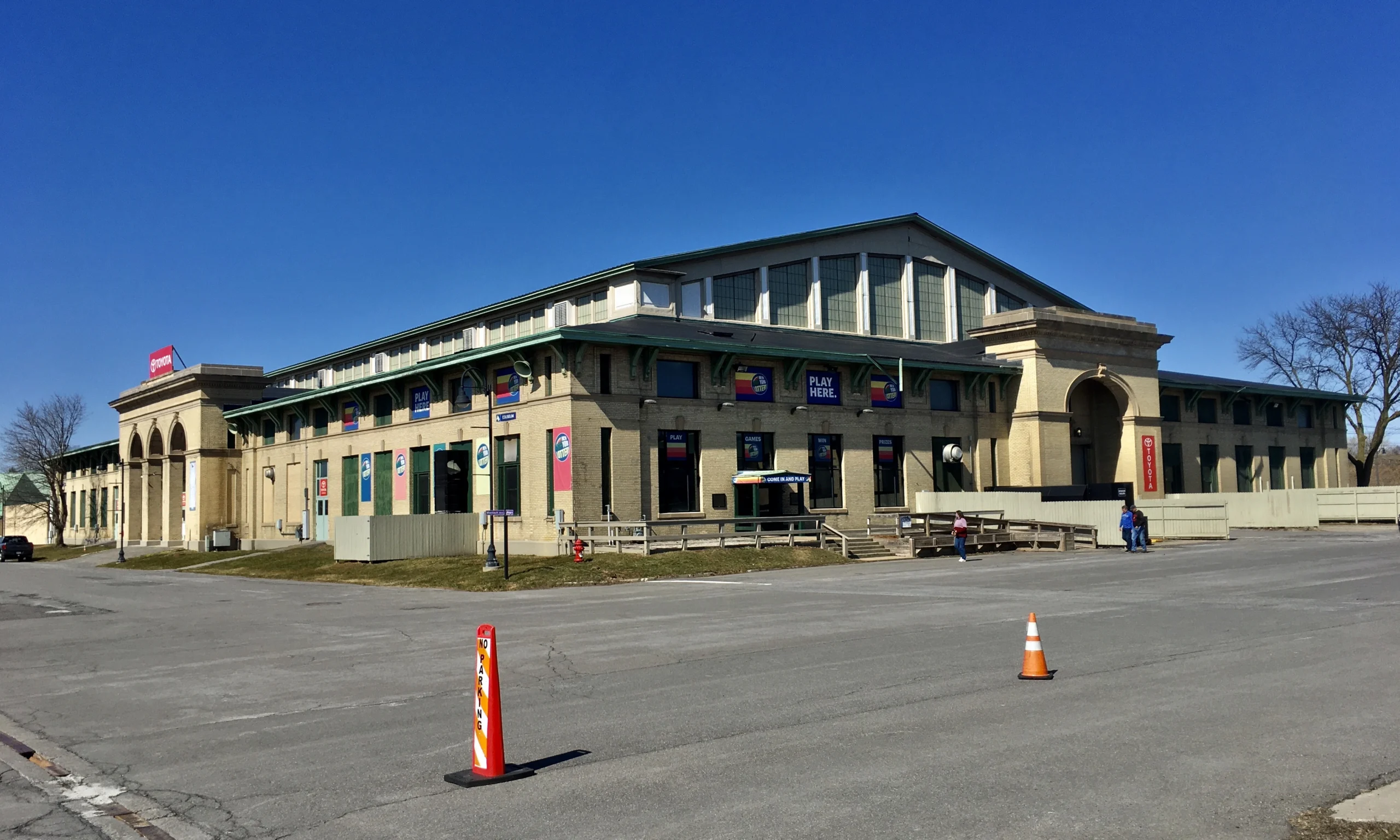
On Sunday, August 30, Holstein dairy cattle will fill the Toyota Coliseum at the State Fair for what the Fair describes as its largest showing in nearly a decade.
This story came from public records we pulled ourselves
Get the next one, plus overnight incidents, in your inbox at 6 AM. Free, no spam.
That is a real recovery, and it is worth understanding why it counts as news rather than routine.
Livestock competition is the oldest part of any state fair and the part most vulnerable to decline. Showing cattle costs money and time. It requires an animal, a trailer, days away from the farm during a working month, and a young person willing to spend a summer preparing. When the number of dairy farms in a state falls, the show ring is where you see it first.
A Holstein show returning to its largest size in nearly ten years is a datapoint pointing the other way.
What is happening in the Coliseum this weekend
The Holstein competition is Sunday, August 30, in the Toyota Coliseum.
The day before, Saturday, August 29, the same building hosts two horse events. At 10:30 a.m., 4-H youth present the 4-H Driving and Miniature Horse Show, demonstrating driving and in-hand skills. At 5:00 p.m., visitors can join 4-H youth for a Meet the Horses educational event.
And on Friday, August 28 at noon, the Coliseum hosts the new Kiddie Tractor Pull, a scaled-down version of the tractor pull for youth registrants. Additional pulls run Saturday, August 29 and Saturday, September 5.
That last one requires signing up in advance. Space is limited, and the Fair directs interested youth to register at the Antique Tractor Exhibit before the show or to contact Jim Griswold at 607-423-6244.
Three days, three completely different uses of one building. That is what the Coliseum is for.
The entries nobody writes about
The Fair reported something in passing that deserves more attention than the Holstein headline.
Llama, meat goat and other animal entries are on the rise at the 2026 Fair.
Meat goat is the interesting one. Goat production has been one of the faster-growing livestock sectors in the United States, driven substantially by demand from immigrant communities for a meat that is a staple across much of the world and was historically marginal in American agriculture.
For small farms in Central New York, goats have a specific appeal. They need less land than cattle, less capital to start, and they can work ground that would not support a dairy herd. Rising entries at a state fair is a soft indicator, but it is an indicator, and it tends to run ahead of the statistics.
The Fair has built for it. The recently constructed Goat Barn Pavilion will host goat competitions this year, and the Fair notes it has bleacher seating, which means the goat shows are now something spectators are expected to sit down and watch.
A building for the FFA
The most concrete investment in agriculture at this year’s Fair is not an animal. It is a building.
New York’s FFA students and educators have a newly constructed 4,000 square foot FFA Building on the west end of the Fairgrounds. The Fair is explicit that it serves them not only during the 13 days of the Fair but year-round.
FFA, formerly Future Farmers of America, is the agricultural education organization that runs through school programs. A dedicated year-round building on the Fairgrounds gives it something most youth organizations at a fair do not have, which is a permanent address.
That matters for the same reason the apple trees in the Voice of the Farmer Garden matter. A tent is an event. A building is a commitment.
Behind the Halter
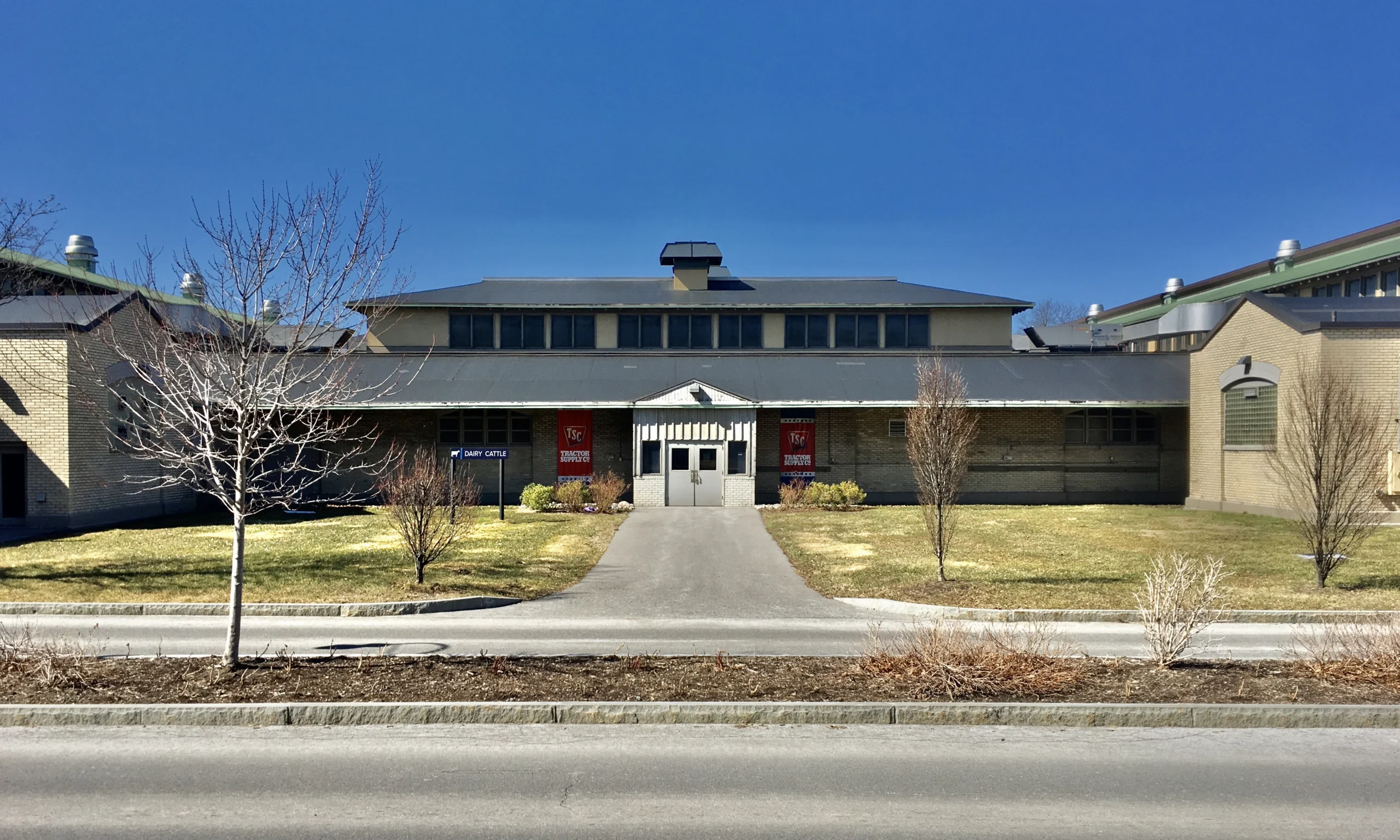
Alongside the physical additions, the Fair is running a new digital campaign called Behind the Halter, subtitled Celebrating the Youth Behind New York’s Dairy Cattle.
It appears on screens throughout the Dairy Cattle Barn and profiles young exhibitors, the people who, in the Fair’s description, dedicate countless hours to caring for, preparing and showing their dairy cattle.
The premise is sound. A fairgoer walking the cattle barn sees animals and, if they notice the people at all, sees teenagers with brushes. The hours behind that are invisible: the feeding schedule, the clipping, the training to lead, the early mornings for months.
Putting that on a screen in the barn is a low-cost way to make the labor legible, and it is aimed squarely at the visitor who has never been on a farm.
Why the dairy barn is the whole point
There is a reason the dairy side gets this much attention at a New York fair.
New York is a major dairy state, and the Fair was founded in 1841 explicitly around agriculture. State Fair Director Julie LaFave has framed the Fair as steeped in a history that started in agriculture. State Agriculture Commissioner Richard A. Ball, whose department co-runs several of the Fair’s agricultural exhibits, has said plainly that it is all about the food.
The dairy infrastructure is being expanded to match. The Fair says the Milk Bar is undergoing renovations that include increasing the square footage of the Dairy Products Building, an project announced by Governor Kathy Hochul in 2025. Visitors to that building can sample and purchase cheeses from across the state.
There is also a Mobile Dairy Experience and an all-new Dairy Discovery Center, which the Fair describes as a 53-foot immersive educational experience demonstrating how dairy gets from farm to table.
And the Fair is debuting The Big Cheese, a 1,400 pound replica cheese wheel produced with Great Lakes Cheese and the Dairy Farmers of America.
What showing an animal actually involves
For anyone who has never done it, the phrase countless hours is doing a lot of work, so here is what it covers.
An animal shown at a state fair has been selected months in advance, usually from stock the family already owns. It is halter-broken, meaning trained to be led rather than driven, which takes weeks of daily handling with an animal that will end up weighing well over a thousand pounds.
It is fed on a schedule intended to bring it into condition on a specific date. It is washed, clipped and groomed to standards that vary by breed. Its feet are trimmed. In the days before the show it is walked, practiced, and settled into a strange barn full of noise and strangers.
Then a teenager leads it into a ring in front of a judge who evaluates the animal’s structure, and the teenager’s handling, against a written standard.
The animals people photograph on their way to the Midway have all been through that. That is the gap the Behind the Halter campaign is aiming at.
Why fairs stopped being about livestock, and why it matters that this one is
There is a longer arc here worth stating plainly.
American state fairs began as agricultural societies’ exhibitions, meetings where farmers compared stock, saw new equipment and learned methods. The rides, the concerts and the fried food came later and eventually became the reason most people attend.
That drift is not a scandal. Fairs need attendance to survive, and attendance follows entertainment. But it does put pressure on the agricultural half, which is expensive, weather-dependent and unglamorous compared with a midway.
What is worth noticing about this year’s New York additions is where the permanent money went. The stunt show and the corgi races are contracted attractions that can leave next year. The FFA building, the Goat Barn Pavilion, the Dairy Products Building expansion and the apple trees in the demonstration garden do not leave.
A fair spending on structures for its agricultural program, in the same season it books a jet ski act, is a fair trying to hold both halves together.
The practical version
If you have one afternoon and want to see the working part of the Fair rather than the midway part, the route is straightforward.
Arrive at nine when the gates open. Start in the Cattle Building while it is still cool. Walk to the Goat Barn Pavilion and sit down for a class, since there is now seating. Cross to the new FFA Building on the west end.
Then check what is in the Toyota Coliseum that day, because it changes daily and it is where the competition happens.
Everything on that route is included with admission, and none of it costs anything beyond the price of getting in.
The 25 cent cup
Underneath all of it sits the single most famous thing the New York State Fair does, which is sell a cup of cold milk for a quarter.
It has become the Fair’s signature, the thing people mention first, and it functions as a permanent advertisement for the state’s dairy industry disguised as a bargain.
It is worth noting what that price actually represents. Twenty-five cents in a year when a bottle of water on the same grounds costs several dollars is not a market price. It is a subsidy by the dairy industry to put its product in a million hands, and it works.
If you want to see the animals
The practical advice for anyone going specifically for the livestock is simple and slightly counterintuitive.
Go early. The barns are open when the gates open at 9:00 a.m., they are cooler then, the animals are more active, and the exhibitors have time to talk. By mid afternoon in late August, a barn full of cattle is hot and the aisles are crowded.
Sunday, August 30 is the Holstein show in the Toyota Coliseum. Saturday, August 29 has the horses at 10:30 a.m. and 5:00 p.m. in the same building. The goat competitions are in the Goat Barn Pavilion, which now has seating.
The Fair runs through Labor Day, Monday, September 7, with gates open 9:00 a.m. to 11:00 p.m. and no entry or re-entry after 9:00 p.m. Admission is $8.32 online with fees included, and free every day for children 12 and under and adults 65 and older.
Everything described here is included with that admission.