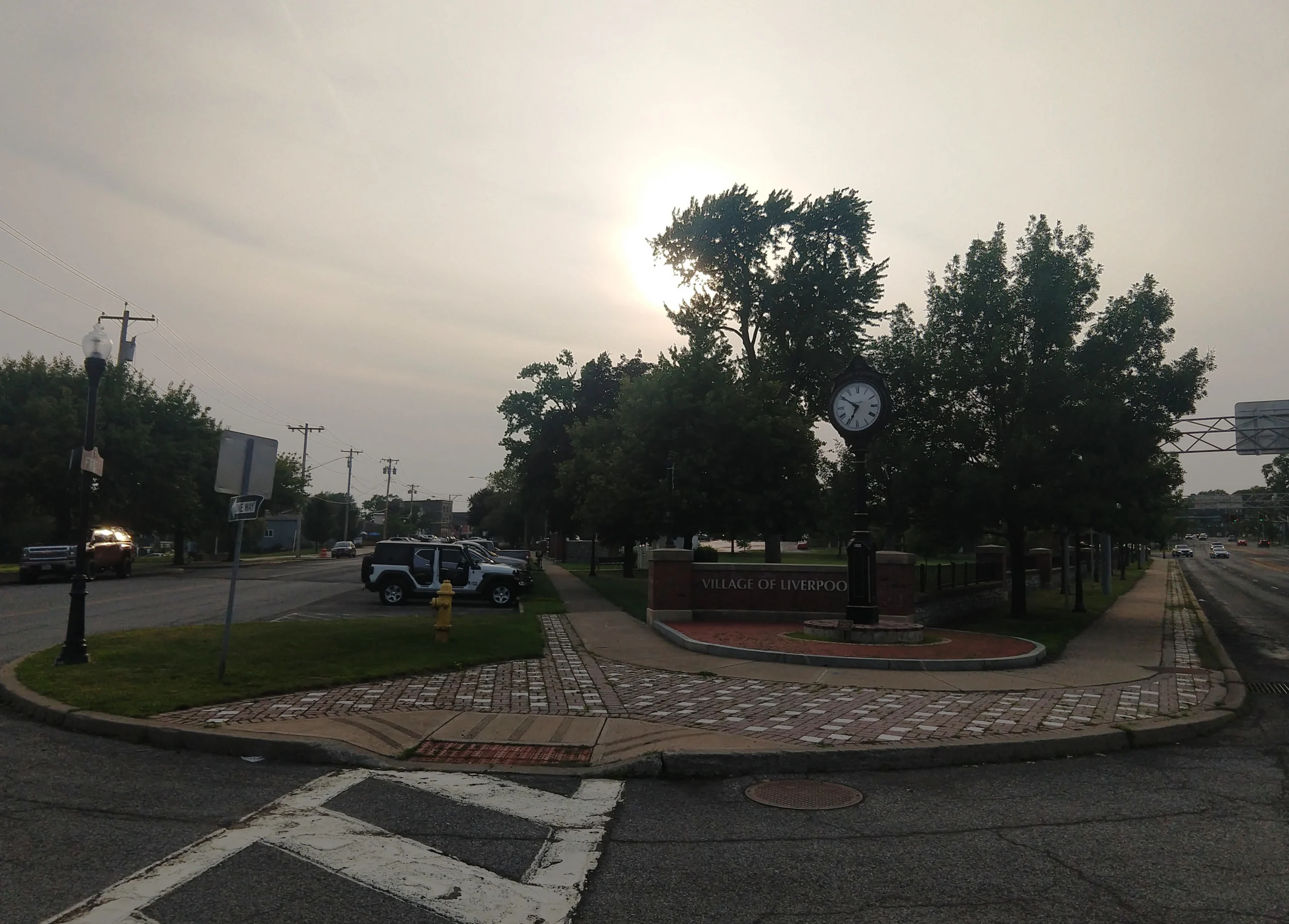
The Liverpool Central School District is asking voters in Salina, Clay and the village to approve a spending plan that grew roughly 10 percent in one year, drains $12.5 million from reserves, and cuts about 80 positions. Polls open at 6 a.m. Tuesday at 195 Blackberry Road.
Liverpool homeowners will decide Tuesday whether to approve a school budget of just under $223 million that raises the property tax levy 3.3 percent and eliminates roughly 80 positions, including teaching assistants, classroom teachers and bus drivers.
This story came from public records we pulled ourselves
Get the next one, plus overnight incidents, in your inbox at 6 AM. Free, no spam.
The vote caps a year of friction inside one of Onondaga County’s largest districts. The Board of Education adopted the spending plan by a narrow 5-to-4 margin on April 20, with two members publicly second-guessing their own yes votes. Superintendent Richard Chapman told the board the district needed to “change course” after a decade in which it added staff while losing students.
Polls run from 6 a.m. to 9 p.m. on Tuesday, May 19, at the District Office, 195 Blackberry Road. A second proposition on the same ballot asks voters to approve a separate Bus and Vehicle Purchase. Three seats on the nine-member Board of Education are also up, with six candidates competing.
What’s on the ballot
Two propositions and one election share Tuesday’s ballot.
The headline question is the 2026-2027 operating budget. The board’s adopted plan totals just under $223 million, an increase of roughly $20 million over the spending plan voters approved last May. The biggest driver, according to district presentations, is health insurance: Chapman has said the self-insured district expects an 8 percent increase in health coverage costs, with employee wages projected to rise about 5 percent.
Liverpool will spend roughly $98 million on personnel in the new budget. The district expects property taxes to cover just under 50 percent of the total, with state aid contributing 44.78 percent. The remainder comes from federal aid, fees and the use of reserves.
The second proposition is the annual Bus and Vehicle Purchase. Liverpool has placed a transportation proposition on its May ballot in every recent year, including 2023, 2024 and 2025, and voters have approved each one.
The third item is the Board of Education election. Three of the board’s nine seats are open. Only one incumbent, Jecenia Bresett, is seeking reelection. The other two outgoing trustees, Stacey Chilbert and Dan McKeever, are not running again.
How the levy compares
A 3.3 percent levy increase is well above the rate of inflation that drives New York’s statutory cap on school tax growth. State law generally limits annual tax levy growth to the lower of 2 percent or the rate of inflation, with district-specific adjustments. A budget at or below the cap passes with a simple majority. A budget that pierces the cap requires a 60 percent super-majority.
Liverpool’s 3.3 percent figure is the tax levy increase, which is not identical to the tax cap calculation. The district has not publicly stated whether the levy proposal is within or above its locally calculated cap. Voters should expect that distinction to surface in the final week of campaigning, because a failed super-majority sends the district to a contingency budget.
The complicating factor for every Central New York district this spring is Albany. New York’s state budget was still being negotiated past its April 1 deadline, leaving school officials to guess at their state aid totals while finalizing local spending plans. About 45 percent of Liverpool’s budget depends on those numbers.
Where the money goes
Liverpool, like every New York district, splits its budget into three legally required components: program (classroom instruction, athletics, transportation, benefits, special education), capital (debt service, facilities, equipment) and administration (central office, board, legal, principals’ offices).
In 2022-23, the last year for which a clean three-part breakdown is publicly cataloged, those components were:
- Program: $129,452,400, or 74.63 percent
- Capital: $29,642,185, or 17.09 percent
- Administrative: $14,356,578, or 8.28 percent
That added up to roughly $173.45 million four years ago. The new $223 million plan is about $50 million larger, or roughly 29 percent above the 2022-23 baseline. Personnel still dominates: the district is budgeting about $98 million for salaries and benefits alone, a figure Chapman has flagged as the central reason for the cuts.
The reductions in staffing fall hardest on classroom support roles. Spectrum News reported the layoff list includes six teachers on special assignment, 32 teaching assistants, and several content-area teachers in math, science and English. Bus drivers are also affected. To close what started as a $17 million gap, the district plans to:
- Pull $12.5 million from reserves.
- Capture $4.6 million in personnel savings through layoffs, retirements and unfilled vacancies.
- Raise the levy 3.3 percent.
An enrollment problem hiding inside a budget problem
The numbers that make Liverpool’s predicament unusual are not in this year’s spending plan. They are in the enrollment trend.
According to the New York State Education Department’s data site, Liverpool’s total K-12 enrollment is 6,627 students, of whom 236 are English Language Learners. Reporting on the budget hearings notes the district had 7,178 students in 2015. That is a decline of about 550 students, or roughly 7.7 percent, over the past decade.
Over the same period, the district added about 175 employees. That divergence (more staff serving fewer students) is the structural imbalance Chapman has cited repeatedly.
U.S. News currently lists 31.0 percent of students as economically disadvantaged, with a minority enrollment of 30 percent. The district operates eight elementary schools, four middle schools and Liverpool High School, 13 buildings in all, across the village and the surrounding towns of Clay and Salina.
Board races: six candidates, three seats
Three trustees are leaving the board, and only one is fighting to stay. The five newcomers are running on a spread of priorities, from layoff and tax pushback to school security.
The full slate, as posted by the district and confirmed in candidate reporting from CNY Central:
- Jecenia Bresett (incumbent). One of the board members who publicly voiced doubts about the 5-4 budget vote. Campaigning on transparency.
- Dawn Curry-Clarry. Frames her candidacy around finding consensus between the warring camps on the current board.
- Victoria R. Baratta. A long-time meeting attendee who says she wants to fix things from inside the boardroom.
- Lindsay Giles (Wiehl). An Onondaga County Sheriff’s deputy whose pitch centers on community connection and student advocacy.
- Elijah Micah Lee Curtis. Running against the layoff package and the tax levy increase, framing the cuts as a threat to classroom relationships.
- John Kritzer. Director of Security for the Syracuse Housing Authority; running on student and staff safety.
The board itself is led by President Nicholas Blaney and has nine seats, each carrying a three-year term. Two trustees who held the 5-4 vote together, Matt Jones and Bresett, have each described that vote as a “reluctant” yes.

Polling locations and hours
Every Liverpool CSD voter casts a ballot at one location.
- Where: District Office, 195 Blackberry Road (the Eagle News announcement of voter registration day listed the address as 194 Blackberry Road; the official district page lists 195).
- When: Tuesday, May 19, 2026, 6 a.m. to 9 p.m.
- Eligibility: U.S. citizen, 18 or older, resident of the district for at least 30 days immediately before the vote, and registered with either the district Board of Voter Registration or the Onondaga County Board of Elections.
- Absentee ballots: The district clerk had to receive applications by 5 p.m. on May 16. Voters who already received an absentee ballot can drop it off at the district office.
- District Clerk: 315-453-6910.
The same trip to Blackberry Road also covers the Liverpool Public Library budget and the library’s Board of Trustees election, which share Tuesday’s ballot.
What happens if it fails
Under New York Education Law, every district has two attempts to pass a budget. If voters reject the proposal on May 19, the Liverpool board may make changes and bring it back for a second vote, typically in June. If that revote also fails, the district must adopt a contingency budget with no tax levy increase over the current year’s levy.
A contingency budget is not symbolic. It strips out non-contingent expenses: certain equipment purchases, community use of buildings, some salary increases for non-instructional staff. For a district already pulling $12.5 million from reserves and cutting 80 jobs, a contingency outcome would push the next round of reductions deeper into the classroom and into transportation.
This year the calculus is sharper because of the late state budget. As New York State of Politics noted last week, school boards across the state are facing an uphill climb on budget approvals, and several districts that fail Tuesday will end up at June revotes, where turnout typically falls and the cost of running the second election lands on local taxpayers.
The local context
Liverpool is the second-largest district in Onondaga County by enrollment, after North Syracuse. The two districts held their public budget hearings on the same day, May 7. Both face the same combination of pressures: rising employee health costs, slow but steady enrollment decline, and a wave of one-time pandemic relief funds running off the books.
What sets Liverpool’s vote apart is the public messiness of the runup. The 5-4 board split, the layoff list reaching into classroom roles, and a six-way race for three trustee seats give Tuesday’s ballot more genuine stakes than a typical school budget year. Bresett’s pitch for reelection (“I promise to continue asking the tough questions to ensure transparency”) is itself an artifact of the dispute.
Voters who want to read the underlying numbers before Tuesday can pull the district’s 2026-2027 Budget Information page, which links the official Budget Document and the Budget Edition of the School Bell, the district’s mailed newsletter. CNY Signal will publish a follow-up after the polls close with the unofficial returns.
Polls close at 9 p.m.
Truth-check: Frank Mahoney, Editor-in-Chief. Every dollar figure, percent, headcount, name and date in this article is sourced inline to the original publication. The 2025-26 budget total of approximately $203 million is derived from public reporting that the 2026-27 plan is about $20 million larger than the prior year. The 2026-27 three-part component split shown in the comparison graphic uses the most recently published mix (2022-23) as a reference; precise 2026-27 component figures will be updated once the district’s official Three-Part Budget Summary is parsed.