Beef Day hits its 31st year at the Fair on Tuesday. Between those two numbers sits the whole question facing New York beef: a large, scattered industry and a certification program most of it has not joined.
Beef Day returns to the New York State Fair on Tuesday, September 1, in its 31st year, with events at the New York Beef Council tent.
This story came from public records we pulled ourselves
Get the next one, plus overnight incidents, in your inbox at 6 AM. Free, no spam.
There is a free cow ear headband, while supplies last. There is a new Beef Day photo contest. There are recipe cards, staff to talk to, and a digital giveaway with admission tickets as the prize.
That is the day. The interesting part is the two numbers in the state’s own description of the industry behind it.
Ten thousand and ninety-three
New York is home to almost 10,000 farms and ranches with cattle and calves.
The New York State Grown and Certified program counts 93 beef producers as members.
Both figures come from the state. Put side by side, they describe an industry that is widespread and largely uncertified.
That is not a scandal, and it does not mean the other farms are doing anything wrong. Grown and Certified is voluntary. It requires participation in food safety and environmental management standards, and it exists to give consumers a state-backed mark on products grown and processed in New York.
But the gap is worth understanding, because it explains what kind of industry this is.
Cattle are not usually the whole farm
Most of those nearly 10,000 operations are not beef ranches in the sense the word suggests.
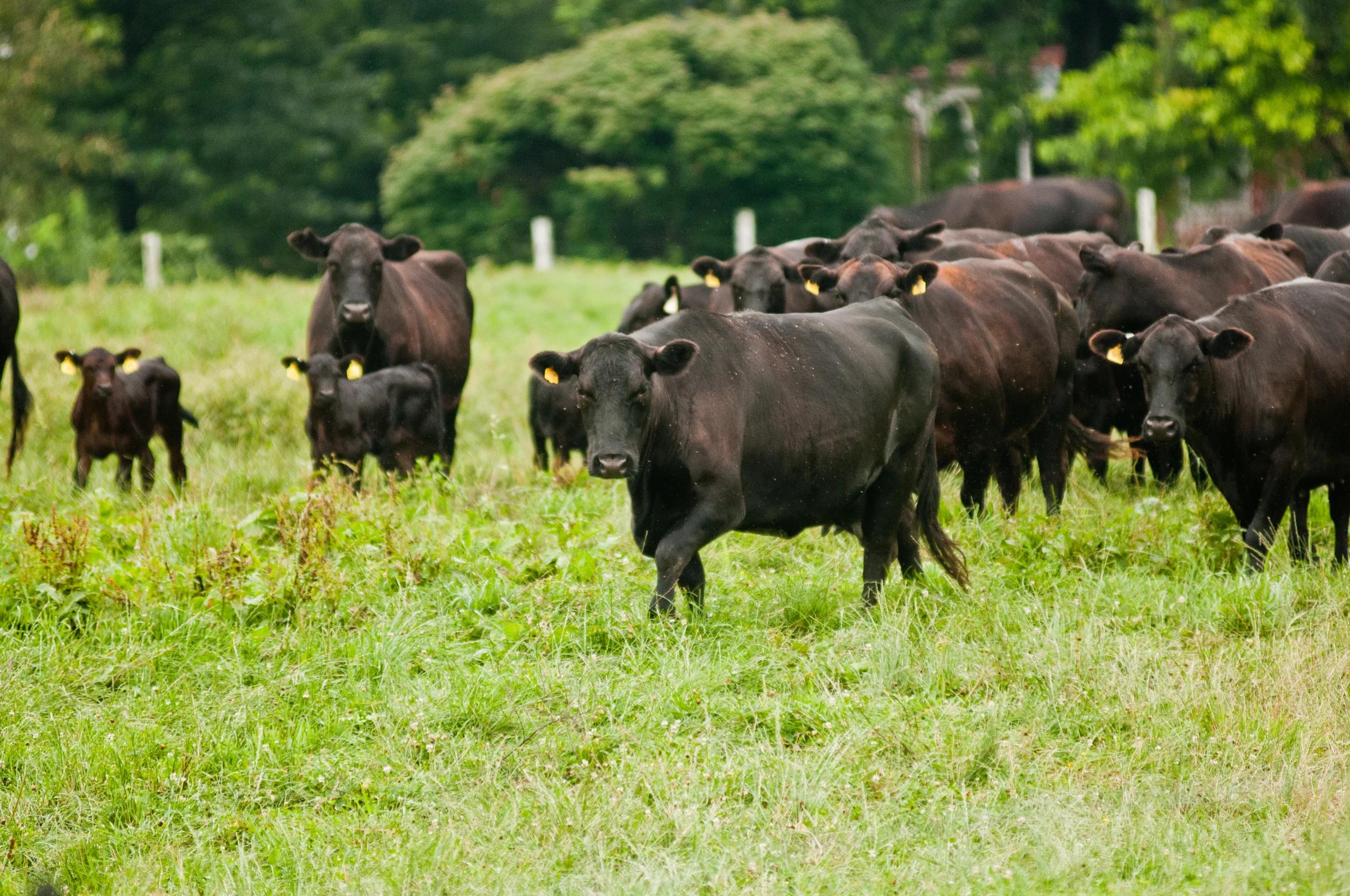
A large share of farms with cattle and calves in New York run small herds alongside something else: a dairy operation with beef animals, a hay farm, a family holding raising a handful of head, cropland with a small cow-calf herd on ground too rough to plant.
For an operation like that, certification is a real cost in paperwork and process against a small volume of product. The economics only work if you are selling directly to consumers or into a market that pays for the mark.
Ninety-three producers have decided it does. The rest sell into commodity channels where the label does not change the price.
That is the structural picture: a lot of cattle spread thin across a state whose leading agricultural sector is dairy, with a small subset pursuing branded, direct-to-consumer sales.
What Beef Day is actually for
Read against that backdrop, the day’s activities make sense as a strategy rather than as decoration.
The Fair says Beef Day aims to build excitement, educate consumers, and elevate the visibility of beef across the state. Ashley Scoones, executive director of the New York Beef Council, framed it around the role beef plays in bringing people together.
The recipe cards matter more than they sound. A council promoting a commodity cannot compete on price against national supply chains. What it can do is increase the number of people who know how to cook a cut they would otherwise pass over, which raises demand for the whole category.
The photo contest and the headbands are reach. They put the product in front of a general audience in a form people share.
And the ticket giveaway is straightforward audience acquisition: it collects interested people ahead of the day.
None of that is cynical. It is a small trade organization using the one venue in the state where it gets direct access to hundreds of thousands of consumers in under two weeks.
Where Beef Day sits in the Fair’s calendar
The Fair runs a series of special days for New York agriculture, and the lineup tells you which sectors have organized promotion behind them.
Agricultural Career Day. Grape Day. Maple Day. Beef Day. Dairy Day.
Each one is anchored by a trade organization or a state program. Grape Day is the New York Wine and Grape Foundation. Maple Day is the Maple Producers Association. Dairy Day is a coalition of four organizations. Beef Day is the New York Beef Council.
Notice what that requires. A sector needs a funded organization, staff who can plan a fair presence, and a reason to spend the money. Sectors without that do not get a day.
Beef getting 31 consecutive years of them says the council has been consistent about it for three decades.
The Grown and Certified question
The certification program deserves a closer look, since 2026 is its tenth anniversary year and it has been showing up across the Fair.
The same program is behind the change at the $1 potato booth, where the Fair’s most famous cheap item now uses New York potatoes with toppings from Grown and Certified processors.
That is the program’s theory in practice. Rather than only marketing to shoppers, it embeds certified product into high-visibility food service, so people eat it without needing to read a label.
For beef, the equivalent path is harder. A potato is a potato. Beef reaches consumers through butchers, grocers and restaurants with established supply chains, and a 93-producer program is small next to that.
Which is why Beef Day leans on recipes, headbands and photographs rather than on the certification mark. The mark is the long game. The day is about the category.
The cow-calf model, briefly
To understand why so many New York farms have cattle without being beef businesses, it helps to know how the industry is structured.
Beef production splits into stages. Cow-calf operations keep breeding cows and raise calves. Those calves are sold on, often out of state, to backgrounding and feeding operations that finish them. Processing happens somewhere else again.
New York sits mostly at the front of that chain. A farm with pasture and a modest herd can run a cow-calf operation without the capital a finishing operation requires, and can do it on ground that will not grow a profitable crop.
The consequence is that a lot of New York beef leaves the state as live animals and comes back, if at all, as product from a national supply chain. That is the gap a state certification program and a direct-to-consumer push are trying to close.
It is also why processing capacity comes up constantly in conversations about New York beef. Without nearby slaughter and processing, selling locally is logistically hard no matter how many people want to buy it.
What the day is really competing against
There is an honest constraint on all of this worth naming.
A consumer standing in a supermarket sees beef priced against beef. The label may say New York, or it may say nothing, and the price difference decides most purchases. A state fair tent with recipe cards is not going to change that at scale.
What it can change is the marginal case: the shopper who now knows the Grown and Certified mark exists, the person who tries a cut they had not cooked before, the family that follows the council online and enters a giveaway.
Trade promotion works in small increments over long periods. Thirty-one years of Beef Day is what that commitment looks like, and the honest measure of it is not attendance on Tuesday but whether the category holds its ground over decades.
A note on how to read agricultural promotion
CNY Signal covers these Fair days as news because the underlying industries are a real part of the regional economy. But the material comes from promotional announcements, and readers should know that.
The figures in this story, the farm count and the certification count, come from New York State. The framing of what Beef Day accomplishes comes from the organizations running it. CNY Signal has quoted both as attributed rather than presenting them as independent findings.
What we have added is the context: what the two numbers mean next to each other, why most cattle farms are not certified, and where New York sits in the beef supply chain. That part is analysis, and it is ours.
One more number worth holding
Set the beef figures beside the dairy ones and New York agriculture comes into focus.
Dairy runs on fewer than 2,700 farms and produces roughly half the state’s agricultural income. Cattle and calves appear on nearly 10,000 farms and produce a far smaller share.
That is not a contradiction. A dairy farm milks twice a day, every day, and sells a product continuously. A cow-calf operation sells once a year. One is an intensive business; the other is often a supplement to something else, or a way of keeping land in use.
Both matter to a rural county, and they matter differently. Dairy sustains full-time employment and processing infrastructure. Beef cattle keep pasture in production on ground that would otherwise go to brush or to house lots.
In a month where CNY Signal has covered farmland being subdivided in the Town of Onondaga and rezoned in Lysander, that second function is not a small thing.
If you go Tuesday
Beef Day is Tuesday, September 1, at the New York Beef Council tent.
The cow ear headbands are free while supplies last, which in practice means early. The photo contest is new this year. Council staff will be there through the day with recipe resources.
Tuesday is also Tasty Tuesday at the Fair, the one-day event where select vendors sell samples of their most popular dishes for $3 to $5, running 10:00 a.m. to 6:00 p.m. Participating vendors carry Tasty Tuesday signage, and the Fair’s app flags them in its Fair Finder section.
So Tuesday is the single best day of the run for eating cheaply and widely, and Beef Day sits inside it.
The Fair runs through Labor Day, Monday, September 7. Gates are 9:00 a.m. to 11:00 p.m., with no entry or re-entry after 9:00 p.m. Admission is $8.32 online with fees included, and free every day for children 12 and under and adults 65 and older.
Sources
- The Great New York State Fair, “New York’s Beef Farmers Celebrated at The Great New York State Fair as Part of 31st Annual Beef Day on September 1,” August 21, 2026, including the figure of almost 10,000 farms and ranches with cattle and calves, the 93 beef producers in NYS Grown and Certified, and quotes from Agriculture Commissioner Richard A. Ball, Fair Director Julie LaFave and New York Beef Council Executive Director Ashley Scoones: https://nysfair.ny.gov/
- The Great New York State Fair, “One Day, Endless Food Options! Tasty Tuesday Returns to The Great New York State Fair,” for the September 1 sampling event: https://nysfair.ny.gov/
- New York State Fair, Admission Tickets and Parking, and Frequently Asked Questions, for prices, hours and the entry cutoff: https://nysfair.ny.gov/admission/
Every figure in this story is drawn from the records above. Links go to the primary documents.