Dairy Day is Thursday. Behind the sculpture sits the number that explains why it gets a building: dairy is roughly half of all agricultural income in New York, produced on fewer than 2,700 farms.
There is a refrigerated case at the New York State Fair containing a sculpture made of butter. It has been there, in some form, for 58 years.
This story came from public records we pulled ourselves
Get the next one, plus overnight incidents, in your inbox at 6 AM. Free, no spam.
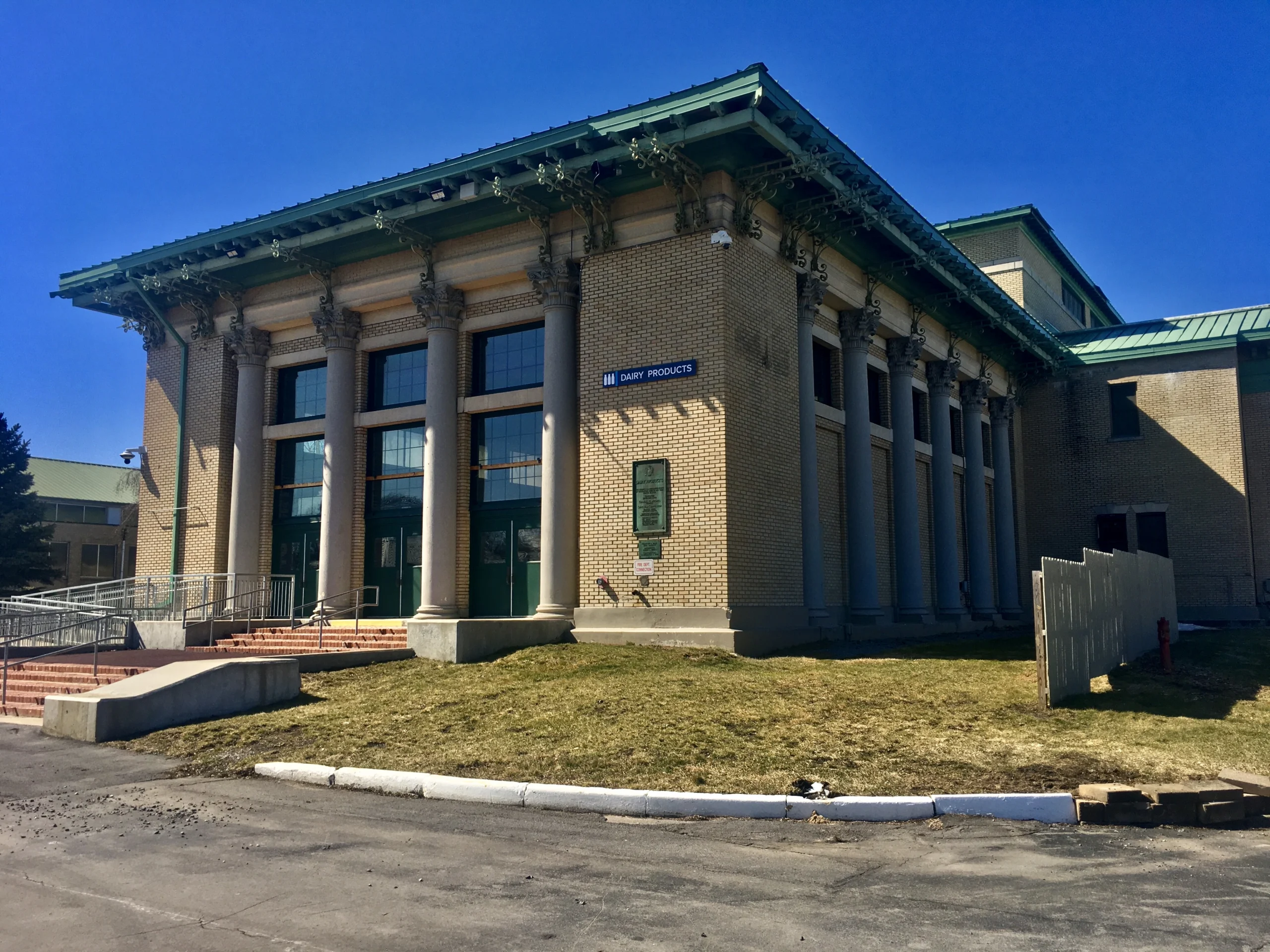
This year’s is the work of Jim Victor and Marie Pelton, artists based in Conshohocken, Pennsylvania, who have made a specialty of sculpting in food. It sits in the Dairy Products Building, and it is probably the single most photographed object on the Fairgrounds that is not a ride.
Dairy Day is Thursday, September 3. The sculpture is the part everyone knows. The industry behind it is the part worth understanding.
One half of everything
Here is the number that reframes the whole building.
New York’s dairy industry is the state’s leading agricultural sector, and it accounts for approximately one half of New York’s total agricultural income.
Not one half of livestock income. One half of agricultural income, full stop. Every apple orchard, every vineyard, every acre of corn and soybeans, every vegetable farm, every maple operation, every cattle ranch in the state adds up to roughly the other half.
And it is produced on fewer than 2,700 dairy farms.
That concentration is the story of American dairy over the last forty years, compressed into one state’s numbers. Fewer farms, larger herds, more milk. The Fair’s dairy exhibits are, among other things, a public face for an industry most people never encounter directly.
What actually happens Thursday
Dairy Day opens at 9:00 a.m. in the Expo Center with the annual Dairy Day Breakfast and awards ceremony.
The awards recognize honorees of the Dairy of Distinction Awards, the PRO-DAIRY Service Awards, and the winners of the New York State Dairy Products competition.
Then at 10:40 a.m., in the lower-level Demonstration Kitchen at the Wegmans Creative Arts Center, comes the Undeniably Dairy Shake-Off. Media teams from Central New York compete to make the best-looking and best-tasting milkshake. The Fair notes the contest is in a new location this year.
A milkshake contest among local media crews is exactly the kind of thing that sounds like filler and reliably draws a crowd.
The 25 cent milk, and who actually pours it
The Dairy Products Building holds the Fair’s most famous bargain, the 25-cent Milk Bar.
Two details about it are worth knowing, because most people assume the state runs it.
It is operated by Cornell Cooperative Extension, the outreach arm of the land-grant university system, and it is supplied by Upstate Niagara Cooperative, a farmer-owned dairy cooperative.
So the cup of milk that functions as the Fair’s signature is poured by an agricultural education organization using milk from a cooperative its member farmers own. It is not a concession stand. It is the industry selling its own product at cost, or near it, to a million people.
The building is being enlarged. In 2025, Governor Kathy Hochul announced the Milk Bar would undergo renovations that include increasing the square footage of the exhibit.
Fairgoers in that building can also sample and buy cheeses from across the state.
Why a butter sculpture at all
The tradition is odd enough to deserve an explanation.
Butter sculpting at agricultural fairs dates back well over a century, to a period when butter was the most valuable product a dairy farm made and displaying it artfully was a way of advertising quality. The medium survived long after the marketing logic faded, and it now persists mostly because people love it.
Practically, it is a refrigerated art installation that has to be built on site, held below a working temperature for 13 days, and dismantled afterward. The butter is typically recycled rather than discarded, often to a farm digester.
Fifty-eight years in, it has become the thing people bring their children to see, which is a decent working definition of a tradition.
That Jim Victor and Marie Pelton come from Pennsylvania rather than New York is a small, honest wrinkle. Food sculpture at this scale is a narrow specialty, and the practitioners work across state fairs regionally. The butter is New York’s. The hands are not.
The rest of the dairy footprint
Beyond the sculpture and the Milk Bar, the Fair’s dairy presence this year is unusually built out.
The Mobile Dairy Experience is a 53-foot immersive exhibit the Fair says demonstrates the processes behind dairy production and the industry’s environmental stewardship.
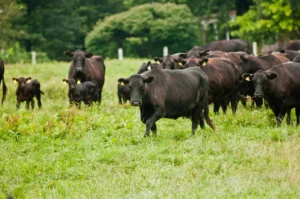
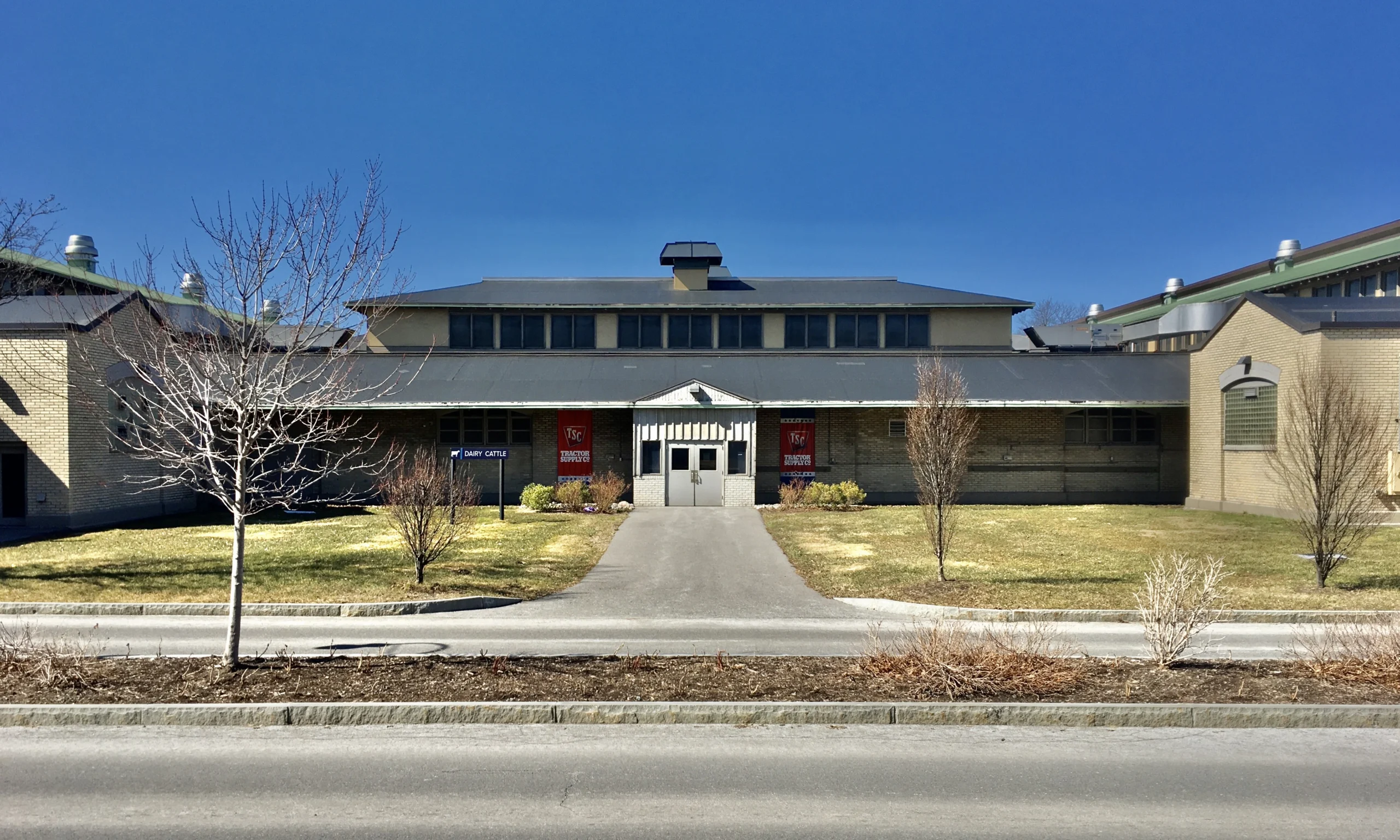
The Dairy Cattle Barn, which houses every dairy animal shown at the Fair, is open to visitors, and fairgoers can watch cows being milked.
That last one is the most valuable thing in the building for anyone who has never seen it. Milking is unremarkable to anyone raised around it and genuinely startling to anyone who has not, and it is the clearest possible answer to where the 25-cent cup comes from.
Elsewhere on the grounds, the Fair debuted The Big Cheese this year, a 1,400 pound replica cheese wheel produced with Great Lakes Cheese and the Dairy Farmers of America.
What 2,700 farms actually means
The farm count deserves a moment, because it is the number that has moved the most.
New York had many times that number of dairy farms within living memory. The animals did not disappear; they consolidated. Herds that were forty cows became four hundred, and the farms that could not make that transition sold their quota, their herd, or their land.
That consolidation is why the industry can produce half of a state’s agricultural income from under 2,700 operations. It is also why a dairy farm failing is a bigger local event than it used to be. When there were thousands, one closing was ordinary. When there are 2,700 statewide, each one is a measurable share of a county’s agricultural base.
It is worth holding both facts at once. The sector is enormously productive and it is carried by a shrinking number of families, most of whom are working seven days a week on animals that need milking whether or not it is a holiday.
That is the group the Dairy of Distinction and PRO-DAIRY awards on Thursday morning exist to recognize, and it is why the awards happen at 9:00 a.m. Farmers are already up.
The Milk Bar is the best deal at the Fair, and it is not close
A brief, practical argument.
A cup of milk costs 25 cents. Nothing else on the grounds is priced within an order of magnitude of that. A bottle of water is several dollars. A soda is more.
The reason is that the Milk Bar is not trying to make money. It is run by Cornell Cooperative Extension and supplied by a farmer-owned cooperative, and its function is to put New York dairy in as many hands as possible.
For a family of four, that is a dollar. On a hot day at a fair where a single lunch can run past forty dollars, the Milk Bar is the one place the arithmetic works entirely in your favor.
It also has a chocolate option, which is the correct choice and should not be controversial.
Why the building is being made bigger
The Milk Bar expansion announced in 2025 is a small item with a clear logic behind it.
The bottleneck at a 25-cent product is never demand. It is throughput: how many people can be served per hour, how long the line runs, and how much cold storage sits behind the counter.
Increasing the square footage of the exhibit addresses exactly that. More counter, more servers, shorter line, more cups poured across 13 days.
For an industry whose entire promotional strategy at this Fair is getting its product into hands, the constraint worth spending money on is the length of the queue.
Who is speaking for the industry
Dairy Day carries an unusually long list of participating organizations, and the list is a fair map of how the sector is organized.
The American Dairy Association North East, whose chief executive John Chrisman framed the day around honoring dairy farm families. Cornell Cooperative Extension, whose assistant director Vicki Giarratano described dairy as essential to New York agriculture, the economy and communities across the state. The New York Animal Agriculture Coalition, whose executive director Eileen Jensen said the group is proud to take part. And Upstate Niagara Cooperative, whose chief executive Kevin Ellis described New York dairy farmers as representing the best of the state.
Four organizations, one product. That density is what a sector producing half of a state’s agricultural income looks like from the outside.
If you go
Dairy Day is Thursday, September 3. The awards breakfast is 9:00 a.m. in the Expo Center. The milkshake contest is 10:40 a.m. at the Wegmans Creative Arts Center demonstration kitchen, lower level.
The butter sculpture and the Milk Bar are in the Dairy Products Building and are there every day of the Fair, not just Thursday. So is the Dairy Cattle Barn.
The Fair runs through Labor Day, Monday, September 7. Gates are 9:00 a.m. to 11:00 p.m., with no entry or re-entry after 9:00 p.m. Admission is $8.32 online with fees, free for children 12 and under and adults 65 and older.
The milk is 25 cents. It has been the correct answer to what to buy at the Fair for a very long time.
Sources
- The Great New York State Fair, “Join The Dairy Celebration at The Great New York State Fair Thursday, September 3,” August 6, 2026, including the butter sculpture’s 58th year, the sculptors, the Dairy Day schedule, the Milk Bar operators and suppliers, and the statement that dairy accounts for approximately one half of New York’s total agricultural income: https://nysfair.ny.gov/
- Quotes from Agriculture Commissioner Richard A. Ball, Fair Director Julie LaFave, American Dairy Association North East CEO John Chrisman, Cornell Cooperative Extension Assistant Director Vicki Giarratano, New York Animal Agriculture Coalition Executive Director Eileen Jensen, and Upstate Niagara Cooperative CEO Kevin Ellis, as published in that announcement.
- New York State Fair, Admission Tickets and Parking, and Frequently Asked Questions, for prices, hours and the entry cutoff: https://nysfair.ny.gov/admission/
Every figure in this story is drawn from the records above. Links go to the primary documents.