Maple Day is Monday. The Maple Producers Association released what its booth actually sold in 2025, and the numbers are a better argument for New York maple than any slogan: six thousand bags of cotton candy, 44 gallons of syrup turned into popcorn, and four barrels rendered into sugar shapes.
Most agricultural promotion at a state fair is vague. Somebody hands you a pamphlet about a commodity and you keep walking.
This story came from public records we pulled ourselves
Get the next one, plus overnight incidents, in your inbox at 6 AM. Free, no spam.
The New York State Maple Producers Association took a different approach this year. Ahead of Maple Day, which falls on Monday, August 31, it published what its booth actually moved during the 2025 Fair.
The list is the most persuasive thing anyone has said about maple all season.
What the booth sold
During the 2025 Fair, visitors to the Maple Booth bought:
9,177 ice cream cones. About 2,000 mapleccinos. About 2,900 maple milkshakes. About 3,000 units of maple popcorn, made with 44 gallons of maple syrup. More than 6,000 bags of maple cotton candy. And 700 bags of maple dog treats.
They also bought more than 1,100 pounds of pure maple sugar shapes, made from just over four barrels of syrup.
Add the cones, the mapleccinos and the milkshakes together and that is more than 14,000 servings of maple-flavored dairy sold from one booth across 13 days.
The dog treats are the detail that lingers. Seven hundred bags. Nobody planned a maple dog treat industry. Somebody made them, put them on a shelf at the State Fair, and seven hundred people bought them for an animal that cannot taste the difference.
The 44 gallons
The popcorn number deserves a second look, because it is the one that connects the booth back to a working farm.
Three thousand units of maple popcorn consumed 44 gallons of syrup. That works out to roughly a gallon and a half of syrup for every hundred units sold.
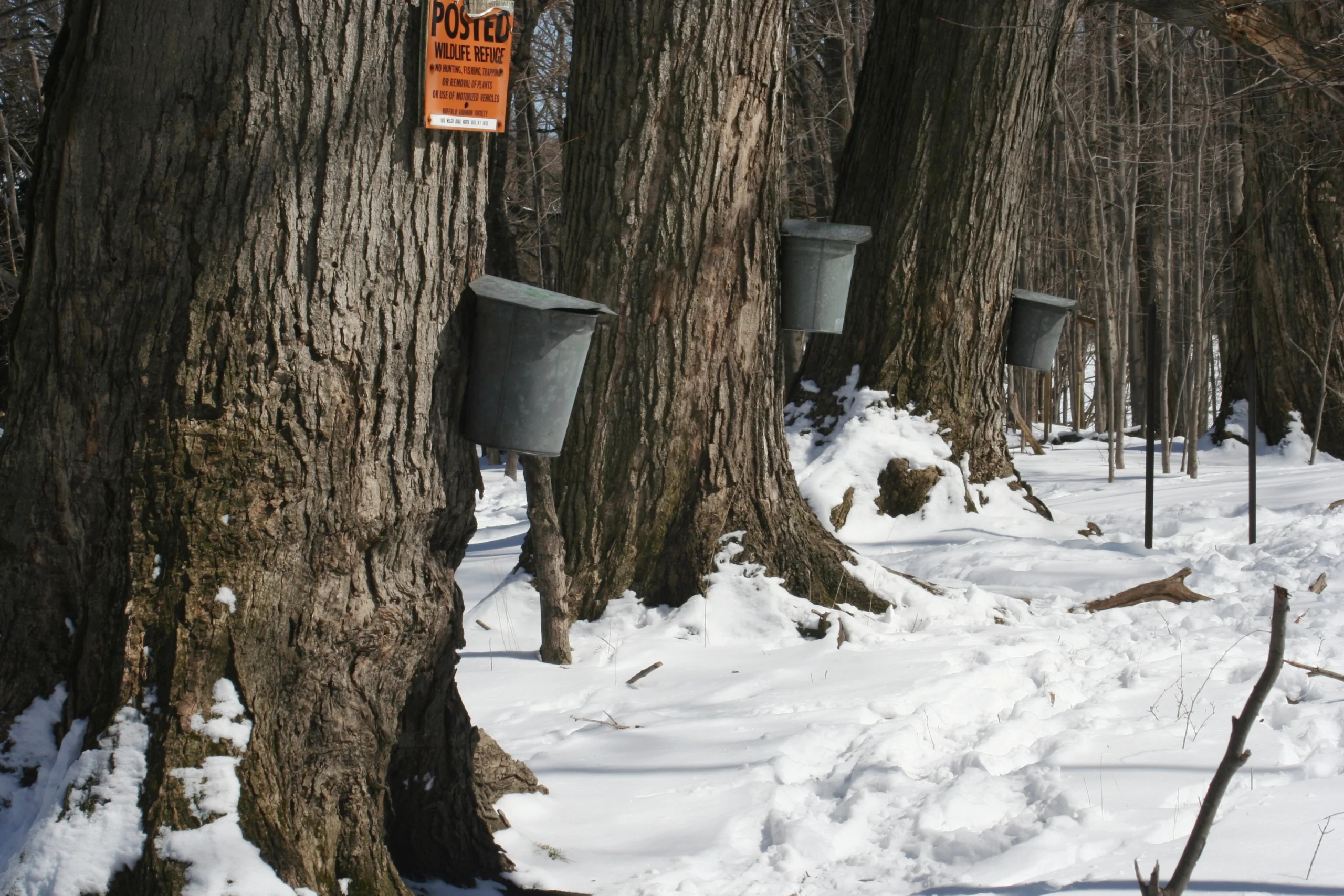
Producing 44 gallons of finished maple syrup takes somewhere in the region of 1,700 gallons of sap, since sap runs around 2 percent sugar and finished syrup is about 66 percent. That sap is collected a bucket or a tubing line at a time, in a season that lasts a few weeks, when nights freeze and days thaw.
One flavor of popcorn at one fair booth represents a meaningful piece of somebody’s sugaring season.
What is actually happening Monday
Maple Day itself is built around an exhibit rather than a stage.
The Maple Experience is a 24-foot mobile classroom, described by the Fair as an interactive educational exhibit with demonstrations of maple production. It is located between the Horticulture Building and the State Police exhibit, and it walks visitors through the process from the first tap on a tree to the finished syrup.
New this year, FFA students from Morrisville Central School will run live demonstrations taking visitors deeper into the individual steps.
That is worth stopping for. Maple is one of the few agricultural products where the entire process is comprehensible in ten minutes and genuinely surprising to people who have never seen it.
There is also syrup to sample, which is the point.
The rest of the day
A few specifics, all from the Fair’s own announcement.
Fairgoers can test their maple trivia knowledge for a chance to win maple ice cream. A bag of maple cotton candy is $1 off for the day. And Leafy, the Maple Producers Association mascot, will be on hand for photos.
At 11:00 a.m., the Wegmans Demonstration Kitchen hosts a session on making maple caramel popcorn, presented by Merle Maple LLC and the association.
Helen Thomas, executive director of the New York State Maple Producers Association, encouraged fairgoers to stop by the Mobile Maple Classroom on Monday.
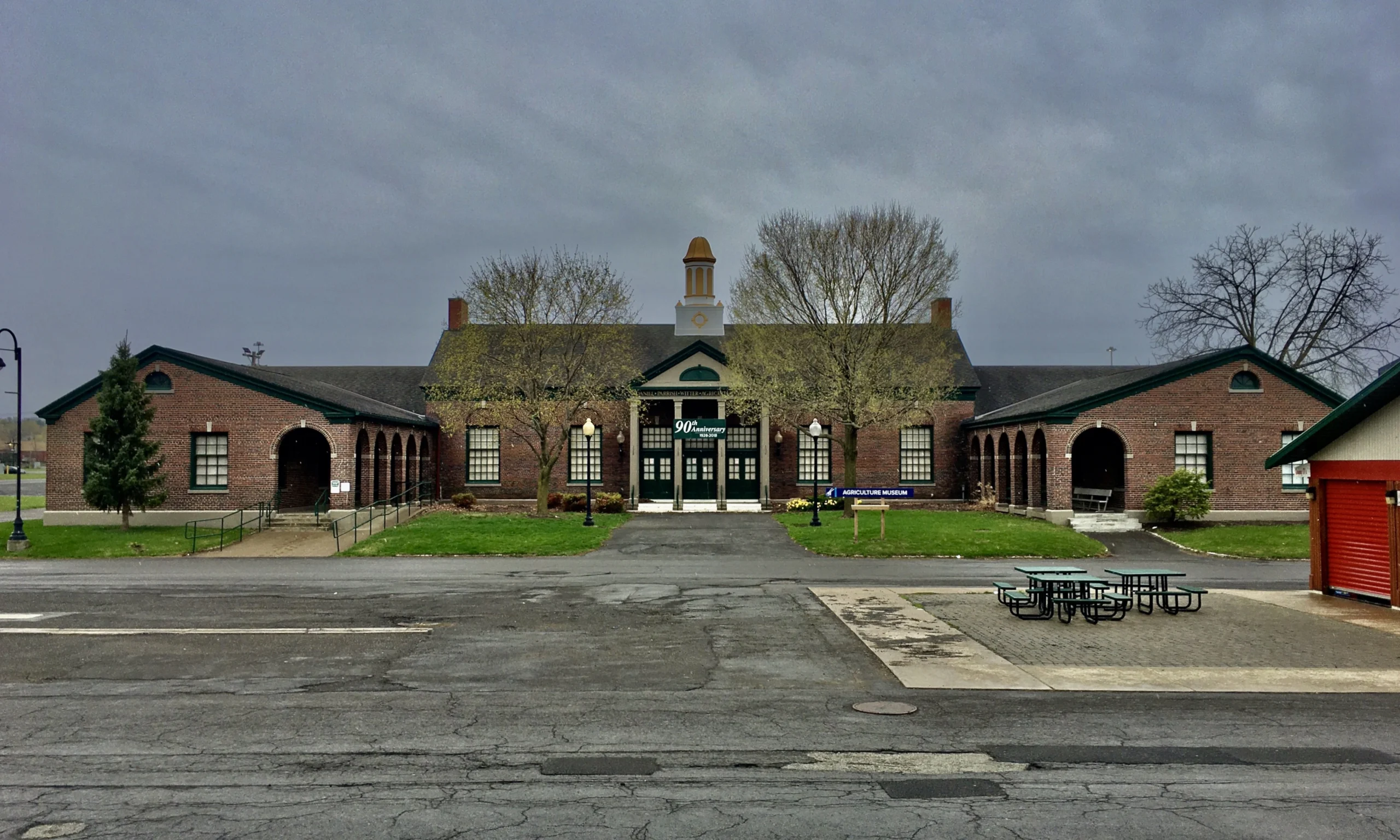
Where maple sits in New York agriculture
State Agriculture Commissioner Richard A. Ball described New York as one of the nation’s leading maple-producing states, and the Fair positions Maple Day alongside Agricultural Career Day, Grape Day, Beef Day and Dairy Day in its lineup of special days for New York agriculture.
Maple occupies an unusual position among those. Dairy and beef are year-round operations with daily labor. Grapes run on an annual growing season. Maple runs on a window of a few weeks in late winter, entirely dependent on a specific weather pattern: nights below freezing, days above.
That makes it the most weather-exposed agricultural product in the state. A warm February can compress or ruin a season, and there is no irrigating or fertilizing your way out of it.
It also makes it one of the few crops harvested from standing forest rather than cleared ground. A sugarbush is woods that stayed woods.
Why the booth numbers matter
There is a reason CNY Signal is leading with sales figures rather than the ceremony.
Agricultural promotion usually deals in acreage, rankings and economic impact statements, all of which are true and none of which mean anything to a person holding a corn dog.
Nine thousand ice cream cones means something. It is a measure of how many people, given a direct choice at a fair full of competing options, picked the maple one.
For an industry whose product competes against cheaper imitations on every supermarket shelf, that is the most useful data point available: at a fair, with the real thing in front of them, people buy it.
Fair Director Julie LaFave called the Maple Producers Association one of the Fair’s most sought-after booths. The numbers support the description.
Why maple is the hardest crop to fake and the easiest to imitate
There is a commercial tension underneath Maple Day worth naming, because it explains why an industry this small promotes this hard.
Real maple syrup is boiled sap and nothing else. There is no additive, no shortcut and no way to stretch it. The producer’s entire margin sits between what the woods yield and what the market pays.
Meanwhile the shelf next to it holds bottles labeled with maple imagery that contain corn syrup, water and flavoring, at a fraction of the price. Those products are legal, clearly labeled, and enormously more profitable to make.
That is the competitive position New York maple occupies year-round: an unadulterated product that costs more, sold beside a cheaper imitation that looks similar on a shelf.
A state fair booth solves that problem in the only way it can be solved, which is by putting the real thing in someone’s mouth. Nine thousand ice cream cones is what that looks like as a strategy.
The forest economics nobody mentions
There is a second reason the industry matters beyond the syrup.
A sugarbush is a working forest. The trees have to stay standing, healthy and mature, because a maple does not produce usable sap until it is decades old and produces best when it is older still. Tapping is done in a way that lets the tree heal.
That creates an unusual alignment. A landowner who makes money from maple has a direct financial reason to keep woods as woods rather than clearing them, subdividing them, or selling the timber.
In a county where CNY Signal has spent this month covering farmland being cut into house lots and woodland being paved for warehouses, an agricultural product that pays landowners to leave trees alone is worth noticing.
It is also fragile in a way row crops are not. A sugarbush represents decades of growth. Once cleared, it does not come back within a working lifetime.
What to actually do at the booth
Practical advice, for anyone going Monday who wants more than a photo with a mascot.
Ask what grade the syrup is. New York producers sell across a range from golden and delicate through very dark and strong, and the difference is when in the season the sap ran, not quality. Most people who think they dislike maple have only had the darkest grades in a commercial product.
Ask where the sugarbush is. Producers at that booth are from specific New York woodlots and will tell you, and it turns an anonymous bottle into a place.
And buy the sugar shapes if they are still there. Eleven hundred pounds sold last year out of four barrels of syrup, which tells you how concentrated the product is and roughly how fast it goes.
If you go Monday
Maple Day is Monday, August 31. The Maple Experience mobile classroom sits between the Horticulture Building and the State Police exhibit.
The Maple Booth itself is in the Horticulture Building, which this year also holds the Arborist Association, the Honey Producers, Taste NY and the $1 Potato Booth. It is the single densest concentration of New York food products on the grounds.
The cotton candy discount is Monday only. The trivia and the ice cream prize are Monday. The 11:00 a.m. popcorn demonstration is at the Wegmans Demonstration Kitchen.
The Fair runs through Labor Day, Monday, September 7. Gates are open 9:00 a.m. to 11:00 p.m., with no entry or re-entry after 9:00 p.m. Admission is $8.32 online with fees, and free every day for children 12 and under and adults 65 and older.
Everything above is included with admission except the maple itself, which you will want to buy anyway.
Sources
- The Great New York State Fair, “Sweeten Your Fair Experience with Maple Day on Monday, August 31,” August 20, 2026, including the 2025 Maple Booth sales figures and quotes from Agriculture Commissioner Richard A. Ball, Fair Director Julie LaFave and Maple Producers Association Executive Director Helen Thomas: https://nysfair.ny.gov/
- The Great New York State Fair, “Holy Cow! New York’s Largest Holstein Dairy Cattle Show in Nearly a Decade,” August 21, 2026, for the Horticulture Building consolidation: https://nysfair.ny.gov/holy-cow-new-yorks-largest-holstein-dairy-cattle-show-in-nearly-a-decade-is-coming-to-the-great-new-york-state-fair/
- New York State Fair, Admission Tickets and Parking, and Frequently Asked Questions, for prices, hours and the entry cutoff: https://nysfair.ny.gov/admission/
Every figure in this story is drawn from the records above. Links go to the primary documents.